4. dubna 2018

Jak překládat poezii


Jak překládat poezii?  A překládat ji vůbec? Má přednost forma či obsah? Dají se na překlad poesie aplikovat pravidla, o kterých jsme mluvili?


1. Projděte si komentáře k tomuto vstupu. Jaké typy básnické tvorby se objevují? Mají něco společného?

Dokážete se během 2 minut naučit 4 libovolné řádky zpaměti? Jak postupujete?


2. Stáhněte si z capsy soubor s různými verzemi překladu Shakespearova sonetu.
Shakespeare_Sonet66_13prekladu.doc

Která verze se vám nejvíc líbí? Proč? Napište svůj názor do komentáře k tomuto blogu. Uvažujete nad formou a obsahem nebo více nasloucháte svým pocitům?

Sonet 66 English
https://www.youtube.com/watch?v=4MWBW_c7Fsw

Sonet 66 Hilský
https://www.youtube.com/watch?v=SJw5BQba7zQ

Interview s Martinem Hilskym

__________________________________

3. Přečtěte si pomalu a klidně následující sonet. Vnímejte rytmus a zvukomalbu textu, při druhém čtení se teprve víc soustřeďte na obsah.

SONNET XII

When I do count the clock that tells the time,
And see the brave day sunk in hideous night;
When I behold the violet past prime,
And sable curls all silver'd o'er with white;

When lofty trees I see barren of leaves 5
Which erst from heat did canopy the herd,
And summer's green all girded up in sheaves
Borne on the bier with white and bristly beard,

Then of thy beauty do I question make,
That thou among the wastes of time must go, 10
Since sweets and beauties do themselves forsake
And die as fast as they see others grow;

    And nothing 'gainst Time's scythe can make defence
    Save breed, to brave him when he takes thee hence.


Pokuste se přeložit jedno ze tří čtyřverší + poslání.
Rozmyslete si, jak budete postupovat.

_______________________

originál
https://www.opensourceshakespeare.org/views/sonnets/sonnets.php

české překlady Shakespeara
Jan Vladislav-pdf
http://lukaflek.wz.cz/poems/ws_sonet29.htm
http://www.v-art.cz/taxus_bohemica/eh/bergrova.htm
http://www.shakespearovy-sonety.cz/a29/
Hilsky sonet 12 youtube
http://sonety.blog.cz/0803/william-shakespeare-sonnet-12-64-73-94-107-128-sest-sonetu-v-mem-prekladu


https://ucbcluj.org/current-issue/vol-21-spring-2012/2842-2/

http://mikechasar.blogspot.cz/2011/02/gi-jane-dh-lawrence.html

12. března 2018

Fakta a přesvědčení

„Dovolit neznalost znamená dodávat jí sílu. Nic nedělat, zatímco naši vůdci prohlašují absurdity, je zločin samolibosti."


Dan Brown - Origin

BISHOP VALDESPINO STOLE another quick glance at Julián, who was still staring blankly out the window of the Opel sedan as it sped along Highway M-505.
What is he thinking? Valdespino wondered.
The prince had been silent for nearly thirty minutes, barely moving except for the occasional reflexive reach into his pocket for his phone, only to realize that he had locked it in his wall safe.
I need to keep him in the dark, Valdespino thought, just a bit longer.
In the front seat, the acolyte from the cathedral was still driving in the direction of Casita del Príncipe, although Valdespino soon would need to inform him that the prince’s retreat was not their destination at all.
Julián turned suddenly from the window, tapping the acolyte on the shoulder. “Please turn on the radio,” he said. “I’d like to hear the news.”
Before the young man could comply, Valdespino leaned forward and placed a firm hand on the boy’s shoulder. “Let’s just sit quietly, shall we?”
Julián turned to the bishop, clearly displeased at having been overridden.
“I’m sorry,” Valdespino said at once, sensing a growing distrust in the prince’s
eyes. “It’s late. All that chatter. I prefer silent reflection.”
“I’ve been doing some reflecting,” Julián said, his voice sharp, “and I’d like to know what’s going on in my country. We’ve entirely isolated ourselves tonight, and I’m starting to wonder if it was a good idea.”
“It is a good idea,” Valdespino assured him, “and I appreciate the trust you’ve shown me.” He removed his hand from the acolyte’s shoulder and motioned to the radio. “Please turn on the news. Perhaps Radio María España?” Valdespino hoped the worldwide Catholic station would be gentler and more tactful than most media outlets had been about tonight’s troubling developments.
When the newscaster’s voice came over the cheap car speakers, he was discussing Edmond Kirsch’s presentation and assassination. Every station in the world is talking about this tonight. Valdespino just hoped his own name would not come up as part of the broadcast.
Fortunately, the topic at the moment appeared to be the dangers of the antireligious message preached by Kirsch, especially the threat posed by his influence on the youth of Spain. As an example, the station began rebroadcasting a lecture Kirsch had delivered recently at the University of Barcelona.
“Many of us are afraid to call ourselves atheists,” Kirsch said calmly to the assembled students. “And yet atheism is not a philosophy, nor is atheism a view of the world. Atheism is simply an admission of the obvious.”
Several students clapped in agreement.
“The term ‘atheist,’” Kirsch continued, “should not even exist. No one ever needs to identify himself as a ‘nonastrologer’ or a ‘nonalchemist.’ We do not have words for people who doubt that Elvis is still alive, or for people who doubt that aliens traverse the galaxy only to molest cattle. Atheism is nothing more than the noises reasonable people make in the presence of unjustified religious beliefs.”
A growing number of students clapped their approval.
“That definition is not mine, by the way,” Kirsch told them. “Those words belong to neuroscientist Sam Harris. And if you have not already done so, you must read his book Letter to a Christian Nation.”
Valdespino frowned, recalling the stir caused by Harris’s book, Carta a una Nación Cristiana, which, while written for Americans, had reverberated across Spain.
“By a show of hands,” Kirsch continued, “how many of you believe in any of the following ancient gods: Apollo? Zeus? Vulcan?” He paused, and then laughed. “Not a single one of you? Okay, so it appears we are all atheists with respect to those gods.” He paused. “I simply choose to go one god further.”
The crowd clapped louder still.
“My friends, I am not saying I know for a fact that there is no God. All I am saying is that if there is a divine force behind the universe, it is laughing hysterically at the religions we’ve created in an attempt to define it.”
Everyone laughed.
Valdespino was now pleased that the prince had asked to listen to the radio. Julián needs to hear this. Kirsch’s devilishly seductive charm was proof that the enemies of Christ were no longer sitting idly by, but rather were actively trying to pull souls away from God.
“I’m an American,” Kirsch continued, “and I feel profoundly fortunate to have been born in one of the most technologically advanced and intellectually progressive countries on earth. And so I found it deeply disturbing when a recent poll revealed that one half of my countrymen believe quite literally that Adam and Eve existed—that an all-powerful God created two fully formed human beings who single-handedly populated the entire planet, generating all the
diverse races, with none of the inherent problems of inbreeding.”
More laughter.
“In Kentucky,” he continued, “church pastor Peter LaRuffa publicly declared: ‘If somewhere within the Bible, I found a passage that said ‘two plus two is five,’ I would believe it and accept it as true.’”
Still more laughter.
“I agree, it’s easy to laugh, but I assure you, these beliefs are far more terrifying than they are funny. Many of the people who espouse them are bright, educated professionals—doctors, lawyers, teachers, and in some cases, people who aspire to the highest offices in the land. I once heard U.S. congressman Paul Broun say, ‘Evolution and the Big Bang are lies straight from the pit of hell. I believe the earth is about nine thousand years old, and it was created in six days as we know them.’” Kirsch paused. “Even more troubling, Congressman Broun sits on the House Science, Space, and Technology Committee, and when questioned about the existence of a fossil record spanning millions of years, his response was ‘Fossils were placed there by God to test our faith.’”
Kirsch’s voice grew suddenly quiet and somber. “To permit ignorance is to empower it. To do nothing as our leaders proclaim absurdities is a crime of complacency. As is letting our schools and churches teach outright untruths to our children. The time for action has come. Not until we purge our species of superstitious thinking can we embrace all that our minds have to offer.” He paused and a hush fell over the crowd. “I love humankind. I believe our minds and our species have limitless potential. I believe we are on the brink of an enlightened new era, a world where religion finally departs … and science reigns.”
The crowd erupted with wild applause.
“For heaven’s sake,” Valdespino snapped, shaking his head in disgust. “Turn it off.”
The acolyte obeyed, and the three men drove on in silence.

7. března 2018

Jekyll a Hyde


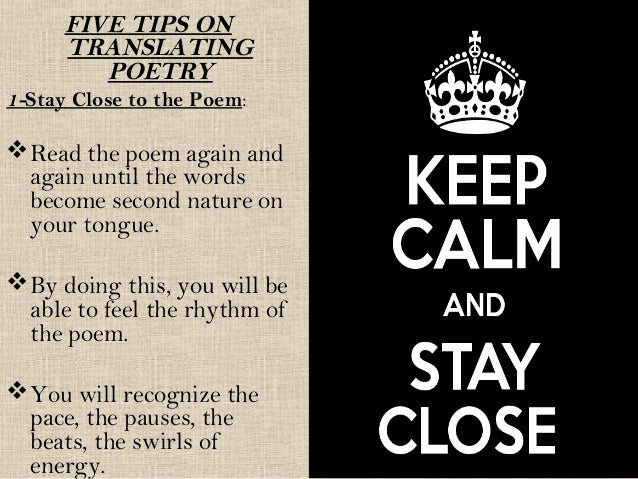
Překlad dialogů má zvláštní pravidla - především je nutné každou osobu správně charakterizovat. Vzhled postav, jejich povaha, zvyky, společenské postavení, věk, vzájemné postoje, emoce... to vše se odráží ve způsobu řeči. 

Než začnete překládat, představte si jednající postavy. Povídejte si s nimi jak s živými lidmi, dovolte jim vystoupit z papíru a stát se skutečnými osobnostmi. 

Při překládání přímé řeči je praktické zkusit si hotový text přečíst nahlas - kde text vázne, působí podivně, špatně se vyslovuje apod., tam je nutné provést změny. 
_________________

Strange Case of Dr Jekyll and Mr Hyde 
Robert LouisStevenson -1886

SEARCH FOR MR. HYDE

THAT evening Mr. Utterson came home to his bachelor house in sombre spirits and sat down to dinner without relish. It was his custom of a Sunday, when this meal was over, to sit close by the fire, a volume of some dry divinity on his reading-desk, until the clock of the neighbouring church rang out the hour of twelve, when he would go soberly and gratefully to bed. On this night, however, as soon as the cloth was taken away, he took up a candle and went into his business-room. There he opened his safe, took from the most private part of it a document endorsed on the envelope as Dr. Jekyll's Will, and sat down with a clouded brow to study its contents. The will was holograph, for Mr. Utterson, though he took charge of it now that it was made, had refused to lend the least assistance in the making of it; it provided not only that, in case of the decease of Henry Jekyll, M.D., D.C.L., L.L.D., F.R.S., etc., all his possessions were to pass into the hands of his "friend and benefactor Edward Hyde," but that in case of Dr. Jekyll's "disappearance or unexplained absence for any period exceeding three calendar months," the said Edward Hyde should step into the said Henry Jekyll's shoes without further delay and free from any burthen or obligation, beyond the payment of a few small sums to the members of the doctor's household. This document had long been the lawyer's eyesore. It offended him both as a lawyer and as a lover of the sane and customary sides of life, to whom the fanciful was the immodest. And hitherto it was his ignorance of Mr. Hyde that had swelled his indignation; now, by a sudden turn, it was his knowledge. It was already bad enough when the name was but a name of which he could learn no more. It was worse when it began to be clothed upon with detestable attributes; and out of the shifting, insubstantial mists that had so long baffled his eye, there leaped up the sudden, definite presentment of a fiend.
"I thought it was madness," he said, as he replaced the obnoxious paper in the safe, "and now I begin to fear it is disgrace."
With that he blew out his candle, put on a great-coat, and set forth in the direction of Cavendish Square, that citadel of medicine, where his friend, the great Dr. Lanyon, had his house and received his crowding patients. "If any one knows, it will be Lanyon," he had thought.
The solemn butler knew and welcomed him; he was subjected to no stage of delay, but ushered direct from the door to the dining-room where Dr. Lanyon sat alone over his wine. This was a hearty, healthy, dapper, red-faced gentleman, with a shock of hair prematurely white, and a boisterous and decided manner. At sight of Mr. Utterson, he sprang up from his chair and welcomed him with both hands. The geniality, as was the way of the man, was somewhat theatrical to the eye; but it reposed on genuine feeling. For these two were old friends, old mates both at school and college, both thorough respecters of themselves and of each other, and, what does not always follow, men who thoroughly enjoyed each other's company.
After a little rambling talk, the lawyer led up to the subjectwhich so disagreeably pre-occupied his mind.
"I suppose, Lanyon," said he "you and I must be the two oldest friends that Henry Jekyll has?"
"I wish the friends were younger," chuckled Dr. Lanyon. "But I suppose we are. And what of that? I see little of him now."
"Indeed?" said Utterson. "I thought you had a bond of common interest."
"We had," was the reply. "But it is more than ten years since Henry Jekyll became too fanciful for me. He began to go wrong, wrong in mind; and though of course I continue to take an interest in him for old sake's sake, as they say,
I see and I have seen devilish little of the man. Such unscientific balderdash," added the doctor, flushing suddenly purple, "would have estranged Damon and Pythias."
This little spirit of temper was somewhat of a relief to Mr. Utterson. "They have only differed on some point of science," he thought; and being a man of no scientific passions (except in the matter of conveyancing), he even added: "It is nothing worse than that!" He gave his friend a few seconds to recover his composure, and then approached the question he had come to put. "Did you ever come across a protege of his--one Hyde?" he asked.
"Hyde?" repeated Lanyon. "No. Never heard of him. Since my time."

That was the amount of information that the lawyer carried back with him to the great, dark bed on which he tossed to and fro, until the small hours of the morning began to grow large. It was a night of little ease to his toiling mind, toiling in mere darkness and besieged by questions.
Six o'clock struck on the bells of the church that was so conveniently near to Mr. Utterson's dwelling, and still he was digging at the problem. Hitherto it had touched him on the intellectual side alone; but now his imagination also was engaged, or rather enslaved; and as he lay and tossed in the gross darkness of the night and the curtained room, Mr. Enfield's tale went by before his mind in a scroll of lighted pictures. He would be aware of the great field of lamps of a nocturnal city; then of the figure of a man walking swiftly; then of a child running from the doctor's; and then these met, and that human Juggernaut trod the child down and passed on regardless of her screams. Or else he would see a room in a rich house, where his friend lay asleep, dreaming and smiling at his dreams; and then the door of that room would be opened, the curtains of the bed plucked apart, the sleeper recalled, and lo! there would stand by his side a figure to whom power was given, and even at that dead hour, he must rise and do its bidding. The figure in these two phases haunted the lawyer all night; and if at any time he dozed over, it was but to see it glide more stealthily through sleeping houses, or move the more swiftly and still the more swiftly, even to dizziness, through wider labyrinths of lamplighted city, and at every street-corner crush a child and leave her screaming. And still the figure had no face by which he might know it; even in his dreams, it had no face, or one that baffled him and melted before his eyes; and thus it was that there sprang up and grew apace in the lawyer's mind a singularly strong, almost an inordinate, curiosity to behold the features of the real Mr. Hyde.
If he could but once set eyes on him, he thought the mystery would lighten and perhaps roll altogether away, as was the habit of mysterious things when well examined. He might see a reason for his friend's strange preference or bondage (call it which you please) and even for the startling clause of the will. At least it would be a face worth seeing: the face of a man who was without bowels of mercy: a face which had but to show itself to raise up, in the mind of the unimpressionable Enfield, a spirit of enduring hatred.
From that time forward, Mr. Utterson began to haunt the door in the by-street of shops. In the morning before office hours, at noon when business was plenty, and time scarce, at night under the face of the fogged city moon, by all lights and at all hours of solitude or concourse, the lawyer was to be found on his chosen post.
"If he be Mr. Hyde," he had thought, "I shall be Mr. Seek."
And at last his patience was rewarded. It was a fine dry night; frost in the air; the streets as clean as a ballroom floor; the lamps, unshaken, by any wind, drawing a regular pattern of light and shadow. By ten o'clock, when the shops were closed, the by-street was very solitary and, in spite of the low growl of London from all round, very silent. Small sounds carried far; domestic sounds out of the houses were clearly audible on either side of the roadway; and the rumour of the approach of any passenger preceded him by a long time. Mr. Utterson had been some minutes at his post, when he was aware of an odd, light footstep drawing near. In the course of his nightly patrols, he had long grown accustomed to the quaint effect with which the footfalls of a single person, while he is still a great way off, suddenly spring out distinct from the vast hum and clatter of the city. Yet his attention had never before been so sharply and decisively arrested; and it was with a strong, superstitious prevision of success that he withdrew into the entry of the court.
The steps drew swiftly nearer, and swelled out suddenly louder as they turned the end of the street. The lawyer, looking forth from the entry, could soon see what manner of man he had to deal with. He was small and very plainly dressed, and the look of him, even at that distance, went somehow strongly against the watcher's inclination. But he made straight for the door, crossing the roadway to save time; and as he came, he drew a key from his pocket like one approaching home.
Mr. Utterson stepped out and touched him on the shoulder as he passed. "Mr. Hyde, I think?"
Mr. Hyde shrank back with a hissing intake of the breath. But his fear was only momentary; and though he did not look the lawyer in the face, he answered coolly enough: "That is my name. What do you want?"
"I see you are going in," returned the lawyer. "I am an old friend of Dr. Jekyll's--Mr. Utterson of Gaunt Street--you must have heard my name; and meeting you so conveniently, I thought you might admit me."
"You will not find Dr. Jekyll; he is from home," replied Mr. Hyde, blowing in the key. And then suddenly, but still without looking up, "How did you know me?" he asked.
"On your side," said Mr. Utterson, "will you do me a favour?"
"With pleasure," replied the other. "What shall it be?"
"Will you let me see your face?" asked the lawyer.
Mr. Hyde appeared to hesitate, and then, as if upon some sudden reflection, fronted about with an air of defiance; and the pair stared at each other pretty fixedly for a few seconds.
"Now I shall know you again," said Mr. Utterson. "It may be useful."
"Yes," returned Mr. Hyde, "it is as well we have, met; and a propos, you should have my address." And he gave a number of a street in Soho.
"Good God!" thought Mr. Utterson, "can he, too, have been thinking of the will?" But he kept his feelings to himself and only grunted in acknowledgment of the address.
"And now," said the other, "how did you know me?"
"By description," was the reply.
"Whose description?"
"We have common friends," said Mr. Utterson.
"Common friends?" echoed Mr. Hyde, a little hoarsely. "Who are they?"
"Jekyll, for instance," said the lawyer.
"He never told you," cried Mr. Hyde, with a flush of anger. "I did not think you would have lied."
"Come," said Mr. Utterson, "that is not fitting language."
The other snarled aloud into a savage laugh; and the next moment, with extraordinary quickness, he had unlocked the door and disappeared into the house.

The lawyer stood awhile when Mr. Hyde had left him, the picture of disquietude. Then he began slowly to mount the street, pausing every step or two and putting his hand to his brow like a man in mental perplexity. The problem he was thus debating as he walked, was one of a class that is rarely solved. Mr. Hyde was pale and dwarfish, he gave an impression of deformity without any nameable malformation, he had a displeasing smile, he had borne himself to the lawyer with a sort of murderous mixture of timidity and boldness, and he spoke with a husky, whispering and somewhat broken voice; all these were points against him, but not all of these together could explain the hitherto unknown disgust, loathing, and fear with which Mr. Utterson regarded him. "There must be something else," said the perplexed gentleman. "There is something more, if I could find a name for it. God bless me, the man seems hardly human! Something troglodytic, shall we say? or can it be the old story of Dr. Fell? or is it the mere radiance of a foul soul that thus transpires through, and transfigures, its clay continent? The last, I think; for, O my poor old Harry Jekyll, if ever I read Satan's signature upon a face, it is on that of your new friend."

Round the corner from the by-street, there was a square of ancient, handsome houses, now for the most part decayed from their high estate and let in flats and chambers to all sorts and conditions of men: map-engravers, architects, shady lawyers, and the agents of obscure enterprises. One house, however, second from the corner, was still occupied entire; and at the door of this, which wore a great air of wealth and comfort, though it was now plunged in darkness except for the fan-light, Mr. Utterson stopped and knocked. A well-dressed, elderly servant opened the door.
"Is Dr. Jekyll at home, Poole?" asked the lawyer.
"I will see, Mr. Utterson," said Poole, admitting the visitor, as he spoke, into a large, low-roofed, comfortable hall, paved with flags, warmed (after the fashion of a country house) by a bright, open fire, and furnished with costly cabinets of oak. "Will you wait here by the fire, sir? or shall I give you a light in the dining room?"
"Here, thank you," said the lawyer, and he drew near and leaned on the tall fender. This hall, in which he was now left alone, was apet fancy of his friend the doctor's; and Utterson himself was wont to speak of it as the pleasantest room in London. But to-night there was a shudder in his blood; the face of Hyde sat heavy on his memory; he felt (what was rare with him) a nausea and distaste of life; and in the gloom of his spirits, he seemed to read a menace in the flickering of the firelight on the polished cabinets and the uneasy starting of the shadow on the roof. He was ashamed of his relief, when Poole presently returned to announce that Dr. Jekyll was gone out.
"I saw Mr. Hyde go in by the old dissecting-room door, Poole," he said. "Is that right, when Dr. Jekyll is from home?"
"Quite right, Mr. Utterson, sir," replied the servant. "Mr. Hyde has a key."
"Your master seems to repose a great deal of trust in that young man, Poole," resumed the other musingly.
"Yes, sir, he do indeed," said Poole. "We have all orders to obey him."
"I do not think I ever met Mr. Hyde?" asked Utterson.
"O, dear no, sir. He never dines here," replied the butler. "Indeed we see very little of him on this side of the house; he mostly comes and goes by the laboratory."
"Well, good-night, Poole."
"Good-night, Mr. Utterson." And the lawyer set out homeward with a very heavy heart. "Poor Harry Jekyll," he thought, "my mind misgives me he is in deep waters! He was wild when he was young; a long while ago to be sure; but in the law of God, there is no statute of limitations. Ay, it must be that; the ghost of some old sin, the cancer of some concealed disgrace: punishment coming, PEDE CLAUDO, years after memory has forgotten and self-love condoned the fault." And the lawyer, scared by the thought, brooded a while on his own past, groping in all the corners of memory, lest by chance some Jack-in-the-Box of an old iniquity should leap to light there. His past was fairly blameless; few men could read the rolls of their life with less apprehension; yet he was humbled to the dust by the many ill things he had done, and raised up again into a sober and fearful gratitude by the many that he had come so near to doing, yet avoided. And then by a return on his former subject, he conceived a spark of hope. "This Master Hyde, if he were studied," thought he, "must have secrets of his own; black secrets, by the look of him; secrets compared to which poor Jekyll's worst would be like sunshine. Things cannot continue as they are. It turns me cold to think of this creature stealing like a thief to Harry's bedside; poor Harry, what a wakening! And the danger of it; for if this Hyde suspects the existence of the will, he may grow impatient to inherit. Ay, I must put my shoulder to the wheel if Jekyll will but let me," he added, "if Jekyll will only let me." For once more he saw before his mind's eye, as clear as a transparency, the strange clauses of the will.
1. března 2018

Synonyma


Vložte do komentáře své návrhy širokých synoynm pro výraz DŮM.

Čím se výrazy liší?

Přemýšlejte o tom, které další informace nesou.


Porovnejte své nápady s pracemi svých předchůdců, třeba ZDE.

22. února 2018

21. února 2018

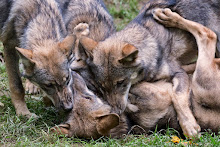
Vizualizace: Drama v divočině

Oliver Curwood
THE WOLF HUNTERS
CHAPTER I
THE FIGHT IN THE FOREST

Cold winter lay deep in the Canadian wilderness. Over it the moon was rising, like a red pulsating ball, lighting up the vast white silence of the night in a shimmering glow. Not a sound broke the stillness of the desolation. It was too late for the life of day, too early for the nocturnal roamings and voices of the creatures of the night. Like the basin of a great amphitheater the frozen lake lay revealed in the light of the moon and a billion stars. Beyond it rose the spruce forest, black and forbidding. Along its nearer edges stood hushed walls of tamarack, bowed in the smothering clutch of snow and ice, shut in by impenetrable gloom.
A huge white owl flitted out of this rim of blackness, then back again, and its first quavering hoot came softly, as though the mystic hour of silence had not yet passed for the night-folk. The snow of the day had ceased, hardly a breath of air stirred the ice-coated twigs of the trees. Yet it was bitter cold—so cold that a man, remaining motionless, would have frozen to death within an hour.
Suddenly there was a break in the silence, a weird, thrilling sound, like a great sigh, but not human—a sound to make one's blood run faster and fingers twitch on rifle-stock. It came from the gloom of the tamaracks. After it there fell a deeper silence than before, and the owl, like a noiseless snowflake, drifted out over the frozen lake. After a few moments it came again, more faintly than before. One versed in woodcraft would have slunk deeper into the rim of blackness, and listened, and wondered, and watched; for in the sound he would have recognized the wild, half-conquered note of a wounded beast's suffering and agony.
Slowly, with all the caution born of that day's experience, a huge bull moose walked out into the glow of the moon. His magnificent head, drooping under the weight of massive antlers, was turned inquisitively across the lake to the north. His nostrils were distended, his eyes glaring, and he left behind a trail of blood. Half a mile away he caught the edge of the spruce forest. There something told him he would find safety. A hunter would have known that he was wounded unto death as he dragged himself out into the foot-deep snow of the lake.
A dozen rods out from the tamaracks he stopped, head thrown high, long ears pitched forward, and nostrils held half to the sky. It is in this attitude that a moose listens when he hears a trout splash three-quarters of a mile away. Now there was only the vast, unending silence, broken only by the mournful hoot of the snow owl on the other side of the lake. Still the great beast stood immovable, a little pool of blood growing upon the snow under his forward legs. What was the mystery that lurked in the blackness of yonder forest? Was it danger? The keenest of human hearing would have detected nothing. Yet to those long slender ears of the bull moose, slanting beyond the heavy plates of his horns, there came a sound. The animal lifted his head still higher to the sky, sniffed to the east, to the west, and back to the shadows of the tamaracks. But it was the north that held him.
From beyond that barrier of spruce there soon came a sound that man might have heard—neither the beginning nor the end of a wail, but something like it. Minute by minute it came more clearly, now growing in volume, now almost dying away, but every instant approaching—the distant hunting call of the wolf-pack! What the hangman's noose is to the murderer, what the leveled rifles are to the condemned spy, that hunt-cry of the wolves is to the wounded animal of the forests.
Instinct taught this to the old bull. His head dropped, his huge antlers leveled themselves with his shoulders, and he set off at a slow trot toward the east. He was taking chances in thus crossing the open, but to him the spruce forest was home, and there he might find refuge. In his brute brain he reasoned that he could get there before the wolves broke cover. And then—
Again he stopped, so suddenly that his forward legs doubled under him and he pitched into the snow. This time, from the direction of the wolf-pack, there came the ringing report of a rifle! It might have been a mile or two miles away, but distance did not lessen the fear it brought to the dying king of the North. That day he had heard the same sound, and it had brought mysterious and weakening pain in his vitals. With a supreme effort he brought himself to his feet, once more sniffed into the north, the east, and the west, then turned and buried himself in the black and frozen wilderness of tamarack.
Stillness fell again with the sound of the rifle-shot. It might have lasted five minutes or ten, when a long, solitary howl floated from across the lake. It ended in the sharp, quick yelp of a wolf on the trail, and an instant later was taken up by others, until the pack was once more in full cry. Almost simultaneously a figure darted out upon the ice from the edge of the forest. A dozen paces and it paused and turned back toward the black wall of spruce.
"Are you coming, Wabi?"
A voice answered from the woods. "Yes. Hurry up—run!"
Thus urged, the other turned his face once more across the lake. He was a youth of not more than eighteen. In his right hand he carried a club. His left arm, as if badly injured, was done up in a sling improvised from a lumberman's heavy scarf. His face was scratched and bleeding, and his whole appearance showed that he was nearing complete exhaustion. For a few moments he ran through the snow, then halted to a staggering walk. His breath came in painful gasps. The club slipped from his nerveless fingers, and conscious of the deathly weakness that was overcoming him he did not attempt to regain it. Foot by foot he struggled on, until suddenly his knees gave way under him and he sank down into the snow.
From the edge of the spruce forest a young Indian now ran out upon the surface of the lake. His breath was coming quickly, but with excitement rather than fatigue. Behind him, less than half a mile away, he could hear the rapidly approaching cry of the hunt-pack, and for an instant he bent his lithe form close to the snow, measuring with the acuteness of his race the distance of the pursuers. Then he looked for his white companion, and failed to see the motionless blot that marked where the other had fallen. A look of alarm shot into his eyes, and resting his rifle between his knees he placed his hands, trumpet fashion, to his mouth and gave a signal call which, on a still night like this, carried for a mile.
"Wa-hoo-o-o-o-o-o! Wa-hoo-o-o-o-o-o!"
At that cry the exhausted boy in the snow staggered to his feet, and with an answering shout which came but faintly to the ears of the Indian, resumed his flight across the lake. Two or three minutes later Wabi came up beside him.
"Can you make it, Rod?" he cried.
The other made an effort to answer, but his reply was hardly more than a gasp. Before Wabi could reach out to support him he had lost his little remaining strength and fallen for a second time into the snow.
"I'm afraid—I—can't do it—Wabi," he whispered. "I'm—bushed—"
The young Indian dropped his rifle and knelt beside the wounded boy, supporting his head against his own heaving shoulders.
"It's only a little farther, Rod," he urged. "We can make it, and take to a tree. We ought to have taken to a tree back there, but I didn't know that you were so far gone; and there was a good chance to make camp, with three cartridges left for the open lake."
"Only three!"
"That's all, but I ought to make two of them count in this light. Here, take hold of my shoulders! Quick!"
He doubled himself like a jack-knife in front of his half-prostrate companion. From behind them there came a sudden chorus of the wolves, louder and clearer than before.
"They've hit the open and we'll have them on the lake inside of two minutes," he cried. "Give me your arms, Rod! There! Can you hold the gun?"
He straightened himself, staggering under the other's weight, and set off on a half-trot for the distant tamaracks. Every muscle in his powerful young body was strained to its utmost tension. Even more fully than his helpless burden did he realize the peril at their backs.
Three minutes, four minutes more, and then—
A terrible picture burned in Wabi's brain, a picture he had carried from boyhood of another child, torn and mangled before his very eyes by these outlaws of the North, and he shuddered. Unless he sped those three remaining bullets true, unless that rim of tamaracks was reached in time, he knew what their fate would be. There flashed into his mind one last resource. He might drop his wounded companion and find safety for himself. But it was a thought that made Wabi smile grimly. This was not the first time that these two had risked their lives together, and that very day Roderick had fought valiantly for the other, and had been the one to suffer. If they died, it would be in company. Wabi made up his mind to that and clutched the other's arms in a firmer grip. He was pretty certain that death faced them both. They might escape the wolves, but the refuge of a tree, with the voracious pack on guard below, meant only a more painless end by cold. Still, while there was life there was hope, and he hurried on through the snow, listening for the wolves behind him and with each moment feeling more keenly that his own powers of endurance were rapidly reaching an end.
For some reason that Wabi could not explain the hunt-pack had ceased to give tongue. Not only the allotted two minutes, but five of them, passed without the appearance of the animals on the lake. Was it possible that they! had lost the trail? Then it occurred to the Indian that perhaps he had wounded one of the pursuers, and that the others, discovering his injury, had set upon him and were now participating in one of the cannibalistic feasts that had saved them thus far. Hardly had he thought of this possibility when he was thrilled by a series of long howls, and looking back he discerned a dozen or more dark objects moving swiftly over their trail.
Not an eighth of a mile ahead was the tamarack forest. Surely Rod could travel that distance!
"Run for it, Rod!" he cried. "You're rested now. I'll stay here and stop 'em!"
He loosened the other's arms, and as he did so his rifle fell from the white boy's nerveless grip and buried itself in the snow. As he relieved himself of his burden he saw for the first time the deathly pallor and partly closed eyes of his companion. With a new terror filling his own faithful heart he knelt beside the form which lay so limp and lifeless, his blazing eyes traveling from the ghastly face to the oncoming wolves, his rifle ready in his hands. He could now discern the wolves trailing out from the spruce forest like ants. A dozen of them were almost within rifle-shot. Wabi knew that it was with this vanguard of the pack that he must deal if he succeeded in stopping the scores behind. Nearer and nearer he allowed them to come, until the first were scarce two hundred feet away. Then, with a sudden shout, the Indian leaped to his feet and dashed fearlessly toward them. This unexpected move, as he had intended, stopped the foremost wolves in a huddled group for an instant, and in this opportune moment Wabi leveled his gun and fired. A long howl of pain testified to the effect of the shot. Hardly had it begun when Wabi fired again, this time with such deadly precision that one of the wolves, springing high into the air, tumbled back lifeless among the pack without so much as making a sound.
Running to the prostrate Roderick, Wabi drew him quickly upon his back, clutched his rifle in the grip of his arm, and started again for the tamaracks. Only once did he look back, and then he saw the wolves gathering in a snarling, fighting crowd about their slaughtered comrades. Not until he had reached the shelter of the tamaracks did the Indian youth lay down his burden, and then in his own exhaustion he fell prone upon the snow, his black eyes fixed cautiously upon the feasting pack. A few minutes later he discerned dark spots appearing here and there upon the whiteness of the snow, and at these signs of the termination of the feast he climbed up into the low branches of a spruce and drew Roderick after him. Not until then did the wounded boy show visible signs of life. Slowly he recovered from the faintness which had overpowered him, and after a little, with some assistance from Wabi, was able to place himself safely on a higher limb.
"That's the second time, Wabi," he said, reaching a hand down affectionately to the other's shoulder. "Once from drowning, once from the wolves. I've got a lot to even up with you!"