Poválečná populární hudba, to bylo v padesátých a šedesátých letech především zázračné "rádio laxemberg," z něhož později čerpaly stále četnější české adaptace americké hudby. Ovšem poklesle kapitalistický anglický text byl v pokrokovém socialistickém státě nepřijatelný a nepřípustný! Od šedesátých let 20. století se tak intenzivně rozvíjela česká překladová textařina, a často bojovala s nesmyslnou cenzurou (v textu se například nesmělo objevit slovo bible - tak vznikla záhadná řádka z textu skupiny Spirituál kvintet "Ten starý příběh z knížky vám tu vykládám").
V současnosti má většina světových písní pop music anglické texty, bez ohledu na národnost autorů a interpretů. Ani ty, které posloucháme česky, nemusejí pocházet z domácí produkce - často čeští interpreti převezmou světový hit a dodají mu český text. Byznys je byznys!
Česká tradice písňových překladů sahá hluboko do historie.
Divotvorný hrnec
U nás doma (How Are Things In Glocca Morra): Burton Lane, V+W
Zpívá Soňa Červená, mluví Václav Trégl
Karel Vlach se svým orchestrem
ULTRAPHON C 15130, mat. 45770, rec. PRAHA 23.4.1948
Americký muzikál Finian´s Rainbow (Divotvorný hrnec) napsal Burton Lane na text E. Y. Harburga. Hudbu přepsal z původních gramofonových desek natočených 30.3. a 3,7,10.4. 1947 v New Yorku Zdeněk Petr, který hudbu i aranžoval. Pražské provedení bylo první v Evropě.
Ukázka ze slavné filmové verze
1. Znáte nějaké české verze původně anglických písní? Uveďte příklady v komentáři k blogu!
2. A jak se přeložené dílko proměňuje? Porovnejte:
Red river
Červená řeka
Three Ravens - A. Scholl
Three Ravens - Djazia
Three Ravens - vocal
Válka růží
L'important C'est la rose
Podívej, kvete růže
Všimněte si, jak se proměnilo i hudební provedení.
Další inspirace z oblasti téměř zlidovělé české popové klasiky zde - Ivo Fišer
http://www.casopisfolk.cz/Textari/textari-fischer_ivo0610.htm
I díla českých písničkářů jasně dokazují, že dobrý a vtipný text je silnou stránkou naší hudební scény.
Zuzana Navarová - Marie
Karel Kryl - Karavana mraků
Karel Plíhal - Nosorožec
Michal Tučný, Rattlesnake Annie - Good Bye to Rivers
My čekali jaro
... a zatím přišel mráz
Oh, dem golden slippers - parodie (info - WIKI)
3. Naším úkolem bude OTEXTOVAT píseň s původně anglickým textem. Nejsme nijak vázáni obsahem originálu, rozhoduje jedině forma, zpívatelnost - slovní a hudební přízvuky se musí překrývat. Zvolte si styl - a držte se ho, ať už to bude drama, lyrika nebo ostrá parodie.
Vyberte si buď jednu z níže uvedených tří skladeb, nebo si zvolte jinou dle vlastní preference - v tom případě ale musíte k přeloženému textu do komentáře k blogu uvést i odkaz na originální audiozáznam, nejlépe na youtube.
I See Fire (Ed Sheran)
https://www.youtube.com/watch?v=5TgiH5Rr3M0
Wind of Change (Scorpions)
https://www.youtube.com/watch?v=ohOtDA3dTAA
Mrs. Robinson (Simon&Garfunkel)
https://www.youtube.com/watch?v=QeY9cnsgNYs
4. Že nepoznáte přízvuk ani v textu, natož v hudbě?
Zkuste si polohlasně zarecitovat a označit přízvučné slabiky:
Je to chůze po tom světě -
kam se noha šine:
sotva přejdeš jedny hory,
hned se najdou jiné.
Je to život na tom světě -
že by člověk utek:
ještě nezažil jsi jeden,
máš tu druhý smutek.
A teď si poslechněte zhudebněnou verzi - přízvuky jsou v ní patrné daleko lépe:
Pocestný
Délky slabik také hrají svou roli:
. . - - . . - -
. . - - . .
. . - - . . - -
. . - - . .
10. listopadu 2015
3. listopadu 2015
Poesie? je spletí hlásek
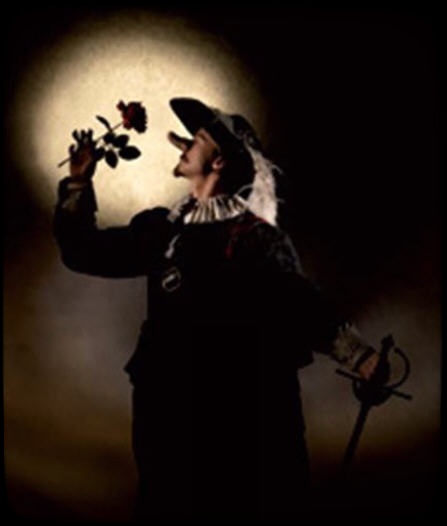
Citát z Rostandova Cyrana otevírá nové téma.
Jak překládat poezii? A překládat ji vůbec? Má přednost forma či obsah? Dají se na překlad poesie aplikovat pravidla, o kterých jsme mluvili?
1. Stáhněte si z capsy soubor s různými verzemi překladu Shakespearova sonetu.
Shakespeare_Sonet66_13prekladu.doc
Která verze se vám nejvíc líbí? Proč? Napište svůj názor do komentáře k tomuto blogu. Uvažujete nad formou a obsahem nebo více nasloucháte svým pocitům?
Sonet 66 English
https://www.youtube.com/watch?v=4MWBW_c7Fsw
Sonet 66 Hilský
https://www.youtube.com/watch?v=SJw5BQba7zQ
_______________________________________________________
What's in a name? That which we call a rose by any other name would smell as sweet.
Co je po jméně? Co růží zvou, i zváno jinak vonělo by stejně.
https://www.psychologytoday.com/blog/adventures-in-old-age/201001/was-shakespeare-wrong-would-rose-any-other-name-smell-sweet
_______________________________________________________
2. Přečtěte si pomalu a klidně následující sonet. Vnímejte rytmus a zvukomalbu textu, při druhém čtení se teprve víc soustřeďte na obsah.
SONNET 18
Pokuste se přeložit jedno ze tří čtyřverší + poslání.
Rozmyslete si, jak budete postupovat.
_______________________
Domácí úkol:
Vyhledejte jakýkoli český překlad své oblíbené básně a anglický originál spolu s českou verzí vlože do komentáře k tomuto blogu.
Naučte se alespoň 8 řádek zpaměti - česky i anglicky. Zkuste si recitaci před zrcadlem, vnímejte rytmus básně, porovnávejte básnické prostředky použité v originále a v překladu.
Jak překládat poezii? A překládat ji vůbec? Má přednost forma či obsah? Dají se na překlad poesie aplikovat pravidla, o kterých jsme mluvili?
1. Stáhněte si z capsy soubor s různými verzemi překladu Shakespearova sonetu.
Shakespeare_Sonet66_13prekladu.doc
Která verze se vám nejvíc líbí? Proč? Napište svůj názor do komentáře k tomuto blogu. Uvažujete nad formou a obsahem nebo více nasloucháte svým pocitům?
Sonet 66 English
https://www.youtube.com/watch?v=4MWBW_c7Fsw
Sonet 66 Hilský
https://www.youtube.com/watch?v=SJw5BQba7zQ
_______________________________________________________
What's in a name? That which we call a rose by any other name would smell as sweet.
Co je po jméně? Co růží zvou, i zváno jinak vonělo by stejně.
https://www.psychologytoday.com/blog/adventures-in-old-age/201001/was-shakespeare-wrong-would-rose-any-other-name-smell-sweet
_______________________________________________________
2. Přečtěte si pomalu a klidně následující sonet. Vnímejte rytmus a zvukomalbu textu, při druhém čtení se teprve víc soustřeďte na obsah.
SONNET 18
Shall I compare thee to a
summer's day?
Thou art more lovely and more
temperate:
Rough winds do shake the
darling buds of May,
And summer's lease hath all too
short a date:
Sometime too hot the eye of
heaven shines,
And often is his gold
complexion dimm'd;
And every fair from fair
sometime declines,
By chance, or nature's changing
course, untrimm'd;
But thy eternal summer shall
not fade
Nor lose possession of that
fair thou ow'st;
Nor shall Death brag thou
wander'st in his shade,
When in eternal lines to time
thou grow'st;
So long as men can breathe or
eyes can see,
So long lives this, and this
gives life to thee.
Pokuste se přeložit jedno ze tří čtyřverší + poslání.
Rozmyslete si, jak budete postupovat.
_______________________
Domácí úkol:
Vyhledejte jakýkoli český překlad své oblíbené básně a anglický originál spolu s českou verzí vlože do komentáře k tomuto blogu.
Naučte se alespoň 8 řádek zpaměti - česky i anglicky. Zkuste si recitaci před zrcadlem, vnímejte rytmus básně, porovnávejte básnické prostředky použité v originále a v překladu.
19. října 2015
Úsporný popis
I. THE GIFT
AT DAYBREAK Billy Buck emerged from the bunkhouse and stood
for a moment on the porch looking up at the sky. He was a broad, bandy-legged
little man with a walrus mustache, with square hands, puffed and muscled on the
palms. His eyes were a contemplative, watery grey and the hair which protruded
from under his Stetson hat was spiky and weathered Billy was still stuffing his
shirt into his blue jeans as he stood on the porch. He unbuckled his belt and
tightened it again. The belt showed, by the worn shiny places opposite each
hole, the gradual increase of Billy's middle over a period of years. When he
had seen to the weather, Billy cleared each nostril by holding its mate closed
with his forefinger and blowing fiercely. Then he walked down to the barn,
rubbing his
hands together. He curried and brushed two saddle horses in
the stalls, talking quietly to them all the time; and he had hardly finished
when the iron triangle started ringing at the ranch house. Billy stuck the
brush and currycomb together and laid them on the rail, and went up to
breakfast. His action had been so deliberate and yet so wasteless of time that
he came to the house while Mrs. Tiflin was still ringing the triangle. She
nodded her grey head to him and withdrew into the kitchen. Billy Buck sat down
on the steps, because he was a cow hand, and it wouldn't be fitting that he
should go first into the dining-room. He heard Mr. Tiflin in the house,
stamping his feet into his boots.
The high jangling note of the triangle put the boy Jody in
motion. He was only a little boy, ten years old, with hair like dusty yellow
grass and with shy polite grey eyes, and with a mouth that worked when he
thought. The triangle picked him up out of sleep. It didn't occur to him to
disobey the harsh note. He never had: no one he knew ever had. He brushed the
tangled hair out of his eyes and skinned his nightgown off. In a moment he was dressed-blue
chambray shirt and overalls. It was late in the summer, so of course there were
no shoes to bother with. In the kitchen he waited until his mother got from in
front of the sink and went back to the stove. Then he washed himself and
brushed back his wet hair with his fingers. His mother turned sharply on him as
he left the sink. Jody looked shyly away.
"I've got to cut your hair before long," his
mother said. "Breakfast's on the table. Go on in, so Billy can come."
Jody sat at the long table which was covered with white
oilcloth washed through to the fabric in some places. The fried eggs lay in
rows on their platter. Jody took three eggs on his plate and followed with
three thick slices of crisp bacon. He carefully scraped a spot of blood from
one of the egg yolks.
Billy Buck clumped in. "That won't hurt you,"
Billy explained. "That's only a sign the rooster leaves."
Jody's tall stern father came in then and Jody knew from the
noise on the floor that he was wearing boots, but he looked under the table
anyway, to make sure. His father turned off the oil lamp over the table, for
plenty of morning light now came through the windows.
Jody did not ask where his father and Billy Buck were riding
that day, but he wished he might go along. His father was a disciplinarian.
Jody obeyed him in everything without questions of any kind. Now, Carl Tiflin sat
down and reached for the egg platter.
"Got the cows ready to go, Billy?" he asked.
"In the lower corral," Billy said. "I could
just as well take them in alone."
"Sure you could. But a man needs company. Besides your
throat gets pretty dry." Carl Tiflin was jovial this morning.
Jody's mother put her head in the door. "What time do
you think to be back, Carl?"
"I can't tell. I've got to see some men in Salinas.
Might be gone till dark."
The eggs and coffee and big biscuits disappeared rapidly. Jody
followed the two men out of the house. He watched them mount their horses and
drive six old milk cows out of the corral and start over the hill toward Salinas.
__________________________________
Přečtěte si text a představujte si vylíčené scény, jako byste je viděli ve filmu. Vizualizace vám pomůže najít adekvátní způsob vyjádření.
__________________________________
Přečtěte si text a představujte si vylíčené scény, jako byste je viděli ve filmu. Vizualizace vám pomůže najít adekvátní způsob vyjádření.
6. října 2015
Dobrodružství na Aljašce
Smoke Bellew
by
Jack London
http://www.fullbooks.com/Smoke-Bellew1.html
THE TASTE OF THE MEAT.
I.
In the beginning he was Christopher Bellew. By the time he was at
college he had become Chris Bellew. Later, in the Bohemian crowd of
San Francisco, he was called Kit Bellew. And in the end he was
known by no other name than Smoke Bellew. And this history of the
evolution of his name is the history of his evolution. Nor would it
have happened had he not had a fond mother and an iron uncle, and
had he not received a letter from Gillet Bellamy.
...........
II.
Kit Bellew landed through the madness of the Dyea beach, congested
with thousand-pound outfits of thousands of men. This immense mass
of luggage and food, flung ashore in mountains by the steamers, was
beginning slowly to dribble up the Dyea valley and across Chilcoot.
It was a portage of twenty-eight miles, and could be accomplished
only on the backs of men. Despite the fact that the Indian packers
had jumped the freight from eight cents a pound to forty, they were
swamped with the work, and it was plain that winter would catch the
major portion of the outfits on the wrong side of the divide.
Tenderest of the tender-feet was Kit. Like many hundreds of others
he carried a big revolver swung on a cartridge-belt. Of this, his
uncle, filled with memories of old lawless days, was likewise
guilty. But Kit Bellew was romantic. He was fascinated by the
froth and sparkle of the gold rush, and viewed its life and movement
with an artist's eye. He did not take it seriously. As he said on
the steamer, it was not his funeral. He was merely on a vacation,
and intended to peep over the top of the pass for a 'look see' and
then to return.
........
III.
Kit's first pack was a success. Up to Finnegan's Crossing they had
managed to get Indians to carry the twenty-five hundred-pound
outfit. From that point their own backs must do the work. They
planned to move forward at the rate of a mile a day. It looked
easy--on paper. Since John Bellew was to stay in camp and do the
cooking, he would be unable to make more than an occasional pack;
so, to each of the three young men fell the task of carrying eight
hundred pounds one mile each day. If they made fifty-pound packs,
it meant a daily walk of sixteen miles loaded and of fifteen miles
light--"Because we don't back-trip the last time," Kit explained the
pleasant discovery; eighty-pound packs meant nineteen miles travel
each day; and hundred-pound packs meant only fifteen miles.
"I don't like walking," said Kit. "Therefore I shall carry one
hundred pounds." He caught the grin of incredulity on his uncle's
face, and added hastily: "Of course I shall work up to it. A
fellow's got to learn the ropes and tricks. I'll start with fifty."
He did, and ambled gaily along the trail. He dropped the sack at
the next camp-site and ambled back. It was easier than he had
thought. But two miles had rubbed off the velvet of his strength
and exposed the underlying softness. His second pack was sixty-five
pounds. It was more difficult, and he no longer ambled. Several
times, following the custom of all packers, he sat down on the
ground, resting the pack behind him on a rock or stump. With the
third pack he became bold. He fastened the straps to a ninety-five-
pound sack of beans and started. At the end of a hundred yards he
felt that he must collapse. He sat down and mopped his face.
"Short hauls and short rests," he muttered. "That's the trick."
Sometimes he did not make a hundred yards, and each time he
struggled to his feet for another short haul the pack became
undeniably heavier. He panted for breath, and the sweat streamed
from him. Before he had covered a quarter of a mile he stripped off
his woollen shirt and hung it on a tree. A little later he
discarded his hat. At the end of half a mile he decided he was
finished. He had never exerted himself so in his life, and he knew
that he was finished. As he sat and panted, his gaze fell upon the
big revolver and the heavy cartridge-belt.
"Ten pounds of junk," he sneered, as he unbuckled it.
He did not bother to hang it on a tree, but flung it into the
underbush. And as the steady tide of packers flowed by him, up
trail and down, he noted that the other tender-feet were beginning
to shed their shooting irons.
His short hauls decreased. At times a hundred feet was all he could
stagger, and then the ominous pounding of his heart against his ear-
drums and the sickening totteriness of his knees compelled him to
rest. And his rests grew longer. But his mind was busy. It was a
twenty-eight mile portage, which represented as many days, and this,
by all accounts, was the easiest part of it. "Wait till you get to
Chilcoot," others told him as they rested and talked, "where you
climb with hands and feet."
"They ain't going to be no Chilcoot," was his answer. "Not for me.
Long before that I'll be at peace in my little couch beneath the
moss."
A slip, and a violent wrenching effort at recovery, frightened him.
He felt that everything inside him had been torn asunder.
"If ever I fall down with this on my back I'm a goner," he told
another packer.
"That's nothing," came the answer. "Wait till you hit the Canyon.
You'll have to cross a raging torrent on a sixty-foot pine tree. No
guide ropes, nothing, and the water boiling at the sag of the log to
your knees. If you fall with a pack on your back, there's no
getting out of the straps. You just stay there and drown."
"Sounds good to me," he retorted; and out of the depths of his
exhaustion he almost half meant it.
"They drown three or four a day there," the man assured him. "I
helped fish a German out there. He had four thousand in greenbacks
on him."
"Cheerful, I must say," said Kit, battling his way to his feet and
tottering on.
He and the sack of beans became a perambulating tragedy. It
reminded him of the old man of the sea who sat on Sinbad's neck.
And this was one of those intensely masculine vacations, he
meditated. Compared with it, the servitude to O'Hara was sweet.
Again and again he was nearly seduced by the thought of abandoning
the sack of beans in the brush and of sneaking around the camp to
the beach and catching a steamer for civilization.
But he didn't. Somewhere in him was the strain of the hard, and he
repeated over and over to himself that what other men could do, he
could. It became a nightmare chant, and he gibbered it to those
that passed him on the trail. At other times, resting, he watched
and envied the stolid, mule-footed Indians that plodded by under
heavier packs. They never seemed to rest, but went on and on with a
steadiness and certitude that was to him appalling.
He sat and cursed--he had no breath for it when under way--and
fought the temptation to sneak back to San Francisco. Before the
mile pack was ended he ceased cursing and took to crying. The tears
were tears of exhaustion and of disgust with self. If ever a man
was a wreck, he was. As the end of the pack came in sight, he
strained himself in desperation, gained the camp-site, and pitched
forward on his face, the beans on his back. It did not kill him,
but he lay for fifteen minutes before he could summon sufficient
shreds of strength to release himself from the straps. Then he
became deathly sick, and was so found by Robbie, who had similar
troubles of his own. It was this sickness of Robbie that braced him
up.
"What other men can do, we can do," Kit told him, though down in his
heart he wondered whether or not he was bluffing.
IV.
"And I am twenty-seven years old and a man," he privately assured
himself many times in the days that followed. There was need for
it. At the end of a week, though he had succeeded in moving his
eight hundred pounds forward a mile a day, he had lost fifteen
pounds of his own weight. His face was lean and haggard. All
resilience had gone out of his body and mind. He no longer walked,
but plodded. And on the back-trips, travelling light, his feet
dragged almost as much as when he was loaded.
He had become a work animal. He fell asleep over his food, and his
sleep was heavy and beastly, save when he was aroused, screaming
with agony, by the cramps in his legs. Every part of him ached. He
tramped on raw blisters, yet this was even easier than the fearful
bruising his feet received on the water-rounded rocks of the Dyea
Flats, across which the trail led for two miles. These two miles
represented thirty-eight miles of travelling. He washed his face
once a day. His nails, torn and broken and afflicted with
hangnails, were never cleaned. His shoulders and chest, galled by
the pack-straps, made him think, and for the first time with
understanding, of the horses he had seen on city streets.
One ordeal that nearly destroyed him at first had been the food.
The extraordinary amount of work demanded extraordinary stoking, and
his stomach was unaccustomed to great quantities of bacon and of the
coarse, highly poisonous brown beans. As a result, his stomach went
back on him, and for several days the pain and irritation of it and
of starvation nearly broke him down. And then came the day of joy
when he could eat like a ravenous animal, and, wolf-eyed, ask for
more.
29. září 2015
Ještě k letecké angličtině
aneb, jak si také můžeme ověřit některé termíny a proniknout do překládané problematiky:
http://technet.idnes.cz/letecka-anglictina-co-si-piloti-povidaji-fdw-/hardware.aspx?c=A150918_134452_hardware_kuz
22. září 2015
Obyčejný děj
Frederick
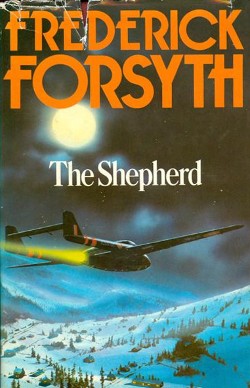
Forsyth - The Shepherd
For a brief
moment, while waiting for the control tower to clear me for takeoff, I glanced
out through the Perspex cockpit canopy at the surrounding German countryside.
It lay white and crisp beneath the crackling December moon.
Behind me
lay the boundary fence of the Royal Air Force base, and beyond the fence, as I
had seen while swinging my little fighter into line with the takeoff runway,
the sheet of snow covering the flat farmland stretched away to the line of the
pine trees, two miles distant in the night yet so clear I could almost see the
shapes of the trees themselves.
Ahead of
me, as I waited for the voice of the controller to come through the headphones,
was the runway itself, a slick black ribbon of tarmac, flanked by twin rows of
bright-burning lights, illuminating the solid path cut earlier by the
snowplows. Behind the lights were the humped banks of the morning’s snow,
frozen hard once again where the snowplow blades had pushed them. Far away to
my right, the airfield tower stood up like a single glowing candle amid the
brilliant hangars where the muffled aircraftmen were even now closing down the
station for the night.
Inside the
control tower, I knew, all was warmth and merriment, the staff waiting only for
my departure to close down also, jump into the waiting cars, and head back to
the parties in the mess. Within minutes of my going, the lights would die out,
leaving only the huddled hangars, seeming hunched against the bitter night, the
shrouded fighter planes, the sleeping fuel-bowser trucks, and, above them all,
the single flickering station light, brilliant red above the black-and-white
airfield, beating out in Morse code the name of the station— CELLE—to an
unheeding sky. For tonight there would be no wandering aviators to look down
and check their bearings; tonight was Christmas Eve, in the year of grace 1957,
and I was a young pilot trying to get home to Blighty for his Christmas leave.
I was in a
hurry and my watch read ten-fifteen by the dim blue glow of the control panel
where the rows of dials quivered and danced. It was warm and snug inside the
cockpit, the heating turned up full to prevent the Perspex’ icing up. It was
like a cocoon, small and warm and safe, shielding me from the bitter cold
outside, from the freezing night that can kill a man inside a minute if he is
exposed to it at six hundred miles an hour.
“Charlie
Delta...”
The
controller’s voice woke me from my reverie, sounding in my headphones as if he
were with me in the tiny cockpit, shouting in my ear. He’s had a jar or two
already, I thought. Strictly against orders, but what the hell? It’s Christmas
Eve.
“Charlie
Delta...Control,” I responded.
“Charlie
Delta, clear takeoff,” he said.
I saw no
point in responding. I simply eased the throttle forward slowly with the left
hand, holding the Vampire steady down the central line with the right hand.
Behind me the low whine of the Goblin engine rose and rose, passing through a
cry and into a scream. The snub-nosed fighter rolled, the lights each side of
the runway passed in ever quicker succession, till they were flashing in a
continuous blur. She became light, the nose rose fractionally, freeing the nosewheel
from contact with the runway, and the rumble vanished instantly. Seconds later
the main wheels came away and their soft drumming also stopped. I held her low
above the deck, letting the speed build up till a glance at the air-speed
indicator told me we were through 120 knots and heading for 150. As the end of
the runway whizzed beneath my feet I pulled the Vampire into a gently climbing
turn to the left, easing up the undercarriage lever as I did so.
From
beneath and behind me I heard the dull clunk of the wheels entering their bays
and felt the lunge forward of the jet as the drag of the undercarriage
vanished. In front of me the three red lights representing three wheels
extinguished themselves. I held her into the climbing turn, pressing the radio
button with the left thumb.
“Charlie
Delta, clear airfield, wheels up and locked,” I said into my oxygen mask.
“Charlie
Delta, roger, over to Channel D,” said the controller, and then, before I could
change radio channels, he added, “Happy Christmas.”
Strictly
against the rules of radio procedure, of course. I was very young then, and
very conscientious. But I replied, “Thank you, Tower, and same to you.” Then I
switched channels to tune into the RAF’s North Germany Air Control frequency.
Down on my
right thigh was strapped the map with my course charted on it in blue ink, but
I did not need it. I knew the details by heart, worked out earlier with the
navigation officer in the nav. hut. Turn overhead Celle airfield onto course
265 degrees, continue climbing to 27,000 feet. On reaching height, maintain
course and keep speed to 485 knots. Check in with Channel D to let them know
you’re in their airspace, then a straight run over the Dutch coast south of the
Bevelands into the North Sea. After forty-four minutes’ flying time, change to
Channel F and call Lakenheath Control to give you a “steer.” Fourteen minutes
later you’ll be overhead Lakenheath. After that, follow instructions and
they’ll bring you down on a radio-con- trolled descent. No problem, all routine
procedures. Sixty-six minutes’ flying time, with the descent and landing, and
the Vampire had enough fuel for over eighty minutes in the air.
Swinging
over Celle airfield at 5,000 feet, I straightened up and watched the needle on
my compass settle happily down on a course of 265 degrees. The nose was
pointing toward the black, freezing vault of the night sky, studded with stars
so brilliant they flickered their white fire against the eyeballs. Below, the
black-and-white map of north Germany was growing smaller, the dark masses of
the pine forests blending into the white expanses of the fields. Here and there
a village or small town glittered with lights. Down there amid the gaily lit
streets the carol singers would be out, knocking on the holly-studded doors to
sing “Silent Night’' and collect pfennigs for charity. The Westphalian housewives
would be preparing hams and geese.
Four
hundred miles ahead of me the story would be the same, the carols in my own
language but many of the tunes the same, and it would be turkey instead of
goose. But whether you call it Weihnacht or Christmas, it’s the same all over
the Christian world, and it was good to be going home.
From Lakenheath
I knew I could get a lift down to London in the liberty bus, leaving just after
midnight; from London I was confident I could hitch a lift to my parents’ home
in Kent. By breakfast time I’d be celebrating with my own family. The altimeter
read 27,000 feet. I eased the nose forward, reduced throttle setting to give me
an air speed of 485 knots and held her steady on 265 degrees. Somewhere beneath
me in the gloom the Dutch border would be slipping away, and I had been
airborne for twenty-one minutes. No problem.
The problem
started ten minutes out over the North Sea, and it started so quietly that it
was several minutes before I realized I had one at all.
For some
time I had been unaware that the low hum coming through my headphones into my
ears had ceased, to be replaced by the strange nothingness of total silence. I
must have been failing to concentrate, my thoughts being of home and my waiting
family. The first thing I knew was when I flicked a glance downward to check my
course on the compass. Instead of being rock-steady on 265 degrees, the needle
was drifting lazily round the clock, passing through east, west, south, and
north with total impartiality.
I swore a
most unseasonal sentiment against the compass and the instrument fitter who
should have
checked it
for 100-percent reliability. Compass failure at night, even a brilliant moonlit
night such as the one beyond the cockpit Perspex, was no fun. Still, it was not
too serious: there was a standby compass—the alcohol kind. But, when I glanced
at it, that one seemed to be in trouble, too. The needle was swinging wildly.
Apparently something had jarred the case—which isn’t uncommon. In any event, I
could call up Lakenheath in a few minutes and they would give me a GCA—Ground
Controlled Approach—the second-by-second instructions that a well-equipped
airfield can give a pilot to bring him home in the worst of weathers, following
his progress on ultraprecise radar screens, watching him descend all the way to
the tarmac, tracing his position in the sky yard by yard and second by second.
I glanced at my watch: thirty- four minutes airborne. I could try to raise
Lakenheath now, at the outside limit of my radio range.
Before
trying Lakenheath, the correct procedure would be to inform Channel D, to which
I was tuned, of my little problem, so they could advise Lakenheath that I was
on my way without a compass. I pressed the transmit button and called: “Celle,
Charlie Delta, Celle, Charlie Delta, calling North Beveland Control....”
I stopped.
There was no point in going on. Instead of the lively crackle of static and the
sharp sound of my own voice coming back into my own ears, there was a muffled
murmur inside my oxygen mask. My own voice speaking... and going nowhere. I
tried again. Same result. Far back across the wastes of the black and bitter
North Sea, in the warm, cheery concrete complex of North Beveland Control, men
sat back from their control panel, chatting and sipping their steaming coffee
and cocoa. And they could not hear me. The radio was dead.
Fighting
down the rising sense of panic that can kill a pilot faster than anything else,
I swallowed and slowly counted to ten. Then I switched to
Channel F
and tried to raise Lakenheath, ahead of me amid the Suffolk countryside, lying
in its forest of pine trees south of Thetford, beautifully equipped with its
GCA system for bringing home lost aircraft. On Channel F the radio was as dead
as ever. My own muttering into the oxygen mask was smothered by the surrounding
rubber. The steady whistle of my own jet engine behind me was my only answer.
It’s a very
lonely place, the sky, and even more so the sky on a winter’s night. And a
single-seater jet fighter is a lonely home, a tiny steel box held aloft on
stubby wings, hurled through the freezing
emptiness
by a blazing tube throwing out the strength of six thousand horses every
second. But the loneliness is offset, cancelled out, by the knowledge that at
the touch of a button on the throttle, the pilot can talk to other human
beings, people who care about him, men and women who staff a network of
stations around the world; just one touch of that button, the transmit button,
and scores of them in control towers across the land that are tuned to his
channel can hear him call for help. When the pilot transmits, on every one of
those screens a line of light streaks from the center of the screen to the
outside rim, which is marked with figures, from one to three hundred and sixty.
Where the streak of light hits the ring, that is where the aircraft lies in
relation to the control tower listening to him. The control towers are linked,
so with two cross bearings they can locate his position to within a few hundred
yards. He is not lost any more. People begin working to bring him down.
The radar
operators pick up the little dot he makes on their screens from all the other
dots; they call him up and give him instructions. “Begin your descent now,
Charlie Delta. We have you now...”
1. Přečtěte si celou ukázku, nechte na sebe působit autorův styl a rytmus řeči.
2. Zaměřte se na tučně vyznačený odstavec, identifikujte možné překladatelské problémy.
3. Přeložte část textu vyznačenou kurzívou a překlad vložte do komentáře k tomuto blogu.
1. Přečtěte si celou ukázku, nechte na sebe působit autorův styl a rytmus řeči.
2. Zaměřte se na tučně vyznačený odstavec, identifikujte možné překladatelské problémy.
3. Přeložte část textu vyznačenou kurzívou a překlad vložte do komentáře k tomuto blogu.
Přihlásit se k odběru:
Příspěvky (Atom)