Vážení studenti,
vzhledem k okolnostem budeme v semináři pokračovat pouze korespondenčně. Pro odlehčení atmosféry jsem vybrala jednu ze svých oblíbených detektivek - so typically British!
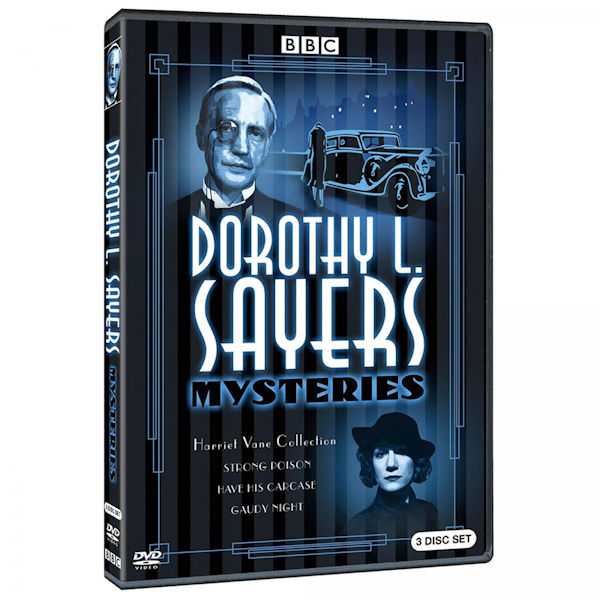
Dorothy Sayersová sice nebyla autorkou tak plodnou jako Agatha Christie, nicméně její detektivní příběhy jsou na srovnatelné profesionální úrovni. V otázkách vražedných metod a detektivních postupů se drží logiky věci s přesnou znalostí reálií - a její hlavní hrdina, Lord Petr Wimsey, si důsledností a specifikou svého mluveného projevu nikterak nezadá s Herculem Poirotem.
Kompletní text románu "Whose Body" máte k dispozici na capse. Zde pouze první dvě kapitoly :) Nespěchejte, čtěte, seznamte se nejprve s jednajícími postavami, a překládejte teprve tehdy, až vám ožijí před očima. Text k překladu je trochu delší (ve dvou částech, vyznačených tučně, jako obvykle), termín odevzdání první verze překladu do 14 dnů, tedy 31.3.
V případě nouze mi pište na mail.
A pokud vám nejde něco vložit do komentáře - zkuste nejprve jiný prohlížeč pro případ, že byste neviděli captcha - případně se příhlašte přes své google konto. Delsi texty musite vlozit nadvakrat :)
Good luck!
_____________________
Dorothy L. Sayers
Whose Body?
1
"Oh, damn!" said Lord Peter Wimsey at Piccadilly Circus. "Hi, driver!"
The taxi man, irritated at receiving this appeal while negotiating the intricacies of turning into Lower Regent Street across the route of a 19 'bus, a 38-B and a bicycle, bent an unwilling ear.
"I've left the catalogue behind," said Lord Peter deprecatingly.
"Uncommonly careless of me. D'you mind puttin' back to where we came from?"
"To the Savile Club, sir?"
"No-110 Piccadilly-just beyond-thank you."
"Thought you was in a hurry," said the man, overcome with a sense of injury.
"I'm afraid it's an awkward place to turn in," said Lord Peter, answering the thought rather than the words. His long, amiable face looked as if it had generated spontaneously from his top hat, as white maggots breed from Gorgonzola.
The taxi, under the severe eye of a policeman, revolved by slow jerks, with a noise like the grinding of teeth.
The block of new, perfect and expensive flats in which Lord Peter dwelt upon the second floor, stood directly opposite the Green Park, in a spot for many years occupied by the skeleton of a frustrated commercial enterprise. As Lord Peter let himself in he heard his man's voice in the library, uplifted in that throttled stridency peculiar to well-trained persons using the telephone.
"I believe that's his lordship just coming in again-if your Grace would kindly hold the line a moment."
"What is it, Bunter?"
"Her Grace has just called up from Denver, my lord. I was just saying your lordship had gone to the sale when I heard your lordship's latchkey."
"Thanks," said Lord Peter; "and you might find me my catalogue, would you? I think I must have left it in my bedroom, or on the desk."
He sat down to the telephone with an air of leisurely courtesy, as though it were an acquaintance dropped in for a chat.
"Hullo, Mother-that you?"
"Oh, there you are, dear," replied the voice of the Dowager Duchess. "I was afraid I'd just missed you."
"Well, you had, as a matter of fact. I'd just started off to Brocklebury's sale to pick up a book or two, but I had to come back for the catalogue. What's up?"
"Such a quaint thing," said the Duchess. "I thought I'd tell you. You know little Mr. Thipps?"
"Thipps?" said Lord Peter. "Thipps? Oh, yes, the little architect man who's doing the church roof. Yes. What about him?"
"Mrs. Throgmorton's just been in, in quite a state of mind."
"Sorry, Mother, I can't hear. Mrs. Who?"
"Throgmorton-Throgmorton-the vicar's wife."
"Oh, Throgmorton, yes?"
"Mr. Thipps rang them up this morning. It was his day to come down, you know."
"Yes?"
"He rang them up to say he couldn't. He was so upset, poor little man. He'd found a dead body in his bath."
"Sorry, Mother, I can't hear; found what, where?"
"A dead body, dear, in his bath."
"What?-no, no, we haven't finished. Please don't cut us off. Hullo! Hullo! Is that you, Mother? Hullo-Mother.-Oh, yes-sorry, the girl was trying to cut us off. What sort of body?"
"A dead man, dear, with nothing on but a pair of pince-nez. Mrs. Throgmorton positively blushed when she was telling me. I'm afraid people do get a little narrow-minded in country vicarages."
"Well, it sounds a bit unusual. Was it anybody he knew?"
"No, dear, I don't think so, but, of course, he couldn't give her many details. She said he sounded quite distracted. He's such a respectable little man-and having the police in the house and so on, really worried him."
"Poor little Thipps! Uncommonly awkward for him. Let's see, he lives in Battersea, doesn't he?"
"Yes, dear; 59, Queen Caroline Mansions; opposite the Park. That big block just round the corner from the Hospital. I thought perhaps you'd like to run around and see him and ask if there's anything we can do. I always thought him a nice little man."
"Oh, quite," said Lord Peter, grinning at the telephone. The Duchess was always of the greatest assistance to his hobby of criminal investigation, though she never alluded to it, and maintained a polite fiction of its non-existence.
"What time did it happen, Mother?"
"I think he found it early this morning, but, of course, he didn't think of telling the Throgmortons just at first. She came up to me just before lunch-so tiresome, I had to ask her to stay. Fortunately, I was alone. I don't mind being bored myself, but I hate having my guests bored."
"Poor old Mother! Well, thanks awfully for tellin' me. I think I'll send Bunter to the sale and toddle round to Battersea now an' try and console the poor little beast. So-long."
"Good-bye, dear."
"Bunter!"
"Yes, my lord."
"Her Grace tells me that a respectable Battersea architect has discovered a dead man in his bath."
"Indeed, my lord? That's very gratifying."
"Very, Bunter. Your choice of words is unerring. I wish Eton and Balliol had done as much for me. Have you found the catalogue?"
"Here it is, my lord."
"Thanks. I am going to Battersea at once. I want you to attend the sale for me. Don't lose time-I don't want to miss the Folio Dante* nor the de Voragine-here you are-see? 'Golden Legend'-Wynken de Worde, 1493-got that?-and, I say, make a special effort for the Caxton folio of the 'Four Sons of Aymon'-it's the 1489 folio and unique. Look! I've marked the lots I want, and put my outside offer against each. Go your best for me. I shall be back to dinner."
"Very good, my lord."
"Take my cab and tell him to hurry. He may for you; he doesn't like me very much. Can I," said Lord Peter, looking at himself in the eighteenth-century mirror over the mantelpiece, "can I have the heart to fluster the flustered Thipps further-that's very difficult to say quickly-by appearing in a top-hat and frock-coat? I think not. Ten to one he will overlook my trousers and mistake me for the undertaker. A grey suit, I fancy, neat but not gaudy, with a hat to tone, suits my other self better. Exit the amateur of first editions; new motive introduced by solo bassoon; enter Sherlock Holmes, disguised as a walking gentleman. There goes Bunter. Invaluable fellow-never offers to do his job when you've told him to do somethin' else. Hope he doesn't miss the 'Four Sons of Aymon.' Still, there is another copy of that-in the Vatican.** It might become available you never know-if the Church of Rome went to pot or Switzerland invaded Italy-whereas a strange corpse doesn't turn up in a suburban bathroom more than once in a lifetime-at least, I should think not-at any rate, the number of times it's happened, with a pince-nez, might be counted on the fingers of one hand, I imagine. Dear me! it's a dreadful mistake to ride two hobbies at once."
He had drifted across the passage into his bedroom, and was changing with a rapidity one might not have expected from a man of his mannerisms. He selected a dark-green tie to match his socks and tied it accurately without hesitation or the slightest compression of his lips, substituted a pair of brown shoes for his black ones, slipped a monocle into a breast pocket, and took up a beautiful Malacca walking-stick with a heavy silver knob.
"That's all, I think," he murmured to himself. "Stay-I may as well have you-you may come in useful-one never knows." He added a flat silver matchbox to his equipment, glanced at his watch, and seeing that it was already a quarter to three, ran briskly downstairs, and, hailing a taxi, was carried to Battersea Park.
Mr. Alfred Thipps was a small, nervous man, whose flaxen hair was beginning to abandon the unequal struggle with destiny. One might say that his only really marked feature was a large bruise over the left eyebrow, which gave him a faintly dissipated air incongruous with the rest of his appearance.
"I'm sure it's most kind of your lordship," he repeated for the dozenth time, rapidly blinking his weak little eyelids. "I appreciate it very deeply, very deeply, indeed, and so would Mother, only she's so deaf, I don't like to trouble you with making her understand. It's been very hard all day," he added, "with the policemen in the house and all this commotion. It's what Mother and me have never been used to, always living very retired, and it's most distressing to a man of regular habits, my lord, and reely, I'm almost thankful Mother doesn't understand, for I'm sure it would worry her terribly if she was to know about it. She was upset at first, but she's made up some idea of her own about it now, and I'm sure it's all for the best."
The old lady who sat knitting by the fire nodded grimly in response to a look from her son.
"I always said as you ought to complain about that bath, Alfred," she said suddenly, in the high, piping voice peculiar to the deaf, "and it's to be 'oped the landlord'll see about it now; not but what I think you might have managed without having the police in, but there! you always were one to make a fuss about a little thing, from chicken-pox up."
"There now," said Mr. Thipps apologetically, "you see how it is. Not but what it's just as well she's settled on that, because she understands we've locked up the bathroom and don't try to go in there. But it's been a terrible shock to me, sir-my lord, I should say, but there! my nerves are all to pieces. Such a thing has never 'appened-happened to me in all my born days. Such a state I was in this morning-I didn't know if I was on my head or my heels-I reely didn't, and my heart not being too strong, I hardly knew how to get out of that horrid room and telephone for the police. It's affected me, sir, it's affected me, it reely has-I couldn't touch a bit of breakfast, nor lunch neither, and what with telephoning and putting off clients and interviewing people all morning, I've hardly known what to do with myself."
"I'm sure it must have been uncommonly distressin'," said Lord Peter, sympathetically, "especially comin' like that before breakfast. Hate anything tiresome happenin' before breakfast. Takes a man at such a confounded disadvantage, what?"
"That's just it, that's just it," said Mr. Thipps, eagerly. "When I saw that dreadful thing lying there in my bath, mother-naked, too, except for a pair of eyeglasses, I assure you, my lord, it regularly turned my stomach, if you'll excuse the expression. I'm not very strong, sir, and I get that sinking feeling sometimes in the morning, and what with one thing and another I 'ad-had to send the girl for a stiff brandy, or I don't know what mightn't have happened. I felt so queer, though I'm anything but partial to spirits as a rule. Still, I make it a rule never to be without brandy in the house, in case of emergency, you know?"
"Very wise of you," said Lord Peter, cheerfully. "You're a very far-seein' man, Mr. Thipps. Wonderful what a little nip'll do in case of need, and the less you're used to it the more good it does you. Hope your girl is a sensible young woman, what? Nuisance to have women faintin' and shriekin' all over the place."
"Oh, Gladys is a good girl," said Mr. Thipps, "very reasonable indeed. She was shocked, of course; that's very understandable. I was shocked myself, and it wouldn't be proper in a young woman not to be shocked under the circumstances, but she is reely a helpful, energetic girl in a crisis, if you understand me. I consider myself very fortunate these days to have got a good, decent girl to do for me and Mother, even though she is a bit careless and forgetful about little things, but that's only natural. She was very sorry indeed about having left the bathroom window open, she reely was, and though I was angry at first, seeing what's come of it, it wasn't anything to speak of, not in the ordinary way, as you might say. Girls will forget things, you know, my lord, and reely she was so distressed I didn't like to say too much to her. All I said was: 'It might have been burglars,' I said, 'remember that, next time you leave a window open all night; this time it was a dead man,' I said, 'and that's unpleasant enough, but next time it might be burglars,' I said, 'and all of us murdered in our beds.' But the police-inspector-Inspector Sugg, they called him, from the Yard-he was very sharp with her, poor girl. Quite frightened her, and made her think he suspected her of something, though what good a body could be to her, poor girl, I can't imagine, and so I told the Inspector. He was quite rude to me, my lord-I may say I didn't like his manner at all. 'If you've got anything definite to accuse Gladys or me of. Inspector,' I said to him, 'bring it forward, that's what you have to do,' I said, 'but I've yet to learn that you're paid to be rude to a gentleman in his own 'ouse-house.' Reely," said Mr, Thipps, growing quite pink on the top of his head, "he regularly roused me, regularly roused me, my lord, and I'm a mild man as a rule."
"Sugg all over," said Lord Peter. "I know him. When he don't know what else to say, he's rude. Stands to reason you and the girl wouldn't go collectin' bodies. Who'd want to saddle himself with a body? Difficulty's usually to get rid of 'em. Have you got rid of this one yet, by the way?"
"It's still in the bathroom," said Mr. Thipps. "Inspector Sugg said nothing was to be touched till his men came in to move it. I'm expecting them at any time. If it would interest your lordship to have a look at it-"
"Thanks awfully," said Lord Peter. "I'd like to very much, if I'm not puttin' you out."
"Not at all," said Mr. Thipps. His manner as he led the way along the passage convinced Lord Peter of two things-first, that, gruesome as his exhibit was, he rejoiced in the importance it reflected upon himself and his flat, and secondly, that Inspector Sugg had forbidden him to exhibit it to anyone. The latter supposition was confirmed by the action of Mr. Thipps, who stopped to fetch the door-key from his bedroom, saying that the police had the other, but that he made it a rule to have two keys to every door, in case of accident.
The bathroom was in no way remarkable. It was long and narrow, the window being exactly over the head of the bath. The panes were of frosted glass; the frame wide enough to admit a man's body. Lord Peter stepped rapidly across to it, opened it and looked out.
The flat was the top one of the building and situated about the middle of the block. The bathroom window looked out upon the backyards of the flats, which were occupied by various small outbuildings, coal-holes, garages, and the like. Beyond these were the back gardens of a parallel line of houses. On the right rose the extensive edifice of St. Luke's Hospital, Battersea, with its grounds, and, connected with it by a covered way, the residence of the famous surgeon, Sir Julian Freke, who directed the surgical side of the great new hospital, and was, in addition, known in Harley Street as a distinguished neurologist with a highly individual point of view.
This information was poured into Lord Peter's ear at considerable length by Mr. Thipps, who seemed to feel that the neighbourhood of anybody so distinguished shed a kind of halo of glory over Queen Caroline Mansions.
"We had him round here himself this morning," he said, "about this horrid business. Inspector Sugg thought one of the young medical gentlemen at the hospital might have brought the corpse round for a joke, as you might say, they always having bodies in the dissecting-room. So Inspector Sugg went round to see Sir Julian this morning to ask if there was a body missing. He was very kind, was Sir Julian, very kind indeed, though he was at work when they got there, in the dissecting-room. He looked up the books to see that all the bodies were accounted for, and then very obligingly came round here to look at this"-he indicated the bath-"and said he was afraid he couldn't help us-there was no corpse missing from the hospital, and this one didn't answer to the description of any they'd had."
"Nor to the description of any of the patients, I hope," suggested Lord Peter casually.
At this grisly hint Mr. Thipps turned pale.
"I didn't hear Inspector Sugg inquire," he said, with some agitation. "What a very horrid thing that would be-God bless my soul, my lord, I never thought of it."
"Well, if they have missed a patient they'd probably have discovered it by now," said Lord Peter. "Let's have a look at this one."
He screwed his monocle into his eye, adding: "I see you're troubled here with the soot blowing in. Beastly nuisance, ain't it? I get it too-spoils all my books, you know. Here, don't you trouble, if you don't care about lookin' at it."
He took from Mr. Thipps's hesitating hand the sheet which had been flung over the bath and pulled it back.
The body which lay in the bath was that of a tall, stout man of about fifty.
The hair, which was thick and black and naturally curly, had been cut and parted by a master hand, and exuded a faint violet perfume, perfectly recognisable in the close air of the bathroom. The features were thick, fleshy and strongly marked, with prominent dark eyes, and a long nose curving down to a heavy chin. The clean-shaven lips were full and sensual, and the dropped jaw showed teeth stained with tobacco. On the dead face the handsome pair of gold pince-nez mocked death with grotesque elegance; the fine gold chain carved over the naked breast. The legs lay stiffly stretched out side by side; the arms reposed close to the body; the fingers were flexed naturally.
Lord Peter lifted one arm, and looked at the hand with a little frown.
"Bit of a dandy, your visitor, what?" he murmured. "Parma violet and manicure." He bent again, slipping his hand beneath the head. The absurd eye-glasses slipped off, clattering into the bath, and the noise put the last touch to Mr. Thipps's growing nervousness.
"If you'll excuse me," he murmured, "it makes me feel quite faint, it reely does."
He slipped outside, and he had no sooner done so than Lord Peter, lifting up the body quickly and cautiously, turned it over and inspected it with his head [garbled] on one side, bringing his monocle into play with the air of the late Joseph H. Chamberlain approving a rare orchid. He then laid the head over his arm, and bringing out the silver matchbox from his pocket, slipped it into the open mouth. Then making the noise usually written "Tut-tut," he laid the body down, picked up the mysterious pince-nez, looked at it, put it on his nose and looked through it, made the same noise again, readjusted the pince-nez upon the nose of the corpse, so as to leave no traces of interference for the irritation of Inspector Sugg, rearranged the body, returned to the window and, leaning out, reached upwards and sideways with his walking-stick, which he had somewhat incongruously brought along with him. Nothing appearing to come of these investigations, he withdrew his head, closed the window, and rejoined Mr. Thipps in the passage.
Mr. Thipps, touched by this sympathetic interest in the younger son of a duke, took the liberty, on their return to the sitting-room, of offering him a cup of tea. Lord Peter, who had strolled over to the window and was admiring the outlook on Battersea Park, was about to accept, when an ambulance came into view at the end of Prince of Wales Road. Its appearance reminded Lord Peter of an important engagement, and with a hurried "By Jove" he took his leave of Mr. Thipps.
"My mother sent kind regards and all that," he said, shaking hands fervently; "hopes you'll soon be down at Denver again. Good-bye, Mrs. Thipps," he bawled kindly into the ear of the old lady. "Oh, no, my dear sir, please don't trouble to come down."
He was none too soon. As he stepped out of the door and turned towards the station, the ambulance drew up from the other direction, and Inspector Sugg emerged from it with two constables. The Inspector spoke to the officer on duty at the Mansions, and turned a suspicious gaze on Lord Peter's retreating back.
"Dear old Sugg," said that nobleman, fondly, "dear, dear old bird! How he does hate me, to be sure."
2
"Excellent, Bunter," said Lord Peter, sinking with a sigh into a luxurious armchair. "I couldn't have done better myself. The thought of the Dante makes my mouth water-and the 'Four Sons of Aymon.' And you've saved me 60-that's glorious. What shall we spend it on, Bunter? Think of it-all ours, to do as we like with, for as Harold Skimpole so rightly observes, 60 saved is 60 gained, and I'd reckoned on spending it all. It's your saving, Bunter, and properly speaking, your 60. What do we want? Anything in your department? Would you like anything altered in the flat?"
"Well, my lord, as your lordship is so good"-the man-servant paused, about to pour an old brandy into a liqueur glass.
"Well, out with it, my Bunter, you imperturbable old hypocrite. It's no good talking as if you were announcing dinner-you're spilling the brandy. The voice is Jacob's voice, but the hands are the hands of Esau. What does that blessed darkroom of yours want now?"
"There's a Double Anastigmat with a set of supplementary lenses, my lord," said Bunter, with a note almost of religious fervour. "If it was a case of forgery now-or footprints-I could enlarge them right up on the plate. Or the side-angled lens would be useful. It's as though the camera had eyes at the back of its head, my lord. Look-I've got it here."
He pulled a catalogue from his pocket, and submitted it, quivering, to his employer's gaze.
Lord Peter perused the description slowly, the corners of his long mouth lifted into a faint smile.
"It's Greek to me," he said, "and 50 seems a ridiculous price for a few bits of glass. I suppose, Bunter, you'd say 750 was a bit out of the way for a dirty old book in a dead language, wouldn't you?"
"It wouldn't be my place to say so, my lord."
"No, Bunter, I pay you 200 a year to keep your thoughts to yourself. Tell me, Bunter, in these democratic days, don't you think that's unfair?"
"No, my lord."
"You don't. D'you mind telling me frankly why you don't think it unfair?"
"Frankly, my lord, your lordship is paid a nobleman's income to take Lady Worthington in to dinner and refrain from exercising your lordship's undoubted powers of repartee."
Lord Peter considered this.
"That's your idea is it, Bunter? Noblesse oblige-for a consideration. I daresay you're right. Then you're better off than I am, because I'd have to behave myself to Lady Worthington if I hadn't a penny. Bunter, if I sacked you here and now, would you tell me what you think of me?"
"No, my lord."
"You'd have a perfect right to, my Bunter, and if I sacked you on top of drinking the kind of coffee you make, I'd deserve everything you could say of me. You're a demon for coffee, Bunter-I don't want to know how you do it, because I believe it to be witchcraft, and I don't want to burn eternally. You can buy your cross-eyed lens."
"Thank you, my lord."
"Have you finished in the dining-room?"
"Not quite, my lord."
"Well, come back when you have. I have many things to tell you. Hullo! who's that?"
The doorbell had rung sharply.
"Unless it's anybody interestin' I'm not at home."
"Very good, my lord."
Lord Peter's library was one of the most delightful bachelor rooms in London. Its scheme was black and primrose. Its walls were lined with rare editions, and its chairs and Chesterfield sofa suggested the embraces of the houris. In one corner stood a black baby grand, a wood fire leaped on a wide old-fashioned hearth, and the Sevres vases on the chimneypiece were filled with ruddy and gold chrysanthemums. To the eyes of the young man who was ushered in from the raw November fog it seemed not only rare and unattainable, but friendly and familiar, like a colourful and gilded paradise in a mediaeval painting.
"Mr. Parker, my lord."
Lord Peter jumped up with genuine eagerness.
"My dear man, I'm delighted to see you. What a beastly foggy night, ain't it? Bunter, some more of that admirable coffee and another glass and the cigars. Parker, I hope you're full of crime-nothing less than arson or murder will do for us tonight. 'On such a night as this-' Bunter and I were just sitting down to carouse. I've got a Dante, and a Caxton folio that is practically unique, at Sir Ralph Brocklebury's sale. Bunter, who did the bargaining, is going to have a lens which does all kinds of wonderful things with its eyes shut, and
We both have got a body in a bath,
We both have got a body in a bath-
For in spite of all temptations,
To go in for cheap sensations
We insist upon a body in a bath-
Nothing less will do for us, Parker. It's mine at present, but we're going shares in it. Property of the firm. Won't you join us? You really must put something in the jack-pot. Perhaps you have a body.
Oh, do have a body.
Every body welcome.
Gin a body meet a body
Hauled before the beak,
Gin a body jolly well knows who murdered a body and that old Sugg is on the wrong track,
Need a body speak?
Not a bit of it. He tips a glassy wink to yours truly and yours truly reads the truth."
"Ah," said Parker, "I knew you'd been round to Queen Caroline Mansions. So've I, and met Sugg, and he told me he'd seen you. He was cross, too. Unwarrantable interference, he calls it."
"I knew he would," said Lord Peter. "I love taking a rise out of dear old Sugg, he's always so rude. I see by the Star that he has excelled himself by taking the girl, Gladys What's-her-name, into custody. Sugg of the evening, beautiful Sugg! But what were you doing there?"
"To tell you the truth," said Parker, "I went round to see if the Semitic-looking stranger in Mr. Thipps's bath was by any extraordinary chance Sir Reuben Levy. But he isn't."
"Sir Reuben Levy? Wait a minute, I saw something about that, I know! A headline: 'Mysterious disappearance of famous financier.' What's it all about? I didn't read it carefully."
"Well, it's a bit odd, though I daresay it's nothing really-old chap may have cleared for some reason best known to himself. It only happened this morning, and nobody would have thought anything about it, only it happened to be the day on which he had arranged to attend a most important financial meeting and do some deal involving millions-I haven't got all the details. But I know he's got enemies who'd just as soon the deal didn't come off, so when I got wind of this fellow in the bath, I buzzed round to have a look at him. It didn't seem likely, of course, but unlikelier things do happen in our profession. The funny thing is, old Sugg had got bitten with the idea it is him, and is wildly telegraphing to Lady Levy to come and identify him. But as a matter of fact, the man in the bath is no more Sir Reuben Levy than Adolf Beck, poor devil, was John Smith. Oddly enough, though, he would be really extraordinarily like Sir Reuben if he had a beard, and as Lady Levy is abroad with the family, somebody may say it's him, and Sugg will build up a lovely theory, like the Tower of Babel, and destined so to perish."
"Sugg's a beautiful, braying ass," said Lord Peter. "He's like a detective in, a novel. Well, I don't know anything about Levy, but I've seen the body, and I should say the idea was preposterous upon the face of it. What do you think of the brandy?"
"Unbelievable, Wimsey-sort of thing makes one believe in heaven. But I want your yarn."
"D'you mind if Bunter hears it, too? Invaluable man, Bunter-amazin' fellow with a camera. And the odd thing is, he's always on the spot when I want my bath or my boots. I don't know when he develops things-I believe he does 'em in his sleep. Bunter!"
"Yes, my lord."
"Stop fiddling about in there, and get yourself the proper things to drink and join the merry throng."
"Certainly, my lord."
"Mr. Parker has a new trick: The Vanishing Financier. Absolutely no deception. Hey, presto, pass! and where is he? Will some gentleman from the audience kindly step upon the platform and inspect the cabinet? Thank you, sir. The quickness of the 'and deceives the heye."
"I'm afraid mine isn't much of a story," said Parker. "It's just one of those simple things that offer no handle. Sir Reuben Levy dined last night with three friends at the Ritz. After dinner the friends went to the theatre. He refused to go with them on account of an appointment. I haven't yet been able to trace the appointment, but anyhow, he returned home to his house-9a, Park Lane-at twelve o'clock."
"Who saw him?"
"The cook, who had just gone up to bed, saw him on the doorstep, and heard him let himself in. He walked upstairs, leaving his greatcoat on the hall peg and his umbrella in the stand-you remember how it rained last night. He undressed and went to bed. Next morning he wasn't there. That's all," said Parker abruptly, with a wave of the hand.
"It isn't all, it isn't all. Daddy, go on, that's not half a story," pleaded Lord Peter.
"But it is all. When his man came to call him he wasn't there. The bed had been slept in. His pyjamas and all his clothes were there, the only odd thing being that they were thrown rather untidily on the ottoman at the foot of the bed, instead of being neatly folded on a chair, as is Sir Reuben's custom-looking as though he had been rather agitated or unwell. No clean clothes were missing, no suit, no boots-nothing. The boots he had worn were in his dressing-room as usual. He had washed and cleaned his teeth and done all the usual things. The housemaid was down cleaning the hall at half-past six, and can swear that nobody came in or out after that. So one is forced to suppose that a respectable middle-aged Hebrew financier either went mad between twelve and six A.M. and walked quietly out of the house in his birthday suit on a November night, or else was spirited away like the lady in the 'Ingoldsby Legends,' body and bones, leaving only a heap of crumpled clothes behind him."
"Was the front door bolted?"
"That's the sort of question you would ask, straight off; it took me an hour to think of it. No; contrary to custom, there was only the Yale lock on the door. On the other hand, some of the maids had been given leave to go to the theatre, and Sir Reuben may quite conceivably have left the door open under the impression they had not come in. Such a thing has happened before."
"And that's really all?"
"Really all. Except for one very trifling circumstance."
"I love trifling circumstances, said Lord Peter, with childish delight; "so many men have been hanged by trifling circumstances. What was it?"
"Sir Reuben and Lady Levy, who are a most devoted couple, always share the same room. Lady Levy, as I said before, is in Mentonne at the moment for her health. In her absence, Sir Reuben sleeps in the double bed as usual, and invariably on his own side-the outside-of the bed. Last night he put the two pillows together and slept in the middle, or, if anything, rather closer to the wall than otherwise. The housemaid, who is a most intelligent girl, noticed this when she went up to make the bed, and, with really admirable detective instinct, refused to touch the bed or let anybody else touch it, though it wasn't till later that they actually sent for the police."
"Was anybody in the house but Sir Reuben and the servants?"
"No; Lady Levy was away with her daughter and her maid. The valet, cook, parlourmaid, housemaid and kitchenmaid were the only people in the house, and naturally wasted an hour or two squawking and gossiping. I got there about ten."
"What have you been doing since?"
"Trying to get on the track of Sir Reuben's appointment last night, since, with the exception of the cook, his 'appointed was the last person who saw him before his disappearance. There may be some quite simple explanation, though I'm dashed if I can think of one for the moment. Hang it all, a man doesn't come in and go to bed and walk away again 'mid nodings on' in the middle of the night."
"He may have been disguised."
"I thought of that-in fact, it seems the only possible explanation. But it's deuced odd, Wimsey. An important City man, on the eve of an important transaction, without a word of warning to anybody, slips off in the middle of the night, disguised down to his skin, leaving behind his watch, purse, chequebook, and-most mysterious and important of all-his spectacles, without which he can't see a step, as he is extremely short-sighted. He-"
"That is important," interrupted Wimsey. "You are sure he didn't take a second pair?"
"His man vouches for it that he had only two pairs, one of which was found on his dressing-table, and the other in the drawer where it is always kept."
Lord Peter whistled.
"You've got me there, Parker. Even if he'd gone out to commit suicide he'd have taken those."
"So you'd think-or the suicide would have happened the first time he started to cross the road. However, I didn't overlook the possibility. I've got particulars of all today's street accidents, and I can lay my hand on my heart and say that none of them is Sir Reuben. Besides, he took his latchkey with him, which looks as though he'd meant to come back."
"Have you seen the men he dined with?"
"I found two of them at the club. They said that he seemed in the best of health and spirits, spoke of looking forward to joining Lady Levy later on-perhaps at Christmas-and referred with great satisfaction to this morning's business transaction, in which one of them-a man called Anderson of Wyndham's-was himself concerned."
"Then up till about nine o'clock, anyhow, he had no apparent intention or expectation of disappearing."
"None-unless he was a most consummate actor. Whatever happened to change his mind must have happened either at the mysterious appointment which he kept after dinner, or while he was in bed between midnight and 5.30 A.M."
"Well, Bunter," said Lord Peter, "what do you make of it?"
"Not in my department, my lord. Except that it is odd that a gentleman who was too flurried or unwell to fold his clothes as usual should remember to clean his teeth and put his boots out. Those are two things that quite frequently get overlooked, my lord."
"If you mean anything personal, Bunter," said Lord Peter, "I can only say that I think the speech an unworthy one. It's a sweet little problem, Parker mine. Look here, I don't want to butt in, but I should dearly love to see that bedroom tomorrow. 'Tis not that I mistrust thee, dear, but I should uncommonly like to see it. Say me not nay-take another drop of brandy and a Villar Villar, but say not, say not nay!"
"Of course you can come and see it-you'll probably find lots of things I've overlooked," said the other, equably, accepting the proffered hospitality.
"Parker, acushia, you're an honour to Scotland Yard. I look at you, and Sugg appears a myth, a fable, an idiot-boy, spawned in a moonlight hour by some fantastic poet's brain. Sugg is too perfect to be possible. What does he make of the body, by the way?"
"Sugg says," replied Parker, with precision, "that the body died from a blow on the back of the neck. The doctor told him that. He says it's been dead a day or two. The doctor told him that, too. He says it's the body of a well-to-do Hebrew of about fifty. Anybody could have told him that. He says it's ridiculous to suppose it came in through the window without anybody knowing anything about it. He says it probably walked in through the front door and was murdered by the household. He's arrested the girl because she's short and frail-looking and quite unequal to downing a tall and sturdy Semite with a poker. He'd arrest Thipps, only Thipps was away in Manchester all yesterday and the day before and didn't come back till late last night-in fact, he wanted to arrest him till I reminded him that if the body had been a day or two dead, little Thipps couldn't have done him in at 10.30 last night. But he'll arrest him tomorrow as an accessory-and the old lady with the knitting, too, I shouldn't wonder."
"Well, I'm glad the little man has so much of an alibi," said Lord Peter, "though if you're only gluing your faith to cadaveric lividity, rigidity, and all the other quiddities, you must be prepared to have some sceptical beast of a counsel walk slap-bang through the medical evidence. Impey Biggs defending in that Chelsea tea-shop affair? Six bloomin' medicos contradictin' each other in the box, an' old Impey elocutin' abnormal cases from Glaister and Dixon Mann till the eyes of the jury reeled in their heads! 'Are you prepared to swear. Dr. Thingumtight, that the onset of rigor mortis indicates the hour of death without the possibility of error?' 'So far as my experience goes, in the majority of cases,' says the doctor, all stiff. 'Ah!' says Biggs, but this is a Court of Justice, Doctor, not a Parliamentary election. We can't get on without a minority report. The law, Dr. Thingumtight, respects the rights of the minority, alive or dead.' Some ass laughs, and old Biggs sticks his chest out and gets impressive. 'Gentlemen, this is no laughing matter. My client-an upright and honourable gentleman-is being tried for his life-for his life, gentlemen-and it is the business of the prosecution to show his guilt-if they can-without a shadow of doubt. Now, Dr. Thingumtight, I ask you again, can you solemnly swear, without the least shadow of doubt,-probable, possible shadow of doubt-that this unhappy woman met her death neither sooner nor later than Thursday evening? A probable opinion? Gentlemen, we are not Jesuits, we are straightforward Englishmen. You cannot ask a British-born jury to convict any man on the authority of a probable opinion.' Hum of applause."
"Biggs's man was guilty all the same," said Parker.
"Of course he was. But he was acquitted all the same, an' what you've just said is libel." Wimsey walked over to the bookshelf and took down a volume of Medical Jurisprudence. "'Rigor mortis-can only be stated in a very general way-many factors determine the result.' Cautious brute. 'On the average, however, stiffening will have begun-neck and jaw-5 to 6 hours after death'-m'm-'in all likelihood have passed off in the bulk of cases by the end of 36 hours. Under certain circumstances, however, it may appear unusually early, or be retarded unusually long!' Helpful ain't it, Parker? 'Brown-Sequard states . . . 30 minutes after death. . . . In certain cases not until lapse of 16 hours after death . . . present as long as 21 days thereafter.' Lord! 'Modifying factors-age-muscular state-or febrile diseases-or where temperature of environment is high'-and so on and so on-any bloomin' thing. Never mind. You can run the argument for what it's worth to Sugg. He won't know any better." He tossed the book away. "Come back to facts. What did you make of the body?"
"Well," said the detective, "not very much-I was puzzled-frankly. I should say he had been a rich man, but self-made, and that his good fortune had come to him fairly recently."
"Ah, you noticed the calluses on the hands-I thought you wouldn't miss that."
"Both his feet were badly blistered-he had been wearing tight shoes."
"Walking a long way in them, too," said Lord Peter, "to get such blisters as that. Didn't that strike you as odd, in a person evidently well off?"
"Well, I don't know. The blisters were two or three days old. He might have got stuck in the suburbs one night, perhaps-last train gone and no taxi-and had to walk home."
"Possibly."
"There were some little red marks all over his back and one leg I couldn't quite account for."
"I saw them."
"What did you make of them?"
"I'll tell you afterwards. Go on."
"He was very long-sighted-oddly long-sighted for a man in the prime of life; the glasses were like a very old man's. By the way, they had a very beautiful and remarkable chain of flat links chased with a pattern. It struck me he might be traced through it."
"I've just put an advertisement in the Times about it," said Lord Peter. "Go on."
"He had had the glasses some time-they had been mended twice."
"Beautiful, Parker, beautiful. Did you realise the importance of that?"
"Not specially, I'm afraid-why?"
"Never mind-go on."
"He was probably a sullen, ill-tempered man-his nails were filed down to the quick as though he habitually bit them, and his fingers were bitten as well. He smoked quantities of cigarettes without a holder. He was particular about his personal appearance."
"Did you examine the room at all? I didn't get a chance."
"I couldn't find much in the way of footprints. Sugg & Co. had tramped all over the place, to say nothing of little Thipps and the maid, but I noticed a very indefinite patch just behind the head of the bath, as though something damp might have stood there. You could hardly call it a print."
"It rained hard all last night, of course."
"Yes; did you notice that the soot on the windowsill was vaguely marked?"
"I did," said Wimsey, "and I examined it hard with this little fellow, but I could make nothing of it except that something or other had rested on the sill." He drew out his monocle and handed it to Parker.
"My word, that's a powerful lens."
"It is," said Wimsey, "and jolly useful when you want to take a good squint at somethin' and look like a bally fool all the time. Only it don't do to wear it permanently-if people see you full-face they say: 'Dear me! how weak the sight of that eye must be!' Still, it's useful."
"Sugg and I explored the ground at the back of the building," went on Parker, "but there wasn't a trace."
"That's interestin'. Did you try the roof?"
"No."
"We'll go over it tomorrow. The gutter's only a couple of feet off the top of the window. I measured it with my stick-the gentleman-scout's vademecum, I call it-it's marked off in inches. Uncommonly handy companion at times. There's a sword inside and a compass in the head. Got it made specially. Anything more?"
"Afraid not. Let's hear your version, Wimsey."
"Well, I think you've got most of the points. There are just one or two little contradictions. For instance, here's a man wears expensive gold-rimmed pince-nez and has had them long enough to be mended twice. Yet his teeth are not merely discoloured, but badly decayed and look as if he'd never cleaned them in his life. There are four molars missing on one side and three on the other and one front tooth broken right across. He's a man careful of his personal appearance, as witness his hair and his hands. What do you say to that?"
"Oh, these self-made men of low origin don't think much about teeth, and are terrified of dentists."
"True; but one of the molars has a broken edge so rough that it had made a sore place on the tongue. Nothing's more painful. D'you mean to tell me a man would put up with that if he could afford to get the tooth filed?"
"Well, people are queer. I've known servants endure agonies rather than step over a dentist's doormat. How did you see that, Wimsey?"
"Had a look inside; electric torch," said Lord Peter. "Handy little gadget. Looks like a matchbox. Well-I daresay it's all right, but I just draw your attention to it. Second point: Gentleman with hair smellin' of Parma violet and manicured hands and all the rest of it, never washes the inside of his ears. Full of wax. Nasty."
"You've got me there, Wimsey; I never noticed it. Still-old bad habits die hard."
"Right oh! Put it down at that. Third point: Gentleman with the manicure and the brilliantine and all the rest of it suffers from fleas."
"By Jove, you're right! Flea-bites. It never occurred to me."
"No doubt about it, old son. The marks were faint and old, but unmistakable."
"Of course, now you mention it. Still, that might happen to anybody. I loosed a whopper in the best hotel in Lincoln the week before last. I hope it bit the next occupier!"
"Oh, all these things might happen to anybody-separately. Fourth point: Gentleman who used Parma violet for his hair, etc., etc., washes his body in strong carbolic soap-so strong that the smell hangs about twenty-four hours later."
"Carbolic to get rid of the fleas."
"I will say for you, Parker, you've an answer for everything. Fifth point: Carefully got-up gentleman, with manicured, though masticated, fingernails, has filthy black toenails which look as if they hadn't been cut for years."
"All of a piece with habits as indicated."
"Yes, I know, but such habits! Now, sixth and last point: This gentleman with the intermittently gentlemanly habits arrives in the middle of a pouring wet night, and apparently through the window, when he has already been twenty-four hours dead and lies down quietly in Mr. Thipps's bath, unseasonably dressed in a pair of pince-nez. Not a hair on his head is ruffled-the hair has been cut so recently that there are quite a number of little short hairs stuck on his neck and the sides of the bath-and he has shaved so recently that there is a line of dried soap on his cheek-"
"Wimsey!"
"Wait a minute-and dried soap in his mouth."
Bunter got up and appeared suddenly at the detective's elbow, the respectful man-servant all over.
"A little more brandy, sir?" he murmured.
"Wimsey," said Parker, "you are making me feel cold all over." He emptied his glass-stared at it as though he were surprised to find it empty, set it down, got up, walked across to the bookcase, turned round, stood with his back against it and said: "Look here, Wimsey-you've been reading detective stories; you're talking nonsense."
"No, I ain't," said Lord Peter, sleepily, "uncommon good incident for a detective story, though, what? Bunter, we'll write one, and you shall illustrate it with photographs."
"Soap in his- Rubbish!" said Parker. "It was something else-some discolouration-"
"No," said Lord Peter, "there were hairs as well. Bristly ones. He had a beard."
He took his watch from his pocket, and drew out a couple of longish, stiff hairs, which he had imprisoned between the inner and the outer case.
Parker turned them over once or twice in his fingers, looked at them close to the light, examined them with a lens, handed them to the impassible Bunter, and said: "Do you mean to tell me, Wimsey, that any man alive would"-he laughed harshly-"shave off his beard with his mouth open, and then go and get killed with his mouth full of hairs? You're mad."
"I don't tell you so," said Wimsey. "You policemen are all alike-only one idea in your skulls. Blest if I can make out why you're ever appointed. He was shaved after he was dead. Pretty, ain't it? Uncommonly jolly little job for the barber, what? Here, sit down, man, and don't be an ass, stumpin' about the room like that. Worse things happen in war. This is only a blinkin' old shillin' shocker. But I'll tell you what, Parker, we're up against a criminal-the criminal-the real artist and blighter with imagination-real, artistic, finished stuff. I'm enjoyin' this, Parker."