Poválečná populární hudba, to bylo v padesátých a šedesátých letech především zázračné "rádio laxemberg," z něhož později čerpaly stále četnější české adaptace americké hudby. Ovšem poklesle kapitalistický anglický text byl v pokrokovém socialistickém státě nepřijatelný a nepřípustný! Od šedesátých let 20. století se tak intenzivně rozvíjela česká překladová textařina, a často bojovala s nesmyslnou cenzurou (v textu se například nesmělo objevit slovo bible - tak vznikla záhadná řádka z textu skupiny Spirituál kvintet "Ten starý příběh z knížky vám tu vykládám").
V současnosti má většina světových písní pop music anglické texty, bez ohledu na národnost autorů a interpretů. Ani ty, které posloucháme česky, nemusejí pocházet z domácí produkce - často čeští interpreti převezmou světový hit a dodají mu český text. Byznys je byznys!
1. Znáte nějaké české verze původně anglických písní? Uveďte příklady v komentáři k blogu!
2. A jak se přeložené dílko proměňuje? Porovnejte:
Red river
Červená řeka
Three Ravens - A. Scholl
Three Ravens - Djazia
Three Ravens - vocal
Válka růží
Všimněte si, jak se proměnilo i hudební provedení.
Další inspirace z oblasti téměř zlidovělé české popové klasiky zde - Ivo Fišer
http://www.casopisfolk.cz/Textari/textari-fischer_ivo0610.htm
3. Naším úkolem bude OTEXTOVAT píseň s původně anglickým textem. Nejsme nijak vázáni obsahem originálu, rozhoduje jedině forma, zpívatelnost - slovní a hudební přízvuky se musí překrývat.
Vyberte si buď jednu z níže uvedených tří skladeb, nebo si zvolte jinou dle vlastní preference - v tom případě ale musíte k přeloženému textu do komentáře k blogu uvést i odkaz na originální audiozáznam, nejlépe na youtube.
Yankee Doodle - jednoduchá lidovka, která dodržuje pravidelnou rytmickou figuraci
Sound of Silence - textově komplikovanější, ale také volnější, poskytuje textaři více prostoru
Yellow Submarine - známý tahák, pevná rytmická struktura, umožňuje parodický přístup
4. Že nepoznáte přízvuk ani v textu, natož v hudbě?
Zkuste si polohlasně zarecitovat a označit přízvučné slabiky:
Je to chůze po tom světě -
kam se noha šine:
sotva přejdeš jedny hory,
hned se najdou jiné.
Je to život na tom světě -
že by člověk utek:
ještě nezažil jsi jeden,
máš tu druhý smutek.
A teď si poslechněte zhudebněnou verzi - přízvuky jsou v ní patrné daleko lépe:
Pocestný
Délky slabik také hrají svou roli:
. . - - . . - -
. . - - . .
. . - - . . - -
. . - - . .
10. listopadu 2014
3. listopadu 2014
W. Shakespeare et al.: Časovost a nadčasovost
Co má William Shakespeare společného s Janem Werichem?
Dumejte, proč se tihle dva sešli v programu dnešní hodiny.
Některé myšlenky jsou nesmrtelné, některé pocity zažívají celé generace lidí a stále cítí potřebu je vyjádřit v umělecké podobě. Ovšem ta podoba se proměňuje a přetváří pod tlakem času a místa.
1. Stáhněte si z capsy soubor Shakespeare_sonet66_13prekladu.docx.
Pomalu a v klidu si přečtěte všechny překlady. Vyberte ten, který se vám nejvíc líbí.
Teprve až zvolíte, začněte přemýšlet, Co se vám na něm líbí, čím vás přitahuje?
Napište svůj názor do komentáře k tomuto blogu.
2. Znáte americký muzikál Finian's Rainbow?
Do Čech ho přivezli těsně po válce Voskovec a Werich a inscenovali v české verzi pod názvem Divotvorný hrnec. Zapůjčit si z USA notový materiál nebylo finančně únosné - přivezli proto jen nahrávky, z nichž skladatel Zdeněk Petr pořídil aranže pro orchestr Osvobozeného divadla. A jejich české texty - to zdaleka není jen překlad! Už v synopsi na Wikipedii najdete řadu rozdílů.
V+W ještě stačili natočit rozhlasovou nahrávku veleúspěšné inscenace s hvězdným obsazením. Pak přišel únor 1948 a s ním konec Osvobozeného divadla, konec kariéry mnoha jeho herců a na 40 let i konec amerických muzikálů na české scéně.
Že o tom nic nevíte? Ale když si poslechnete některé písně z tohoto muzikálu, určitě vám povědomé budou.
WIKI:
http://cs.wikipedia.org/wiki/Divotvorn%C3%BD_hrnec
http://en.wikipedia.org/wiki/Finian's_Rainbow
A co teprve když přijde ke slovu Čochtan, vodník ze Zlaté stoky, okres Třeboň!
Ogg - Finian's Rainbow 4:22
Čochtan - Divotvorný hrnec
3. Poslechněte si obě verze jedné písně z muzikálu Divotvorný hrnec. Vyberte si jedno čtyřverší z originálu a pokuste se ho přeložit - tak, aby se dalo použít v nové inscenaci, tedy bez porušení autorských práv pánů Voskovce a Wericha!
Zvolené čtyřverší i svůj překlad vložte do komentáře k tomuto blogu.
Když z chudáka se stane boháč
When the idle poor becomes the idle rich
Originální text:
When the idle poor become the idle rich,
You'll never know just who is who or who is which,
Won't it be rich when everyone's poor relative becomes a Rockefellertive,
And palms no longer itch, what a switch,
When we all have ermine and plastic teeth,
How will we determine who's who underneath?
And when all your neighbors are upper class,
You won't know your Joneses from your Astors,
Let's toast the day,
The day we drink that drinkie up,
But with the little pinkie up,
The day on which, the idle poor become the idle rich.
When a rich man doesn't want to work,
He's a bon vivant, yes, he's a bon vivant,
But when a poor man doesn't want to work,
He's a loafer, he's a lounger, he's a lazy good for nothing, he's a jerk.
When a rich man loses on a horse, isn't he the sport?
Oh isn't he the sport?
But when a poor man loses on a horse,
He's a gambler, he's a spender, he's a lowlife,
He's a reason for divorce.
When a rich man chases after dames,
He's a man about town, oh, he's a man about town,
But when a poor man chases after dames,
He's a bounder, he's a rounder, he's a rotter and a lotta dirty names.
When the idle poor become the idle rich,
You'll never know just who is who or who is which,
No one will see the Irish or the Slav in you,
For when you're on Park Avenue, Cornelius and Mike look alike.
When poor Tweedledum is rich Tweedledee,
This discrimination will no longer be,
When we're in the dough and off of the nut,
You won't know your banker from your butler.
Let's make a switch, with just a few annuities,
We'll hide those incongruities in clothes from Abercrombie Fitch.
When the idle poor become the idle rich,
When the idle poor become the idle rich.
Dumejte, proč se tihle dva sešli v programu dnešní hodiny.
Některé myšlenky jsou nesmrtelné, některé pocity zažívají celé generace lidí a stále cítí potřebu je vyjádřit v umělecké podobě. Ovšem ta podoba se proměňuje a přetváří pod tlakem času a místa.
1. Stáhněte si z capsy soubor Shakespeare_sonet66_13prekladu.docx.
Pomalu a v klidu si přečtěte všechny překlady. Vyberte ten, který se vám nejvíc líbí.
Teprve až zvolíte, začněte přemýšlet, Co se vám na něm líbí, čím vás přitahuje?
Napište svůj názor do komentáře k tomuto blogu.
2. Znáte americký muzikál Finian's Rainbow?
Do Čech ho přivezli těsně po válce Voskovec a Werich a inscenovali v české verzi pod názvem Divotvorný hrnec. Zapůjčit si z USA notový materiál nebylo finančně únosné - přivezli proto jen nahrávky, z nichž skladatel Zdeněk Petr pořídil aranže pro orchestr Osvobozeného divadla. A jejich české texty - to zdaleka není jen překlad! Už v synopsi na Wikipedii najdete řadu rozdílů.
V+W ještě stačili natočit rozhlasovou nahrávku veleúspěšné inscenace s hvězdným obsazením. Pak přišel únor 1948 a s ním konec Osvobozeného divadla, konec kariéry mnoha jeho herců a na 40 let i konec amerických muzikálů na české scéně.
Že o tom nic nevíte? Ale když si poslechnete některé písně z tohoto muzikálu, určitě vám povědomé budou.
WIKI:
http://cs.wikipedia.org/wiki/Divotvorn%C3%BD_hrnec
http://en.wikipedia.org/wiki/Finian's_Rainbow
A co teprve když přijde ke slovu Čochtan, vodník ze Zlaté stoky, okres Třeboň!
Ogg - Finian's Rainbow 4:22
Čochtan - Divotvorný hrnec
3. Poslechněte si obě verze jedné písně z muzikálu Divotvorný hrnec. Vyberte si jedno čtyřverší z originálu a pokuste se ho přeložit - tak, aby se dalo použít v nové inscenaci, tedy bez porušení autorských práv pánů Voskovce a Wericha!
Zvolené čtyřverší i svůj překlad vložte do komentáře k tomuto blogu.
Když z chudáka se stane boháč
When the idle poor becomes the idle rich
Originální text:
When the idle poor become the idle rich,
You'll never know just who is who or who is which,
Won't it be rich when everyone's poor relative becomes a Rockefellertive,
And palms no longer itch, what a switch,
When we all have ermine and plastic teeth,
How will we determine who's who underneath?
And when all your neighbors are upper class,
You won't know your Joneses from your Astors,
Let's toast the day,
The day we drink that drinkie up,
But with the little pinkie up,
The day on which, the idle poor become the idle rich.
When a rich man doesn't want to work,
He's a bon vivant, yes, he's a bon vivant,
But when a poor man doesn't want to work,
He's a loafer, he's a lounger, he's a lazy good for nothing, he's a jerk.
When a rich man loses on a horse, isn't he the sport?
Oh isn't he the sport?
But when a poor man loses on a horse,
He's a gambler, he's a spender, he's a lowlife,
He's a reason for divorce.
When a rich man chases after dames,
He's a man about town, oh, he's a man about town,
But when a poor man chases after dames,
He's a bounder, he's a rounder, he's a rotter and a lotta dirty names.
When the idle poor become the idle rich,
You'll never know just who is who or who is which,
No one will see the Irish or the Slav in you,
For when you're on Park Avenue, Cornelius and Mike look alike.
When poor Tweedledum is rich Tweedledee,
This discrimination will no longer be,
When we're in the dough and off of the nut,
You won't know your banker from your butler.
Let's make a switch, with just a few annuities,
We'll hide those incongruities in clothes from Abercrombie Fitch.
When the idle poor become the idle rich,
When the idle poor become the idle rich.
14. října 2014
Dobrá detektivka
...musí mít především spád. Mezi autory klasické detektivní literatury nepochybně patří americký právník Erle Stanley Gardner, s nedostižnými dramatickými situacemi před tváří soudního dvora. Přečtěte si nejprve celou ukázku, abyste sedokázali vžít do situace a vystihnout atmosféru, a pokuste se o překlad zvýrazněného úryvku z románu The Case of The Lazy Lover (celý text je k dispozici v capse). Zaměřte se na čtivost textu a živost dialogu. Nezapomínejte pečlivě kontrolovat interpunkci!
E.S.Gardner – Tha Case of The Lazy Lover
"Did you find the gun?"
"Yes, sir, I did."
"When?"
"Well, that was after the sheriff got out there and we looked the tracks over a bit and the sheriff asks me to tell him what I could about them, and I noticed the tracks made by this man Fleetwood when he got out from behind the steering wheel of the automobile and walked around the front of the car. I could tell from those tracks that about the time he got even with the headlights, he'd turned around and done something, and the way the right foot was sort of smudged, I figured that he'd
heaved something or thrown something and told the sheriff about it. So,
the sheriff and I, we went out in the hard ground and started looking
around and found it. It just happened I was the one that found the gun."
"And what happened? Did you pick it up?"
"Not me," Overbrook said, grinning. "I'd read enough detective stories
so I know about fingerprints. I just called the sheriff and told him the
gun was over there, and the sheriff didn't pick it up. Not then. We got a
stake and drove it into the ground where the gun was lying, and lien the
sheriff got a piece of string and slipped it through the trigger guard on
the gun and pulled it up so he didn't touch it. That way we didn't smudge
any fingerprints that were on it. I heard afterwards that they'd
found..."
"Never mind what you'd heard," Danvers said, interrupting. "Just tell Mr.
Mason the facts."
"Yes, sir."
"I think that's all," Mason said.
'That's our case, Your Honor," Danvers said
"You're resting?" Mason asked, with some surprise.
"Certainly," Danvers said.
"I move that the Court dismiss the case and free the defendant from
custody," Mason said. 'There is no evidence sufficient to show that she
is in any way connected with what happened."
"On the contrary," Danvers said. 'There's every evidence. We have to go
through with this every time, Your Honor, but I suppose I may as well
point out for the sake of the record what we have. We now have the
testimony of witnesses showing that Allred was unconscious in an
automobile, that Mrs. Allred was in the luggage compartment of that
automobile. These tracks can't lie. The person who was in the luggage
compartment of that automobile go out and ran to the highway. Then
after a while she turned around and went back to the car, got in it and
drove away. The unconscious form of her husband was in the car at that
time. He couldn't have recovered consciousness and left the car without
leaving tracks. You can see from this diagram of tracks where the car
was backed, turned and driven back to the roadway, headed in the
direction of the main mountain road.
"I have a lot of other evidence that I can introduce, but the object of
the defense counsel at this time is to force me to show all of my hand
without showing any of his, and then when the case comes up for trial in
the superior court, he will be in a position to have me at just that much
of a disadvantage.
"'The only object of this preliminary hearing is to prove that a crime has
been committed, and to show there is reasonable ground for believing
that the defendant committed that crime. I claim I have abundantly met
the requirements of the law."
"I think so," Judge Cotton said. "The motion is denied. Does the defense
have any evidence at all it wishes to introduce?"
Mason said, "I notice that George Jerome is in court, and yet he was not
called as a witness."
"I didn't need him."
"I'll call him as my witness," Mason said.
"Now then, Your Honor," Danvers protested. "This is an old trick, and it's
just a trick. The lawyer for the defense knows that his client is going to
get bound over, so he doesn't care what happens in this court. He isn't
bound by it. Therefore, he calls people and goes on fishing expeditions
and..."
"I understand the basic rules of courtroom tactics," Judge Cotton said,
smiling, "but I don't think you would claim, Counselor, that Mr. Mason
does not have a right to call any person whom he wishes as a witness."
"No, Your Honor, but I do want to point out that George Jerome will be a
prosecution witness and, in the event Mr. Mason puts him on the stand, I
want Counsel to be confined to the examination of this witness according
to the strict rules of evidence. I don't want him to start cross-examining
the witness."
"When and if that happens, you may object," Judge Cotton said. "In the
meantime, George Jerome is called to the stand as a witness for the
defense."
Jerome was sworn, looked somewhat angrily at Mason as he settled his
huge frame there on the witness stand.
"Your name is George Jerome. You're a partner, or were a partner, of
Bertrand C. Allred?"
"Yes, sir."
"You were, of course, quite well acquainted with Albert during his
lifetime?"
"Yes."
"When was the last time you saw him alive?"
"Objected to as incompetent, irrelevant and immaterial," Danvers said.
"Overruled."
"Well, it was, let me see. It was Monday evening about --- oh about halfpast six o'clock, I'd say."
"Where?"
"Now you mean the last time I saw him?"
"Yes."
"Well, it was out at his house. That is, out at the part of the house he
calls his office -- the place he has set aside for his office work."
"That was Monday evening, the night of the murder?" Mason asked.
"Yes, sir."
"What did you talk about?"
"Objected to, if the Court please, as incompetent, irrelevant and
immaterial."
"Sustained."
"Was anyone else there with you at that time?"
"No, sir."
"Now when you drove away from that house did you take Mr. Allred with
you?"
"Yes, sir. I did."
"In the automobile with you?"
"Yes, sir."
"You took him up to the Snug-Rest Auto Court, didn't you?"
"Objected to as leading and suggestive."
"Sustained."
"Where did you take him?"
"To a car rental place on Seventh Street."
"Then what did you do?"
"I stopped the car and let him out."
"Did Mr. Allred tell you why he wanted you to take him there?"
"He said he wanted to rent a car."
"Did he say where he wanted to go in that car?"
"No, sir."
Paul Drake, pushing his way through the spectators, opened the gate in the mahogany railing which separated the bar from the spectators, tiptoed to Mason's side and whispered, "I've just found out, Perry, that the D. A.'s office knows all about how Allred got to the Snug-Rest. He rented a car and driver to take him up there. He got there between nine-thirty and ten-thirty, the driver isn't certain of the time. Of course, that doesn't help you any because, while it corroborates Mrs. Allred's story, it also ties right in with Fleetwood's story."
"Thanks," Mason said in a whisper.
The lawyer turned to Jerome. "Mr. Jerome, you knew where Mr. Allred
was going, didn't you?"
"No, sir."
"But you surmised it?"
"Objected to as argumentative, as an attempt to cross-examine his own
witness," Danvers said.
"Of course," Mason pointed out to the Court, "this is a hostile witness
and..."
"The Court understands," Judge Colton interrupted. "If you want to
assure the Court that this is your witness and you are calling him to
prove some specific point which you can state to the Court, the situation
will then be different. As matters now stand, this is merely a fishing
expedition with one of the prosecution's witnesses, and the Court will
hold you to strict rules of procedure on direct examination. I take it, Mr.
Mason, that you are not prepared to make any statement to the Court
and Counsel of what you expect to prove by this witness?"
"No, Your Honor."
"I thought not."
"But," Mason said, turning again to the witness, "you did follow Mr.
Allred, didn't you?"
"Objected to as leading and suggestive."
"Sustained."
"Were you at any time on Monday night in the vicinity of the Snug-Rest
Auto Court?"
"Objected to as incompetent, irrelevant and immaterial. No proper
foundation laid."
"Sustained."
"When was the last time you saw Bees Allred alive?"
"Objected to as already asked and answered."
"Sustained."
"When was the last time you talked with Robert Fleetwood before
Allred's death?"
"I can't remember."
"Did you talk with Fleetwood at any time on Monday?"
"I can't remember."
"Did you receive any message on Monday which had been left for you by
Fleetwood?"
"Objected to as assuming a fact not in evidence, and attempting to
cross-examine his own witness."
Judge Cotton said, "Mr. Mason, before I rule on that objection, I want to
reiterate the position of the Court, which is that of being opposed to
fishing expeditions by Counsel. Now, if you have reason to believe..."
"I do, Your Honor. The witness, Fleetwood, has stated that he did leave a
message for this witness."
"Very well, the objection is overruled. Answer the question."
Jerome said, "I received a message which I was told had been left for
me by Fleetwood. It said not to make any settlement with Allred until I
had talked with Fleetwood."
"And when you talked with Fleetwood, what did he tell you?"
"Objected to as hearsay, incompetent, irrelevant and immaterial."
"Sustained."
Judge Cotton said, "I wish to call to the attention of Counsel that my
position on all of these questions will be the same. If Counsel can state
to the Court that he is prepared to prove some specific fact by this
witness, there will be a great deal more leniency in connection with the
examination of this witness.
"However," Judge Cotton went on, "it seems that we have reached the
noon hour, and the Court will adjourn until two o'clock this afternoon.
The defendant, in the meantime, is remanded to the custody of the
sheriff. That's all, Mr. Jerome. You will leave the witness stand and
return at two o'clock this afternoon for further examination. Court's
adjourned."
Mrs. Allred leaned over and touched Mason's arm. "I want to talk with
you," she said tensely.
Mason said to the deputy sheriff, "My client wants to confer with me.
May I have a few minutes?"
"Okay," the deputy said. "Not too long."
Mason nodded, took Mrs. Allred's arm and escorted her over to a corner
of the courtroom. "What is it?" he asked.
She said, "It's the truth, Mr. Mason."
"What Fleetwood has said."
"You mean you were in the turtleback of that automobile?"
"Yes."
Mason said grimly, "This is a hell of a time to say so."
"I can't help it, Mr. Mason. I had Pat to think of."
"What about Pat? What does she have to do with it?"
"Nothing, Mr. Mason. Nothing at all. Now don't misunderstand me.
Please don't misunderstand me on that. That would be the last straw."
"I was merely taking what you said at its face value."
"No, no. When I said I had to protect Pat, I meant that I felt it would be
bad for her if I should admit I'd driven that automobile over the grade.
I -- well, that was what was in my mind all along -- to try and avoid
putting Pat in an embarrassing position."
Mason said, "Well, suppose you try telling me the truth for a change.
Just what did happen?"
"It was almost the way Bob Fleetwood said. He did drive the automobile
off the road and stop, and I got out and ran down to the road. He called
to me and told me that my husband was unconscious. I stopped then, and
I saw him standing in front of the headlights. I saw him throw a gun just
as far as he could throw it out into the darkness. And then I saw him
turn and walk away from the automobile."
"I think it was because he threw away that gun that I was convinced. I
knew he never in the world would have done that if my husband hadn't
been unable to hurt him. And, the way he did it, made me think that --
well, you know, there was a certain gesture of finality about it. So I
fumed around and tiptoed back to the car and peeked inside to see just
what the situation was.
"Bertrand was slumped over in a corner of the car, utterly motionless.
You couldn't hear a sound."
"Fleetwood said he was breathing very heavily," Mason said.
"Fleetwood is lying about that. My husband was dead."
"You're certain?"
"I should be certain. I stood there for a moment by the door of the car.
Then I put my foot on the running board, raised myself up and said,
'Bertrand.' He made no answer. I leaned over and felt of his wrist. it had
that peculiar clammy feeling that tells its own story. But I wanted to
make sure. I felt of his pulse. He was dead."
"Then why didn't you go back and call the police?"
She said, "I didn't realize the situation in which I'd placed myself until
after I'd entered the automobile. I realized then that the ground was so
soft that every single track showed.
"Bob Fleetwood is right about one thing. After I got in the luggage
compartment, I lay there for a while, very cramped in that small space.
Then I remembered we always kept an electric lantern in there for use in
case of an emergency in changing tires. I found the electric lantern and
switched it on. By examining the catch, I felt sure I could pry the catch
back and get the lid of the luggage compartment open if I had a lever of
some sort. Then I thought of the jack handle. I found that and tried it.
It was pretty hard to manipulate things while the car was moving over
the road, particularly that dirt road. It was a little rough.
"However, I finally got the catch back and got the lid so I could raise it.
I was just in the act of raising the lid when the car turned off the road
and stopped. I pushed the cover of the luggage compartment up far
enough to get out, and jumped to the ground. I heard the lid bang down
behind me, and I started running.
"I don't think I'd gone over thirty or forty feet when I heard Bob
Fleetwood call out that everything was all right and not to worry; that
Bertrand was unconscious.
"I kept right on running, but I looked back over my shoulder and saw Bob
Fleetwood throw the gun away. Then he walked away from the car. And,
as I told you, I returned to the car and found my husband was dead.
"It wasn't until that time I realized that from the nature of the ground
in which the car was sitting my tracks showed. They showed just exactly
what I had done, and I knew that if I left tracks going back to the
automobile, then leaving the automobile and going back to the road again,
it would look as though I had returned to kill my husband with the jack
handle.
"So I thought I'd drive the car to some place where the ground was
firmer, where I could get out without leaving tracks. Then I got the idea,
why not drive the car off the grade and make it look as though my
husband had lost control of the car?
"Well, I did that, and that was when I got the idea of pretending that
Bob had stolen my car. I thought that would pass the buck to him, and
then if anything turned up, in order to save his own skin, he'd have to say
that he killed Bertrand in self-defense, I... well, I guess I didn't do a
very good job of thinking, but I'd been through a lot that night, Mr.
Mason."
Mason said, "Is this the truth?"
"It's the truth."
"Look at me."
She met his eyes.
"If I'd known this a long while ago," Mason said, "I could probably have
tied the killing to Bob Fleetwood. As it is now, you've lied and Fleetwood
has lied. A judge or jury will have to toss up to decide which is telling the
truth.
"The fact that Fleetwood threw the gun away makes me feel your
husband was dead when Fleetwood left the car, but because you lied at
the start, you've given Fleetwood all the trumps to play against us."
"I'm sorry, Mr. Mason."
"Look here, is this the truth?"
"Yes."
Mason said, "If you are changing your story simply because you think
Fleetwood's testimony has given you a good chance to crawl out from
under, you're a fool."
"No, I'm not just changing my story. I'm -- I have Pat to think of... I..."
She started to sob.
Mason said, "Well, I'm not going to let you change your story. I'm not
going to let you tell any story for a while. You aren't to talk with anyone -
- anyone. Do you understand that?"
"Yes."
"And don't ever forget, a good lie can sometimes have all the grace of
artistry, but only the truth can have the ring of sincerity."
And Mason raised his hand, beckoned to the deputy.
Na mostě Karla...
Neviditelný pes
E.S.Gardner – Tha Case of The Lazy Lover
"Did you find the gun?"
"Yes, sir, I did."
"When?"
"Well, that was after the sheriff got out there and we looked the tracks over a bit and the sheriff asks me to tell him what I could about them, and I noticed the tracks made by this man Fleetwood when he got out from behind the steering wheel of the automobile and walked around the front of the car. I could tell from those tracks that about the time he got even with the headlights, he'd turned around and done something, and the way the right foot was sort of smudged, I figured that he'd
heaved something or thrown something and told the sheriff about it. So,
the sheriff and I, we went out in the hard ground and started looking
around and found it. It just happened I was the one that found the gun."
"And what happened? Did you pick it up?"
"Not me," Overbrook said, grinning. "I'd read enough detective stories
so I know about fingerprints. I just called the sheriff and told him the
gun was over there, and the sheriff didn't pick it up. Not then. We got a
stake and drove it into the ground where the gun was lying, and lien the
sheriff got a piece of string and slipped it through the trigger guard on
the gun and pulled it up so he didn't touch it. That way we didn't smudge
any fingerprints that were on it. I heard afterwards that they'd
found..."
"Never mind what you'd heard," Danvers said, interrupting. "Just tell Mr.
Mason the facts."
"Yes, sir."
"I think that's all," Mason said.
'That's our case, Your Honor," Danvers said
"You're resting?" Mason asked, with some surprise.
"Certainly," Danvers said.
"I move that the Court dismiss the case and free the defendant from
custody," Mason said. 'There is no evidence sufficient to show that she
is in any way connected with what happened."
"On the contrary," Danvers said. 'There's every evidence. We have to go
through with this every time, Your Honor, but I suppose I may as well
point out for the sake of the record what we have. We now have the
testimony of witnesses showing that Allred was unconscious in an
automobile, that Mrs. Allred was in the luggage compartment of that
automobile. These tracks can't lie. The person who was in the luggage
compartment of that automobile go out and ran to the highway. Then
after a while she turned around and went back to the car, got in it and
drove away. The unconscious form of her husband was in the car at that
time. He couldn't have recovered consciousness and left the car without
leaving tracks. You can see from this diagram of tracks where the car
was backed, turned and driven back to the roadway, headed in the
direction of the main mountain road.
"I have a lot of other evidence that I can introduce, but the object of
the defense counsel at this time is to force me to show all of my hand
without showing any of his, and then when the case comes up for trial in
the superior court, he will be in a position to have me at just that much
of a disadvantage.
"'The only object of this preliminary hearing is to prove that a crime has
been committed, and to show there is reasonable ground for believing
that the defendant committed that crime. I claim I have abundantly met
the requirements of the law."
"I think so," Judge Cotton said. "The motion is denied. Does the defense
have any evidence at all it wishes to introduce?"
Mason said, "I notice that George Jerome is in court, and yet he was not
called as a witness."
"I didn't need him."
"I'll call him as my witness," Mason said.
"Now then, Your Honor," Danvers protested. "This is an old trick, and it's
just a trick. The lawyer for the defense knows that his client is going to
get bound over, so he doesn't care what happens in this court. He isn't
bound by it. Therefore, he calls people and goes on fishing expeditions
and..."
"I understand the basic rules of courtroom tactics," Judge Cotton said,
smiling, "but I don't think you would claim, Counselor, that Mr. Mason
does not have a right to call any person whom he wishes as a witness."
"No, Your Honor, but I do want to point out that George Jerome will be a
prosecution witness and, in the event Mr. Mason puts him on the stand, I
want Counsel to be confined to the examination of this witness according
to the strict rules of evidence. I don't want him to start cross-examining
the witness."
"When and if that happens, you may object," Judge Cotton said. "In the
meantime, George Jerome is called to the stand as a witness for the
defense."
Jerome was sworn, looked somewhat angrily at Mason as he settled his
huge frame there on the witness stand.
"Your name is George Jerome. You're a partner, or were a partner, of
Bertrand C. Allred?"
"Yes, sir."
"You were, of course, quite well acquainted with Albert during his
lifetime?"
"Yes."
"When was the last time you saw him alive?"
"Objected to as incompetent, irrelevant and immaterial," Danvers said.
"Overruled."
"Well, it was, let me see. It was Monday evening about --- oh about halfpast six o'clock, I'd say."
"Where?"
"Now you mean the last time I saw him?"
"Yes."
"Well, it was out at his house. That is, out at the part of the house he
calls his office -- the place he has set aside for his office work."
"That was Monday evening, the night of the murder?" Mason asked.
"Yes, sir."
"What did you talk about?"
"Objected to, if the Court please, as incompetent, irrelevant and
immaterial."
"Sustained."
"Was anyone else there with you at that time?"
"No, sir."
"Now when you drove away from that house did you take Mr. Allred with
you?"
"Yes, sir. I did."
"In the automobile with you?"
"Yes, sir."
"You took him up to the Snug-Rest Auto Court, didn't you?"
"Objected to as leading and suggestive."
"Sustained."
"Where did you take him?"
"To a car rental place on Seventh Street."
"Then what did you do?"
"I stopped the car and let him out."
"Did Mr. Allred tell you why he wanted you to take him there?"
"He said he wanted to rent a car."
"Did he say where he wanted to go in that car?"
"No, sir."
Paul Drake, pushing his way through the spectators, opened the gate in the mahogany railing which separated the bar from the spectators, tiptoed to Mason's side and whispered, "I've just found out, Perry, that the D. A.'s office knows all about how Allred got to the Snug-Rest. He rented a car and driver to take him up there. He got there between nine-thirty and ten-thirty, the driver isn't certain of the time. Of course, that doesn't help you any because, while it corroborates Mrs. Allred's story, it also ties right in with Fleetwood's story."
"Thanks," Mason said in a whisper.
The lawyer turned to Jerome. "Mr. Jerome, you knew where Mr. Allred
was going, didn't you?"
"No, sir."
"But you surmised it?"
"Objected to as argumentative, as an attempt to cross-examine his own
witness," Danvers said.
"Of course," Mason pointed out to the Court, "this is a hostile witness
and..."
"The Court understands," Judge Colton interrupted. "If you want to
assure the Court that this is your witness and you are calling him to
prove some specific point which you can state to the Court, the situation
will then be different. As matters now stand, this is merely a fishing
expedition with one of the prosecution's witnesses, and the Court will
hold you to strict rules of procedure on direct examination. I take it, Mr.
Mason, that you are not prepared to make any statement to the Court
and Counsel of what you expect to prove by this witness?"
"No, Your Honor."
"I thought not."
"But," Mason said, turning again to the witness, "you did follow Mr.
Allred, didn't you?"
"Objected to as leading and suggestive."
"Sustained."
"Were you at any time on Monday night in the vicinity of the Snug-Rest
Auto Court?"
"Objected to as incompetent, irrelevant and immaterial. No proper
foundation laid."
"Sustained."
"When was the last time you saw Bees Allred alive?"
"Objected to as already asked and answered."
"Sustained."
"When was the last time you talked with Robert Fleetwood before
Allred's death?"
"I can't remember."
"Did you talk with Fleetwood at any time on Monday?"
"I can't remember."
"Did you receive any message on Monday which had been left for you by
Fleetwood?"
"Objected to as assuming a fact not in evidence, and attempting to
cross-examine his own witness."
Judge Cotton said, "Mr. Mason, before I rule on that objection, I want to
reiterate the position of the Court, which is that of being opposed to
fishing expeditions by Counsel. Now, if you have reason to believe..."
"I do, Your Honor. The witness, Fleetwood, has stated that he did leave a
message for this witness."
"Very well, the objection is overruled. Answer the question."
Jerome said, "I received a message which I was told had been left for
me by Fleetwood. It said not to make any settlement with Allred until I
had talked with Fleetwood."
"And when you talked with Fleetwood, what did he tell you?"
"Objected to as hearsay, incompetent, irrelevant and immaterial."
"Sustained."
Judge Cotton said, "I wish to call to the attention of Counsel that my
position on all of these questions will be the same. If Counsel can state
to the Court that he is prepared to prove some specific fact by this
witness, there will be a great deal more leniency in connection with the
examination of this witness.
"However," Judge Cotton went on, "it seems that we have reached the
noon hour, and the Court will adjourn until two o'clock this afternoon.
The defendant, in the meantime, is remanded to the custody of the
sheriff. That's all, Mr. Jerome. You will leave the witness stand and
return at two o'clock this afternoon for further examination. Court's
adjourned."
Mrs. Allred leaned over and touched Mason's arm. "I want to talk with
you," she said tensely.
Mason said to the deputy sheriff, "My client wants to confer with me.
May I have a few minutes?"
"Okay," the deputy said. "Not too long."
Mason nodded, took Mrs. Allred's arm and escorted her over to a corner
of the courtroom. "What is it?" he asked.
She said, "It's the truth, Mr. Mason."
"What Fleetwood has said."
"You mean you were in the turtleback of that automobile?"
"Yes."
Mason said grimly, "This is a hell of a time to say so."
"I can't help it, Mr. Mason. I had Pat to think of."
"What about Pat? What does she have to do with it?"
"Nothing, Mr. Mason. Nothing at all. Now don't misunderstand me.
Please don't misunderstand me on that. That would be the last straw."
"I was merely taking what you said at its face value."
"No, no. When I said I had to protect Pat, I meant that I felt it would be
bad for her if I should admit I'd driven that automobile over the grade.
I -- well, that was what was in my mind all along -- to try and avoid
putting Pat in an embarrassing position."
Mason said, "Well, suppose you try telling me the truth for a change.
Just what did happen?"
"It was almost the way Bob Fleetwood said. He did drive the automobile
off the road and stop, and I got out and ran down to the road. He called
to me and told me that my husband was unconscious. I stopped then, and
I saw him standing in front of the headlights. I saw him throw a gun just
as far as he could throw it out into the darkness. And then I saw him
turn and walk away from the automobile."
"I think it was because he threw away that gun that I was convinced. I
knew he never in the world would have done that if my husband hadn't
been unable to hurt him. And, the way he did it, made me think that --
well, you know, there was a certain gesture of finality about it. So I
fumed around and tiptoed back to the car and peeked inside to see just
what the situation was.
"Bertrand was slumped over in a corner of the car, utterly motionless.
You couldn't hear a sound."
"Fleetwood said he was breathing very heavily," Mason said.
"Fleetwood is lying about that. My husband was dead."
"You're certain?"
"I should be certain. I stood there for a moment by the door of the car.
Then I put my foot on the running board, raised myself up and said,
'Bertrand.' He made no answer. I leaned over and felt of his wrist. it had
that peculiar clammy feeling that tells its own story. But I wanted to
make sure. I felt of his pulse. He was dead."
"Then why didn't you go back and call the police?"
She said, "I didn't realize the situation in which I'd placed myself until
after I'd entered the automobile. I realized then that the ground was so
soft that every single track showed.
"Bob Fleetwood is right about one thing. After I got in the luggage
compartment, I lay there for a while, very cramped in that small space.
Then I remembered we always kept an electric lantern in there for use in
case of an emergency in changing tires. I found the electric lantern and
switched it on. By examining the catch, I felt sure I could pry the catch
back and get the lid of the luggage compartment open if I had a lever of
some sort. Then I thought of the jack handle. I found that and tried it.
It was pretty hard to manipulate things while the car was moving over
the road, particularly that dirt road. It was a little rough.
"However, I finally got the catch back and got the lid so I could raise it.
I was just in the act of raising the lid when the car turned off the road
and stopped. I pushed the cover of the luggage compartment up far
enough to get out, and jumped to the ground. I heard the lid bang down
behind me, and I started running.
"I don't think I'd gone over thirty or forty feet when I heard Bob
Fleetwood call out that everything was all right and not to worry; that
Bertrand was unconscious.
"I kept right on running, but I looked back over my shoulder and saw Bob
Fleetwood throw the gun away. Then he walked away from the car. And,
as I told you, I returned to the car and found my husband was dead.
"It wasn't until that time I realized that from the nature of the ground
in which the car was sitting my tracks showed. They showed just exactly
what I had done, and I knew that if I left tracks going back to the
automobile, then leaving the automobile and going back to the road again,
it would look as though I had returned to kill my husband with the jack
handle.
"So I thought I'd drive the car to some place where the ground was
firmer, where I could get out without leaving tracks. Then I got the idea,
why not drive the car off the grade and make it look as though my
husband had lost control of the car?
"Well, I did that, and that was when I got the idea of pretending that
Bob had stolen my car. I thought that would pass the buck to him, and
then if anything turned up, in order to save his own skin, he'd have to say
that he killed Bertrand in self-defense, I... well, I guess I didn't do a
very good job of thinking, but I'd been through a lot that night, Mr.
Mason."
Mason said, "Is this the truth?"
"It's the truth."
"Look at me."
She met his eyes.
"If I'd known this a long while ago," Mason said, "I could probably have
tied the killing to Bob Fleetwood. As it is now, you've lied and Fleetwood
has lied. A judge or jury will have to toss up to decide which is telling the
truth.
"The fact that Fleetwood threw the gun away makes me feel your
husband was dead when Fleetwood left the car, but because you lied at
the start, you've given Fleetwood all the trumps to play against us."
"I'm sorry, Mr. Mason."
"Look here, is this the truth?"
"Yes."
Mason said, "If you are changing your story simply because you think
Fleetwood's testimony has given you a good chance to crawl out from
under, you're a fool."
"No, I'm not just changing my story. I'm -- I have Pat to think of... I..."
She started to sob.
Mason said, "Well, I'm not going to let you change your story. I'm not
going to let you tell any story for a while. You aren't to talk with anyone -
- anyone. Do you understand that?"
"Yes."
"And don't ever forget, a good lie can sometimes have all the grace of
artistry, but only the truth can have the ring of sincerity."
And Mason raised his hand, beckoned to the deputy.
Na mostě Karla...
Neviditelný pes
7. října 2014
Stylové roviny
Které výrazy se liší sémanticky a které stylovou platností?
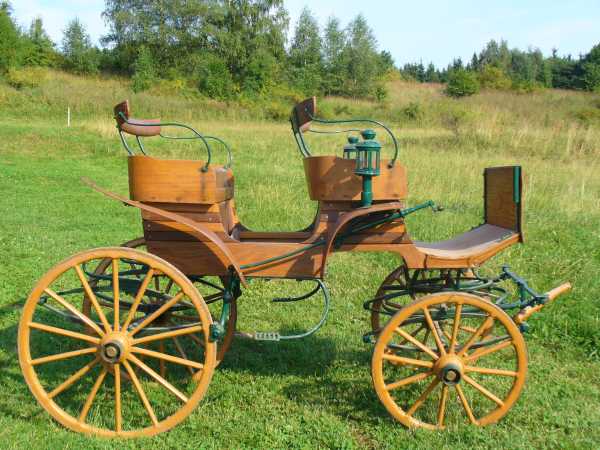
kočár
vůz
spřeženívozítko
sulka
kočí vozík
žebřiňák
bryčka
přibližovadlo
Ve dvojicích vymyslete co nejvíce synonym ke slovům PES a JÍT. Rozdělujte je podle stylové platnosti!
Porovnejte své nápady:
Link1
Link2
Funnkční styly
Funkční styly 2
kočár
vůz
spřeženívozítko
sulka
kočí vozík
žebřiňák
bryčka
přibližovadlo
Ve dvojicích vymyslete co nejvíce synonym ke slovům PES a JÍT. Rozdělujte je podle stylové platnosti!
Porovnejte své nápady:
Link1
Link2
Funnkční styly
Funkční styly 2
30. září 2014
Barvitý popis
Co činí popisné pasáže čtivými? Dokážete si po přečtení uvedeného textu představit nejen zámek Baskerville, ale i atmosféru, která ho obklopuje?
THE HOUND OF THE BASKERVILLES
By A. Conan Doyle
http://www.gutenberg.org/files/2852/2852-h/2852-h.htm
I remembered the case well, for it was one in which Holmes had taken an
interest on account of the peculiar ferocity of the crime and the
wanton brutality which had marked all the actions of the assassin. The
commutation of his death sentence had been due to some doubts as to his
complete sanity, so atrocious was his conduct. Our wagonette had topped
a rise and in front of us rose the huge expanse of the moor, mottled
with gnarled and craggy cairns and tors. A cold wind swept down from
it and set us shivering. Somewhere there, on that desolate plain, was
lurking this fiendish man, hiding in a burrow like a wild beast, his
heart full of malignancy against the whole race which had cast him out.
It needed but this to complete the grim suggestiveness of the barren
waste, the chilling wind, and the darkling sky. Even Baskerville fell
silent and pulled his overcoat more closely around him.
We had left the fertile country behind and beneath us. We looked back on
it now, the slanting rays of a low sun turning the streams to threads of
gold and glowing on the red earth new turned by the plough and the broad
tangle of the woodlands. The road in front of us grew bleaker and wilder
over huge russet and olive slopes, sprinkled with giant boulders. Now
and then we passed a moorland cottage, walled and roofed with stone,
with no creeper to break its harsh outline. Suddenly we looked down into
a cuplike depression, patched with stunted oaks and firs which had been
twisted and bent by the fury of years of storm. Two high, narrow towers
rose over the trees. The driver pointed with his whip.
"Baskerville Hall," said he.
Its master had risen and was staring with flushed cheeks and shining
eyes. A few minutes later we had reached the lodge-gates, a maze of
fantastic tracery in wrought iron, with weather-bitten pillars on either
side, blotched with lichens, and surmounted by the boars' heads of the
Baskervilles. The lodge was a ruin of black granite and bared ribs of
rafters, but facing it was a new building, half constructed, the first
fruit of Sir Charles's South African gold.
Through the gateway we passed into the avenue, where the wheels were
again hushed amid the leaves, and the old trees shot their branches in a
sombre tunnel over our heads. Baskerville shuddered as he looked up
the long, dark drive to where the house glimmered like a ghost at the
farther end.
Domácí úkol:
Přečtete si povídku Karla Čapka Experiment profesora Rousse.
ukázka:
“Pojďte sem,” přerušil ho Amerikán velitelsky, “tady
si sedněte.
Vy musíte říkat, co vás první napadne. Vy nesmíte pře
mýšlet, vy
musíte plácnout mechanically, ani sám nevíte co. Vy
rozumíte?”
“Prosím,” řekl ochotně pokusný muž, trochu tísněn a
uditoriem
tak významným; načež odkašlal a úzkostlivě mrkal jako
maturant.
“Strom,” vystřelil na něj učenec.
“Mohutný,” zašeptal stařík.
“Jak prosím?” ptal se učenec, jaksi nechápaje.
“Lesní velikán,” vysvětloval muž ostýchavě.
“Ah tak. Ulice!”
“Ulice ... ulice v slavnostním hávu,” děl mužík.
“Co tím míníte?”
“Prosím slavnost. Nebo pohřeb.”
“So. Tak vy máte říci jenom slavnost. Pokud možno je
dním
slovem.”
“Ano prosím.”
“Tak dál: Obchod.”
THE HOUND OF THE BASKERVILLES
By A. Conan Doyle
http://www.gutenberg.org/files/2852/2852-h/2852-h.htm
I remembered the case well, for it was one in which Holmes had taken an
interest on account of the peculiar ferocity of the crime and the
wanton brutality which had marked all the actions of the assassin. The
commutation of his death sentence had been due to some doubts as to his
complete sanity, so atrocious was his conduct. Our wagonette had topped
a rise and in front of us rose the huge expanse of the moor, mottled
with gnarled and craggy cairns and tors. A cold wind swept down from
it and set us shivering. Somewhere there, on that desolate plain, was
lurking this fiendish man, hiding in a burrow like a wild beast, his
heart full of malignancy against the whole race which had cast him out.
It needed but this to complete the grim suggestiveness of the barren
waste, the chilling wind, and the darkling sky. Even Baskerville fell
silent and pulled his overcoat more closely around him.
We had left the fertile country behind and beneath us. We looked back on
it now, the slanting rays of a low sun turning the streams to threads of
gold and glowing on the red earth new turned by the plough and the broad
tangle of the woodlands. The road in front of us grew bleaker and wilder
over huge russet and olive slopes, sprinkled with giant boulders. Now
and then we passed a moorland cottage, walled and roofed with stone,
with no creeper to break its harsh outline. Suddenly we looked down into
a cuplike depression, patched with stunted oaks and firs which had been
twisted and bent by the fury of years of storm. Two high, narrow towers
rose over the trees. The driver pointed with his whip.
"Baskerville Hall," said he.
Its master had risen and was staring with flushed cheeks and shining
eyes. A few minutes later we had reached the lodge-gates, a maze of
fantastic tracery in wrought iron, with weather-bitten pillars on either
side, blotched with lichens, and surmounted by the boars' heads of the
Baskervilles. The lodge was a ruin of black granite and bared ribs of
rafters, but facing it was a new building, half constructed, the first
fruit of Sir Charles's South African gold.
Through the gateway we passed into the avenue, where the wheels were
again hushed amid the leaves, and the old trees shot their branches in a
sombre tunnel over our heads. Baskerville shuddered as he looked up
the long, dark drive to where the house glimmered like a ghost at the
farther end.
Domácí úkol:
Přečtete si povídku Karla Čapka Experiment profesora Rousse.
ukázka:
“Pojďte sem,” přerušil ho Amerikán velitelsky, “tady
si sedněte.
Vy musíte říkat, co vás první napadne. Vy nesmíte pře
mýšlet, vy
musíte plácnout mechanically, ani sám nevíte co. Vy
rozumíte?”
“Prosím,” řekl ochotně pokusný muž, trochu tísněn a
uditoriem
tak významným; načež odkašlal a úzkostlivě mrkal jako
maturant.
“Strom,” vystřelil na něj učenec.
“Mohutný,” zašeptal stařík.
“Jak prosím?” ptal se učenec, jaksi nechápaje.
“Lesní velikán,” vysvětloval muž ostýchavě.
“Ah tak. Ulice!”
“Ulice ... ulice v slavnostním hávu,” děl mužík.
“Co tím míníte?”
“Prosím slavnost. Nebo pohřeb.”
“So. Tak vy máte říci jenom slavnost. Pokud možno je
dním
slovem.”
“Ano prosím.”
“Tak dál: Obchod.”
22. září 2014
Docela obyčejný text
When he finally stepped onstage, Langdon received a
rousing round of applause from a crowd that
was standing room only.
“Meine
Damen und Herren,” Langdon began, his
voice booming over the loudspeakers.
“Willkommen,
bienvenue, welcome.”
The famous line from Cabaret drew appreciative laughter from the crowd.
“I’ve been informed that our audience tonight contains
not only Dante Society members, but also
many visiting scientists and students who may be
exploring Dante for the first time. So, for those in
the audience who have been too busy studying to read
medieval Italian epics, I thought I’d begin with
a quick overview of Dante—his life, his work, and why
he is considered one of the most influential
figures in all of history.”
More applause.
Using the tiny remote in his hand, Langdon called up a
series of images of Dante, the first being
Andrea del Castagno’s full-length portrait of the poet
standing in a doorway, clutching a book of
philosophy.
“Dante Alighieri,” Langdon began. “This Florentine
writer and philosopher lived from 1265 to
1321. In this portrait, as in nearly all depictions,
he wears on his head a red cappuccio—a
tight-fitting,
plaited hood with earflaps—which, along with his
crimson Lucca robe, has become the most widely
reproduced image of Dante.”
Langdon advanced slides to the Botticelli portrait of
Dante from the Uffizi Gallery, which stressed
Dante’s most salient features, a heavy jaw and hooked
nose. “Here, Dante’s unique face is once again
framed by his red cappuccio, but in this instance Botticelli has added a laurel
wreath to his cap as a
symbol of expertise—in this case in the poetic arts—a
traditional symbol borrowed from ancient
Greece and used even today in ceremonies honoring poet
laureates and Nobel laureates.”
Langdon quickly scrolled through several other images,
all showing Dante in his red cap, red tunic,
laurel wreath, and prominent nose. “And to round out
your image of Dante, here is a statue from the
Piazza di Santa Croce … and, of course, the famous
fresco attributed to Giotto in the chapel of the
Bargello.”
Langdon left the slide of Giotto’s fresco on the
screen and walked to the center of the stage.
“As you are no doubt aware, Dante is best known for
his monumental literary masterpiece—The
Divine
Comedy—a brutally vivid account of
the author’s descent into hell, passage through purgatory,
and eventual ascent into paradise to commune with God.
By modern standards, The Divine Comedy
has nothing comedic about it. It’s called a comedy for
another reason entirely. In the fourteenth
century, Italian literature was, by requirement,
divided into two categories: tragedy, representing high
literature, was written in formal Italian; comedy,
representing low literature, was written in the
vernacular and geared toward the general population.”
Langdon advanced slides to the iconic fresco by
Michelino, which showed Dante standing outside
the walls of Florence clutching a copy of The
Divine Comedy. In the background, the
terraced
mountain of purgatory rose high above the gates of
hell. The painting now hung in Florence’s
Cathedral of Santa Maria del Fiore—better known as Il
Duomo.
“As you may have guessed from the title,” Langdon
continued, “The Divine Comedy was written in
the vernacular—the language of the people. Even so, it
brilliantly fused religion, history, politics,
philosophy, and social commentary in a tapestry of
fiction that, while erudite, remained wholly
accessible to the masses. The work became such a
pillar of Italian culture that Dante’s writing style
has been credited with nothing less than the
codification of the modern Italian language.”
Langdon paused a moment for effect and then whispered,
“My friends, it is impossible to overstate
the influence of Dante Alighieri’s work. Throughout
all of history, with the sole exception perhaps of
Holy Scripture, no single work of writing, art, music,
or literature has inspired more tributes,
imitations, variations, and annotations than The
Divine Comedy.”
After listing the vast array of famous composers, artists,
and authors who had created works based
on Dante’s epic poem, Langdon scanned the crowd. “So
tell me, do we have any authors here tonight?”
Nearly one-third of the hands went up. Langdon stared
out in shock. Wow, either this is the most
accomplished
audience on earth, or this e-publishing thing is really taking off.
“Well, as all of you authors know, there is nothing a
writer appreciates more than a blurb—one of
those single-line endorsements from a powerful
individual, designed to make others want to buy your
work. And, in the Middle Ages, blurbs existed, too.
And Dante got quite a few of them.”
Langdon changed slides. “How would you like to have this on your book jacket?”
Ne’er walked the earth a greater man than he.
—Michelangelo
A murmur of surprise rustled through the crowd.
“Yes,” Langdon said, “that’s the same Michelangelo you
all know from the Sistine Chapel and the
David. In addition to being a master painter and sculptor,
Michelangelo was a superb poet, publishing
nearly three hundred poems—including one titled
‘Dante,’ dedicated to the man whose stark visions
of hell were those that inspired Michelangelo’s Last
Judgment. And if you don’t believe
me, read the
third canto of Dante’s Inferno
and then visit the Sistine Chapel;
just above the altar, you’ll see this
familiar image.”
Langdon advanced slides to a frightening detail of a
muscle-bound beast swinging a giant paddle at
cowering people. “This is Dante’s hellish ferryman,
Charon, beating straggling passengers with an
oar.”
Langdon moved now to a new slide—a second detail of
Michelangelo’s Last Judgment—a
man
being crucified. “This is Haman the Agagite, who,
according to Scripture, was hanged to death.
However, in Dante’s poem, he was crucified instead. As
you can see here in the Sistine Chapel,
Michelangelo chose Dante’s version over that of the
Bible.” Langdon grinned and lowered his voice to
a whisper. “Don’t tell the pope.”
The crowd laughed.
“Dante’s Inferno created a world of pain and suffering beyond all
previous human imagination, and
his writing quite literally defined our modern visions
of hell.” Langdon paused. “And believe me, the
Catholic Church has much to thank Dante for. His Inferno
terrified the faithful for centuries,
and no
doubt tripled church attendance among the fearful.”
Langdon switched the slide. “And this leads us to the
reason we are all here tonight.”
The screen now displayed the title of his lecture: DIVINE
DANTE: SYMBOLS OF HELL.
“Dante’s Inferno is a landscape so rich in symbolism and iconography
that I often dedicate an entire
semester course to it. And tonight, I thought there
would be no better way to unveil the symbols of
Dante’s Inferno than to walk side by side with him … through the gates
of hell.”
Langdon paced out to the edge of the stage and
surveyed the crowd. “Now, if we’re planning on
taking a stroll through hell, I strongly recommend we
use a map. And there is no map of Dante’s hell
more complete and accurate than the one painted by
Sandro Botticelli.”
He touched his remote, and Botticelli’s forbidding Mappa
dell’Inferno materialized before the
crowd. He could hear several groans as people absorbed
the various horrors taking place in the funnelshaped
subterranean cavern.
“Unlike some artists, Botticelli was extremely
faithful in his interpretation of Dante’s text. In fact,
he spent so much time reading Dante that the great art
historian Giorgio Vasari said Botticelli’s
obsession with Dante led to ‘serious disorders in his
living.’ Botticelli created more than two dozen
other works relating to Dante, but this map is his
most famous.”
Langdon turned now, pointing to the upper left-hand
corner of the painting. “Our journey will begin
up there, aboveground, where you can see Dante in red,
along with his guide, Virgil, standing outside
the gates of hell. From there we will travel downward,
through the nine rings of Dante’s inferno, and
eventually come face-to-face with …”
Langdon quickly flashed to a new slide—a giant
enlargement of Satan as depicted by Botticelli in
this very painting—a horrific, three-headed Lucifer
consuming three different people, one in each
mouth.
The crowd gasped audibly.
“A glance at coming attractions,” Langdon announced.
“This frightening character here is where
tonight’s journey will end. This is the ninth ring of
hell, where Satan himself resides. However …”
Langdon paused. “Getting there is half the fun, so
let’s rewind a bit … back up to the gates of hell,
where our journey begins.”
Langdon moved to the next slide—a Gustave Doré
lithograph that depicted a dark, tunneled
entrance carved into the face of an austere cliff. The
inscription above the door read: ABANDON ALL
HOPE, YE WHO ENTER HERE.
“So …” Langdon said with a
smile. “Shall we enter?”
Dan Brown - Inferno
Přeložte tučně vyznačené části textu a vložte svůj překlad do komentáře k tomuto blogu (do nedělního večera).
zajímavý odkaz
Přeložte tučně vyznačené části textu a vložte svůj překlad do komentáře k tomuto blogu (do nedělního večera).
zajímavý odkaz
13. května 2014
Přihlásit se k odběru:
Příspěvky (Atom)