25. dubna 2012

Svět v kostce: mistrovství povídky

Přečtěte si následující povídku Raye Bradburyho. Nechte doznít dojmy, napište krátký komentář do tohoto blogu.

ZDE najdete jinou Bradburyho povídku; co mají tyto dva literární texty společného?


Apple-core Baltimore

 On the way to the cemetery Menville decided they needed to pick up  something to eat, so they stopped the car at a roadside stand near an orange grove where there were displays of bananas, apples, blueberries, and, of course, oranges.
 Menville picked out two wonderful, big, glossy apples and handed one to Smith.
 Smith said, ‘How come?’
 Menville, looking enigmatic, just said, ‘Eat, eat.’ They stowed their jackets in the car and walked the rest of the way to the graveyard.
 Once inside the gates, they walked a great distance until at last they came to a special marker.
 Smith looked down and said, ‘Russ Simpson. Wasn’t he an old friend of yours from high school?’
 ‘Yeah,’ said Menville. ‘That was the one.
 Part of the gang. My very best friend, actually. Russ Simpson.’
 They stood for a while, biting into their apples, chewing quietly.
 ‘He must have been very special,’ Smith said. ‘You’ve come all this way. But
 you didn’t bring any flowers.’
 ‘No, only these apples. You’ll see.’
 Smith stared at the marker. ‘What was there about him that was so
 special?’
 Menville took another bite of his apple and said, ‘He was constant. He was there every noon, he was there on the streetcar going to school and then back home every day. He was there at recess, he sat across from me in homeroom, and we took a class in the short story together. It was that kind of thing. Oh, sure, on occasion he did crazy stuff.’
‘Like what?’ said Smith.
 ‘Well, we had this little gang of five or six guys who met at lunchtime. We  were all different, but on the other hand, we were all sort of the same. Russ used to sort of  pick at me, you know how friends do.’
 ‘Pick? Like what?’
 ‘He liked to play a game. He’d look at all of us and say, “Someone say  ‘Granger.’” He’d look at me and say, “Say ‘Granger.’” I’d say “Granger” and Russ would shake his head and say, “No, no. One of you others say ‘Granger.’” So one of the other guys would say “Granger” and they would all laugh, a big reaction, because he said “Granger” just the right way. Then Russ would turn to me and say, “Now it’s your turn, you say it.” I would say “Granger” and no one would laugh and I’d stand there, feeling left out.
 ‘There was a trick to the whole thing but I was so stupid, so naive, that I could never figure out that it was a joke, the sort of thing they played on me.
 ‘Then one time I was over at Russ’s house and a friend of his named Pipkin leaned over the balcony in the living room and dropped a cat on me. Can you believe that?! The cat landed right on my head and clawed my face. It could have put out my eyes, I thought later. Russ thought it was a great joke. Russ was laughing and Pip was laughing, and I threw the cat across the room. Russ was indignant. “Watch what you’re doing with the cat!” he said. “Watch what the cat was doing with me!” I cried. That was a big joke; he told everyone. They all laughed, except me.’
 ‘That’s some memory,’ said Smith.
 ‘He was there every day, was in school with me, my best friend. Every once in a while, at lunchtime, he’d eat an apple and when he finished he’d say, “Apple core.” And one of the other guys would say, “Baltimore.” Russ would then say, “Who’s your friend?” They’d point at me and he’d throw the apple core–hard–at me. This was a routine; it happened at least once a week for a couple of years. Apple-core Baltimore.’
 ‘And this was your best friend?’
 ‘Sure, my best friend.’
 They stood there by the grave, still working at their apples. The sun was getting hotter and there was no breeze.
 ‘What else?’ said Smith.
 ‘Oh, not much. Well, sometimes at lunchtime I’d ask the typing teacher to let me use one of the typewriters so I could write, as I didn’t have a typewriter of my own.‘Finally, I had a chance to buy one real cheap, so I went without lunch for a month or so, saving my lunch money. Finally, I had enough to buy my very own typewriter so I could write whenever I wanted.
 ‘One day Russ looked at me and said, “My God, do you realize what you are?” I said, “What?” He said, “You’re a stale fruitcake, giving up your money to buy that damned typewriter. A stale fruitcake.”
 ‘I often thought later that someday when I finished my great American novel, that’s what I’d call it: Stale Fruitcake.’
 Smith said, ‘Better than Gatsby, huh?’
 ‘Gatsby, sure. Anyway, I had the typewriter.’
 They were quiet then, the only sound the last bites into their diminishing apples.
 A distant expression came over Smith’s face and he blinked and suddenly whispered, ‘Apple-core.’
 To which, quickly, Menville said, ‘Baltimore.’
 Smith then said, ‘Who’s your friend?’
 Menville, looking down at the marker near his feet, eyes wide, said, ‘Granger.’
 ‘Granger?’ said Smith, and stared at his friend.
 ‘Yeah,’ said Menville. ‘Granger.’
 At this Smith raised his hand and threw his apple core down on top of the gravestone.
 No sooner was this done than Menville hurled his apple core down, then reached and took it up again and threw it a second time so that the gravestone was so littered with shreds of the apple core that you couldn’t make out the name on the marker.
 They stared at the mess.
 Then Menville turned and began to walk away, threading through the
 gravestones, tears streaming down his cheeks.
Smith called after him. ‘Where are you going?’
Menville, not looking back, said in a hoarse voice, ‘To get some more apples, damn it to hell, more apples.’

4. dubna 2012

Zlatý věk sci-fi

Arthur C. Clarke - Měsíční prach

Clarke - Bradbury - Asimov. Trojhvězdí anglicky píšících autorů, kteří v druhé polovině dvacátého století dovedli žánr science fiction až do hěvzdných sfér klasické krásné literatury.
A co víc - podobně jako v případě Jula Verna, jejich fantazie se dnes stávají skutečností - například navigační a komunikační satelity, iontový motor či vesmírná plavidla poháněná slunečním větrem.

A jak si lidstvo vede na Měsíci?


A. C. Clarke
A Fall of Moondust (p.175)

The dust that lapped--if that was the word--against the quay from which _Selene_ had departed four days ago was only a couple of meters deep, but for this test no greater depth was needed. If the hastily built equipment worked here, it would work out in the open Sea.
Lawrence watched from the Embarkation Building as his space-suited assistants bolted the framework together. It was made, like ninety per cent of the structures on the Moon, from slotted aluminum strips and bars. In some ways, thought Lawrence, the Moon was an engineer's paradise. The low gravity, the total absence of rust or corrosion--indeed, of weather itself, with its unpredictable winds and rains and frosts-removed at once a whole range of problems that plagued all terrestrial enterprises. But to make up for that, of course, the Moon had a few specialities of its own--like the two-hundredbelow-zero nights, and the dust that they were fighting now.
The light framework of the raft rested upon a dozen large metal drums, which carried the prominently stenciled words: "Contents Ethyl Alcohol. Please return when empty to No. 3 Dispatching Center, Copernicus." Their contents now were a very high grade of vacuum; each drum could support a weight of two lunar tons before sinking.
Now the raft was rapidly taking shape. Be sure to have plenty of spare nuts and bolts, Lawrence told
himself. He had seen at least six dropped in the dust, which had instantly swallowed them. And there went a wrench. Make an order that all tools must be tied to the raft even when in use, however inconvenient that might be.
Fifteen minutes--not bad, considering that the men were working in vacuum and therefore were hampered by their suits. The raft could be extended in any direction as required, but this would be enough to start with. This first section alone could carry over twenty tons, and it would be some time before they unloaded that weight of equipment on the site.
Satisfied with this stage of the project, Lawrence left the Embarkation Building while his assistants were still dismantling the raft. Five minutes later (that was one advantage of Port Roris--you could get anywhere in five minutes), he was in the local engineering depot. What he found there was not quite so satisfactory.
Supported on a couple of trestles was a two-meter-square mock-up of _Selene's_ roof--an exact copy of the real thing, made from the same materials. Only the outer sheet of aluminized fabric that served as a sun shield was missing; it was so thin and flimsy that it would not affect the test.
The experiment was an absurdly simple one, involving only three ingredients: a pointed crowbar, a sledge hammer, and a frustrated engineer, who, despite strenuous efforts, had not yet succeeded in hammering the
bar through the roof.
Anyone with a little knowledge of lunar conditions would have guessed at once why he had failed. The hammer, obviously, had only a sixth of its terrestrial weight; therefore-- equally obviously--it was that much less effective.
The reasoning would have been completely false. One of the hardest things for the layman to understand was the difference between weight and mass, and the inability to do so had led to countless accidents. For weight was an arbitrary characteristic; you could change it by moving from one world to another. On Earth, that hammer would weigh six times as much as it did here; on the sun, it would be almost two hundred times heavier; and in space it would weigh nothing at all.
But in all three places, and indeed throughout the Universe, its mass or inertia would be exactly the same. The effort needed to set it moving at a certain speed, and the impact it would produce when stopped, would be constant through all space and time. On a nearly gravityless asteroid, where it weighed less than a feather, that hammer would pulverize a rock just as effectively as on Earth.
"What's the trouble?" said Lawrence.
"The roof's too springy," explained the engineer, rubbing the sweat from his brow. "The crowbar just bounces back every time it's hit."
"I see. But will that happen when we're using a fifteen-meter pipe, with dust packed all around it? That may absorb the recoil."
"Perhaps--but look at this."
They kneeled beneath the mock-up and inspected the underside of the roof. Chalk lines had been drawn upon it to indicate the position of the electric wiring, which had to be avoided at all costs.
"This Fiberglas is so tough, you can't make a clean hole through it. When it does yield, it splinters and tears. See-it's already begun to star. I'm afraid that if we try this bruteforce approach, we'll crack the roof."
"And we can't risk that," Lawrence agreed. "Well, drop the idea. If we can't pile drive, we'll have to bore. Use a drill, screwed on the end of the pipe so it can be detached easily. How are you getting on with the rest of the plumbing?"
"Almost ready--it's all standard equipment. We should be finished in two or three hours."
"I'll be back in two," said Lawrence. He did not add, as some men would have done, "I want it finished by then." His staff was doing its utmost, and one could neither bully nor cajole trained and devoted men into working faster than their maximum. Jobs like this could not be rushed, and the deadline for _Selene's_ oxygen supply was still three days away. In a few hours, if all went well, it would have been pushed into the indefinite future.

20. března 2012

Démant v koruně

1. Kdo byl Rudyard Kipling? Co víte o jeho životě a tvorbě?
2. Najděte si na internetu synopsi jeho románu "Kim".
3. Dokážete správně přeložit zpátky do angličtiny název tohoto příspěvku?
4. Zvolna si přečtěte následující ukázku. Vnímejte rytmus a syntaktickou i významovou strukturu, příjemnou pravidelnost textu.
5. Přeložte tučně vyznačený úryvek.

Poznámka: opravené předchozí texty jsou k dispozici na capse.
--------------------------------------------------------------------

Rudyard Kipling – KIM

‘Was there ever such a disciple as I?’ cried Kim merrily to the lama. ‘All earth would have picked thy bones within ten mile of Lahore city if I had not guarded thee.’
‘I consider in my own mind whether thou art a spirit, sometimes, or sometimes an evil imp,’ said the lama, smiling slowly.
‘I am thy chela.’ Kim dropped into step at his side—that indescribable gait of the long-distance tramp all the world over.
‘Now let us walk,’ muttered the lama, and to the click of his rosary they walked in silence mile upon mile. The lama as usual, was deep in meditation, but Kim’s bright eyes were open wide. This broad, smiling river of life, he considered, was a vast improvement on the cramped and crowded Lahore streets. There were new people and new sights at every stride—castes he knew and castes that were altogether out of his experience.
They met a troop of long-haired, strong-scented Sansis with baskets of lizards and other unclean food on their backs, their lean dogs sniffing at their heels. These people kept their own side of the road’, moving at a quick, furtive jog-trot, and all other castes gave them ample room; for the Sansi is deep pollution. Behind them, walking wide and stiffly across the strong shadows, the memory of his leg-irons still on him, strode one newly released from the jail; his full stomach and shiny skin to prove that the Government fed its prisoners better than most honest men could feed themselves. Kim knew that walk well, and made broad jest of it as they passed. Then an Akali, a wild-eyed, wildhaired Sikh devotee in the blue-checked clothes of his faith, with polished-steel quoits glistening on the cone of his tall blue turban, stalked past, returning from a visit to one of the independent Sikh States, where he had been singing the ancient glories of the Khalsa to College-trained princelings in top-boots and whitecord breeches. Kim was careful not to irritate that man; for the Akali’s temper is short and his arm quick. Here and there they met or were overtaken by the gaily dressed crowds of whole villages turning out to some local fair; the women, with their babes on their hips, walking behind the men, the older boys prancing on sticks of sugar-cane, dragging rude brass models of locomotives such as they sell for a halfpenny, or flashing the sun into the eyes of their betters from cheap toy mirrors. One could see at a glance what each had bought; and if there were any doubt it needed only to watch the wives comparing, brown arm against brown arm, the newly purchased dull glass bracelets that come from the North-West. These merry-makers stepped slowly, calling one to the other and stopping to haggle with sweetmeatsellers, or to make a prayer before one of the wayside shrines— sometimes Hindu, sometimes Mussalman—which the low-caste of both creeds share with beautiful impartiality. A solid line of blue, rising and falling like the back of a caterpillar in haste, would swing up through the quivering dust and trot past to a chorus of quick cackling. That was a gang of changars—the women who have taken all the embankments of all the Northern railways under their charge—a flat-footed, big-bosomed, strong-limbed, blue-petticoated clan of earth-carriers, hurrying north on news of a job, and wasting no time by the road. They belong to the caste whose men do not count, and they walked with squared elbows, swinging hips, and heads on high, as suits women who carry heavy weights. A little later a marriage procession would strike into the Grand Trunk with music and shoutings, and a smell of marigold and jasmine stronger even than the reek of the dust. One could see the bride’s litter, a blur of red and tinsel, staggering through the haze, while the bridegroom’s bewreathed pony turned aside to snatch a mouthful from a passing fodder-cart. Then Kim would join the Kentish-fire of good wishes and bad jokes, wishing the couple a hundred sons and no daughters, as the saying is. Still more interesting and more to be shouted over it was when a strolling juggler with some half-trained monkeys, or a panting, feeble bear, or a woman who tied goats’ horns to her feet, and with these danced on a slack-rope, set the horses to shying and the women to shrill, long-drawn quavers of amazement.


7. března 2012

Mezi čtyřma očima

Autoři, kteří nemají v lásce zdlouhavé popisy, často charakterizují své postavy pomocí přímé řeči. Sociální postavení, bystrost, vtip, postoj k životu... to vše lze vyčíst ze způsobu, jakým se postava vyjadřuje.

1. Pečlivě si přečtěte následující úryvek z románu Agathy Christie Mrtvá v knihovně. Dokážete si představit jednotlivé aktéry pochmurné scény? (Originál románu je k dispozici v capse.)
2. Přeložte vyznačenou část, svůj text vložte do komentáře k tomuto blogu.

TIP:
Pokud si nejste jisti kvalitou překladu, přečtěte si dialogy nahlas.
Pro inspiraci můžete shlédnout tuto scénu ve filmové podobě: http://www.youtube.com/watch?v=BnnNkIPwwAk


Agatha Christie - The Body In The Library (1942)

There was the sound of a car crunching on the gravel outside. Constable Palk said with urgency, "That'll be the inspector."
True to his ingrained belief that the gentry didn't let you down, Mrs. Bantry immediately moved to the door. Miss Marple followed her. Mrs. Bantry said, "That'll be all right, Palk." Constable Palk was immensely relieved.
Hastily downing the last fragments of toast and marmalade with a drink of coffee. Colonel Bantry hurried out into the hall and was relieved to see Colonel Melchett, the chief constable of the county, descending from a car, with Inspector Slack in attendance. Melchett was a friend of the colonel's; Slack he had never very much taken to an energetic man who belied his name and who accompanied his bustling manner with a good deal of disregard for the feelings of anyone he did not consider important "Mornin.“
"It's, it's" Colonel Bantry struggled to express himself "it's incredible, fantastic!"
"No idea who the woman is?"
"Not in the slightest. Never set eyes on her in my life."
"Butler know anything?" asked Inspector Slack.
"Lorrimer is just as taken aback as I am."
"Ah," said Inspector Slack. "I wonder."
Colonel Bantry said, "There's breakfast in the dining room, Melchett, if you'd like anything."
"No, no, better get on with the job. Haydock ought to be here any minute now..... Ah, here he is." Another car drew up and big, broad-shouldered Doctor Haydock, who was also the police surgeon, got out. A second police car had disgorged two plain-clothes men, one with a camera.
"All set, eh?" said the chief constable. "Right. We'll go along. In the library. Slack tells me."
Colonel Bantry groaned. "It's incredible! You know, when my wife insisted this morning that the housemaid had come in and said there was a body in the library, I just wouldn't believe her."
"No, no, I can quite understand that. Hope your missus isn't too badly upset by it all."
"She's been wonderful, really wonderful. She's got old Miss Marple up here with her from the village, you know."
"Miss Marple?" The chief constable stiffened. "Why did she send for her?"
"Oh, a woman wants another woman, don't you think so?"
Colonel Melchett said with a slight chuckle, "If you ask me, your wife's going to try her hand at a little amateur detecting. Miss Marple's quite the local sleuth. Put it over us properly once, didn't she, Slack?"
Inspector Slack said, "That was different."
"Different from what?"
"That was a local case, that was, sir. The old lady knows everything that goes on in the village, that's true enough. But she'll be out of her depth here."
Melchett said dryly, "You don't know very much about it yourself yet, Slack."
"Ah, you wait, sir. It won't take me long to get down to it."
In the dining room Mrs. Bantry and Miss Marple, in their turn, were partaking of breakfast. After waiting on her guest, Mrs. Bantry said urgently, "Well, Jane?" Miss Marple looked up at her slightly bewildered. Mrs. Bantry said hopefully, "Doesn't it remind you of anything?"
For Miss Marple had attained fame by her ability to link up trivial village happenings with graver problems in such a way as to throw light upon the latter.
"No," said Miss Marple thoughtfully. "I can't say that it does not at the moment. I was reminded a little of Mrs. Chetty's youngest Edie, you know but I think that was just because this poor girl bit her nails and her front teeth stuck out a little. Nothing more than that. And of course," went on Miss Marple, pursuing the parallel further, "Edie was fond of what I call cheap finery too."

29. února 2012

Synonyma a stylové roviny

Kolik synonym dokážete vymyslet k jedinému slovu?
Napište do komentáře k blogu deset širších synonym označujících lidský pohyb (chůzi, běh), která považujete za nejvyhraněnější, nejoriginálnější, nejneobvyklejší... prostě NEJ!

22. února 2012

Obraz skrytý ve slovech

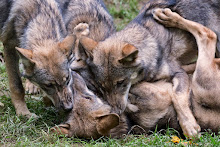
1. Stáhněte si ze stránek projektu Guttenberg knihu Olivera Curwooda Lovci vlků.
2. Přečtěte si první kapitolu a vyhledejte na webu ilustrace, které by se k ní hodily. Vybrané obrázky stáhněte do jednoho adresáře.

3. Pokuste se o překlad následujícího úryvku.

Oliver Curwood - Wolf Hunters

Stillness fell again with the sound of the rifle-shot. It might have lasted five minutes or ten, when a long, solitary howl floated from across the lake. It ended in the sharp, quick yelp of a wolf on the trail, and an instant later was taken up by others, until the pack was once more in full cry. Almost simultaneously a figure darted out upon the ice from the edge of the forest. A dozen paces and it paused and turned back toward the black wall of spruce.
"Are you coming, Wabi?"
A voice answered from the woods. "Yes. Hurry up—run!"
Thus urged, the other turned his face once more across the lake. He was a youth of not more than eighteen. In his right hand he carried a club. His left arm, as if badly injured, was done up in a sling improvised from a lumberman's heavy scarf. His face was scratched and bleeding, and his whole appearance showed that he was nearing complete exhaustion. For a few moments he ran through the snow, then halted to a staggering walk. His breath came in painful gasps. The club slipped from his nerveless fingers, and conscious of the deathly weakness that was overcoming him he did not attempt to regain it. Foot by foot he struggled on, until suddenly his knees gave way under him and he sank down into the snow.
From the edge of the spruce forest a young Indian now ran out upon the surface of the lake. His breath was coming quickly, but with excitement rather than fatigue. Behind him, less than half a mile away, he could hear the rapidly approaching cry of the hunt-pack, and for an instant he bent his lithe form close to the snow, measuring with the acuteness of his race the distance of the pursuers. Then he looked for his white companion, and failed to see the motionless blot that marked where the other had fallen. A look of alarm shot into his eyes, and resting his rifle between his knees he placed his hands, trumpet fashion, to his mouth and gave a signal call which, on a still night like this, carried for a mile.
"Wa-hoo-o-o-o-o-o! Wa-hoo-o-o-o-o-o!"
At that cry the exhausted boy in the snow staggered to his feet, and with an answering shout which came but faintly to the ears of the Indian, resumed his flight across the lake. Two or three minutes later Wabi came up beside him.
"Can you make it, Rod?" he cried.
The other made an effort to answer, but his reply was hardly more than a gasp. Before Wabi could reach out to support him he had lost his little remaining strength and fallen for a second time into the snow.
"I'm afraid—I—can't do it—Wabi," he whispered. "I'm—bushed—"
The young Indian dropped his rifle and knelt beside the wounded boy, supporting his head against his own heaving shoulders.


15. února 2012

Motto: Kdo je generál Failure a proč čte můj disk C?

Kdo je to překladatel?
Jaké znalosti potřebuje ke své práci?
A jaké problémy musí řešit?

Stručně formulujte své názory a vložte je do komentáře k tomuto blogu.
Nezapomeňte svůj příspěvek podepsat!


http://www.obecprekladatelu.cz/cz/ceny--stipendia--akce/anticena-skripec


http://www.redigo.cz/redigo/pokracujeme-v-usmevnych-prikladech-chybne-prace-prekladatelu
http://www.it.cas.cz/~jaja/prekladatelske_perlicky.html


1. Přečtěte si následující úryvek. Knihu či film pravděpodobně znáte :)
2. Vyberte věty nebo obraty, které mohou při překladu do češtiny působit problémy.
3. Pokuste se o překlad; své texty vložte do komentáře k tomuto blogu.

Dan Brown - The Da Vinci Code


The crisp April air whipped through the open window of the Citroën ZX as it skimmed south past the Opera House and crossed Place Vendôme. In the passenger seat, Robert Langdon felt the city tear past him as he tried to clear his thoughts. His quick shower and shave had left him looking reasonably presentable but had done little to ease his anxiety. The frightening image of the curator's body remained locked in his mind.

Jacques Saunière is dead.

Langdon could not help but feel a deep sense of loss at the curator's death. Despite Saunière's reputation for being reclusive, his recognition for dedication to the arts made him an easy man to revere. His books on the secret codes hidden in the paintings of Poussin and Teniers were some of Langdon's favorite classroom texts. Tonight's meeting had been one Langdon was very much looking forward to, and he was disappointed when the curator had not shown.

Again the image of the curator's body flashed in his mind. Jacques Saunière did that to himself? Langdon turned and looked out the window, forcing the picture from his mind.