21. března 2016

Klasika žánru fantasy

Dílo J. R. R. Tolkiena je populární po desítky let a stalo se výchozím bodem nového žánru - fantasy. Představy, myšlenky a nápady tohoto anglického filologa se objevují v nejrůznějších obměnách a variacích v literatuře, filmu i počítačových hrách, dokonce by se dalo říct, že existuje cosi jako tolkienovská taxonomie oblud a pohádkových bytostí.

Dnes se tedy pokusíme proniknout do ikonického textu Pána prstenů, a zaměříme se zejména na popisné pasáže. Před vznikem filmové podoby měli čtenáři k dispozici pouze autorova slova, která je vedla světem temnot i jasu, ohně a větru.

Přečtete si celou následující ukázku z prvního dílu trilogie Pán prstenů. (Kompletní pdf - ukázka je ze strany 181 - je k dipozici na capse.) Pokuste si představit prostředí, kterým hrdinové procházejí, i celkovou atmosféru děje. Pak si napište několik českých adjektiv, která atmosféru charakterizují - nepřekládáme, jen se snažíme aktivovat oblast českého jazyka, kterou budeme potřebovat. Pokuste se své pocity z ukázky vyjádřit slovně (nejlépe ve dvojici).

____________________________________________

After only a brief rest they started on their way again. All were eager to get the journey over as quickly as possible, and were willing, tired as they were, to go on marching still for several hours. Gandalf walked in front as before. In his left hand he held up his glimmering staff, the light of which just showed the ground before his feet; in his right he held his sword Glamdring. Behind him came Gimli, his eyes glinting in the dim light as he turned his head from side to side. Behind the dwarf walked Frodo, and he had drawn the short sword, Sting. No gleam came from the blades of Sting or of Glamdring; and that was some comfort, for being the work of Elvish smiths in the Elder Days these swords shone with a cold light, if any Orcs were near at hand. Behind Frodo went Sam, and after him Legolas, and the young hobbits, and Boromir. In the dark at the rear, grim and silent, walked Aragorn.
 The passage twisted round a few turns, and then began to descend. It went steadily down for a long while before it became level once again. The air grew hot and stifling, but it was not foul, and at times they felt currents of cooler air upon their faces, issuing from half-guessed openings in the walls. There were many of these. In the pale ray of the wizard's staff, Frodo caught glimpses of stairs
and arches and of other passages and tunnels, sloping up, or running steeply down, or opening blankly dark on either side. It was bewildering beyond hope of remembering.
 Gimli aided Gandalf very little, except by his stout courage. At least he was not, as were most of the others, troubled by the mere darkness in itself. Often the wizard consulted him at points where the choice of way was doubtful; but it was always Gandalf who had the final word. The Mines of Moria were vast and intricate beyond the imagination of Gimli, Glóin's son, dwarf of the mountain-race though he was. To Gandalf the far-off memories of a journey long before were now of little help, but even in the gloom and despite all windings of the road he knew whither he wished to go, and he did not falter, as long as there was a path that led towards his goal.
 `Do not be afraid! ' said Aragorn. There was a pause longer than usual, and Gandalf and Gimli were whispering together; the others were crowded behind, waiting anxiously. `Do not be afraid! I have been with him on many a journey, if never on one so dark; and there are tales of Rivendell of greater deeds of his than any that I have seen. He will not go astray-if there is any path to find. He has led us in here against our fears, but he will lead us out again, at whatever cost to himself. He is surer of finding the way home in a blind night than the cats of Queen Berúthiel.'
 It was well for the Company that they had such a guide. They had no fuel nor any means of making torches; in the desperate scramble at the doors many things had been left behind. But without any light they would soon have come to grief. There were not only many roads to choose from, there were also in many places holes and pitfalls, and dark wells beside the path in which their passing feet echoed. There were fissures and chasms in the walls and floor, and every now and then a crack would open right before their feet. The widest was more than seven feet across, and it was long before Pippin could summon enough courage to leap over the dreadful gap. The noise of churning water came up from far below, as if some great mill-wheel was turning in the depths.
 `Rope! ' muttered Sam. `I knew I'd want it, if I hadn't got it! '
 As these dangers became more frequent their march became slower. Already they seemed to have been tramping on, on, endlessly to the mountains' roots. They were more than weary, and yet there seemed no comfort in the thought of halting anywhere. Frodo's spirits had risen for a while after his escape, and after food and a draught of the cordial; but now a deep uneasiness, growing to dread, crept over him again. Though he had been healed in Rivendell of the knife-stroke, that grim wound had not been without effect. His senses were sharper and more aware of things that could not be seen. One sign of change that he soon had noticed was that he could see more in the dark than any of his companions, save perhaps Gandalf. And he was in any case the bearer of the Ring: it hung upon its chain against his breast, and at whiles it seemed a heavy weight. He felt the certainty of evil ahead and of evil following; but he said nothing. He gripped tighter on the hilt of his sword and went on doggedly.
 The Company behind him spoke seldom, and then only in hurried whispers. There was no sound but the sound of their own feet; the dull stump of Gimli's dwarf-boots; the heavy tread of Boromir; the light step of Legolas; the soft, scarce-heard patter of hobbit-feet; and in the rear the slow firm footfalls of Aragorn with his long stride. When they halted for a moment they heard nothing at all, unless it were occasionally a faint trickle and drip of unseen water. Yet Frodo began to hear, or to imagine that he heard, something else: like the faint fall of soft bare feet. It was never loud enough, or near enough, for him to feel certain that he heard it; but once it had started it never stopped, while the Company was moving. But it was not an echo, for when they halted it pattered on for a little all by itself, and then grew still.
 It was after nightfall when they had entered the Mines. They had been going for several hours with only brief halts, when Gandalf came to his first serious check. Before him stood a wide dark arch opening into three passages: all led in the same general direction, eastwards; but the left-hand passage plunged down, while the right-hand climbed up, and the middle way seemed to run on, smooth and
level but very narrow.

7. března 2016

M*A*S*H

Dabing patří mezi nejobtížnější překladatelské disciplíny - zejména pro svou variabilitu a často také pro extrémní časový tlak. Pojďme si vyzkoušet, jaké problémy musí řešit překladatel dabingových textů!
Americký seriál M*A*S*H patří mezi stálice televizního vysílání snad všude na světě. V české verzi naštěstí odpadl umělý smích v pozadí a divák se tak může lépe soustředit na kouzelné gagy v prostředí válečných hrůz - sám tento protiklad bývá často základnou pro drsný humor i pro okamžiky, kdy zamrazí. I řeč postav se vyznačuje protiklady, mísí lékařský slang s vojenským, vyžívá se ve slovních hříčkách a hraje si s divákovými emocemi. 

Video není ani po letech volně k dispozici; fanoušci seriálu tedy vytvořili alespoň stránky, kde si můžete přečíst kompletní texty jednotlivých epizod. Zkuste si napřed přečíst text vybrané epizody "Dear Sigmund"a představit si, že ho překládáte BEZ OBRAZU.


________________________________________________

Text k překladu, převzatý ze závěru epizody je zde. Překládáme DABING, tedy kromě základního významu a různých jazykových hříček musíme dbát i na to, aby se text dal dabovat - "vešel se hercům do pusy."

- What's in the box? - Um, it's the ambulance driver's personal effects, sir. It's going out to Graves Registration.
- Did you write a little note for me to his folks? - Yes, sir. It's right here. I never know what to say.
Of all the lousy duties I've had to perform in this service that's always been the lousiest.
You can change it if you want, sir. I'm not sure all the words are exactly right or anything.
"Dear Mr. And Mrs. O'Donnell , it is with real deep sadness that I must tell you of the death of your son. You can be very, very proud of Jerry. He never took a human life, and he died "while he was trying to save the lives of five other fellows. He was rushing them to the evac "which is short for evacuation hospital, in Seoul "when his ambulance overturned. He was a real good boy, Mr. And Mrs. O'Donnell ,and I know he loved you both very much. He spoke of you often to my company clerk, Corporal Walter O'Reilly. We were proud of him at MASH and  we'll miss Jerry very, very much.
" - Thank you, Radar. Don't change a word.
- Thank you, sir.
[Thinking] The one person I can't figure out, even with all you've taught me, Sigmund is B. J. Hunnicutt. - He's an enigma with size- 13 shoes.
- Get that guy to pre-op now.
In the midst of the most terrific enterprise ever devised to separate a person's brains from his buns B. J. Goes calmly on. I envy his serenity. - Although there must be a volcano under there somewhere.
- Oh, give me that.
- [Screams] - [Laughing] [Water Running] - Oh, hi.
- You! You're the practical joker? It certainly looks that way, doesn't it? - Would you like to help? - Sure.
What do I do? As loud as you can, shout, "Air raid!" Air raid! Air raid! Air raid! Air raid! Air raid! Air raid! [Gasping]

"Colonel Potter is pleased to announce that today is the first day of spring.
"In recognition of this event we are unveiling the cherry tree branch that we have been trying to grow in a hothouse kind of ever since Major Houlihan got the branch for us when she went away to get engaged to Tokyo.
" Oh, thank you.
"And now, in honor of the first day of spring" Okay, that's it.
- You leaving, Sidney? - Afraid so.
- Hate to be cured and run.
- You feel better? Yeah, I think I do a little. It's like spring at MASH. If you can't find it, and you can't feel it, you just go ahead and make it. Somewhere in here, I'm coaxing a little bud to grow. Meanwhile, I'm goin' back to work.
- See ya at the game next week? Yes, I'll be here with $20 in my pants and three aces up my sleeve.
Show a little imagination. Don't make them all spades.
Clamp.
[Sidney Thinking] They look every day into the face of death.
- I'll be closing in five minutes.
- On the surface they may seem like other doctors and nurses but underneath Ah, Sigmund, underneath.

23. února 2016

Synonymie a stylové roviny

Ve skupinách sepište co nejvíce výrazů více či méně synonymních ke slovům KŮŇ a JÍT/BĚŽET. Soustřeďte se na vnímání jejich stylové platnosti - kam je vhodné který výraz zařadit? Která postava ho může použít a v jakém kontextu?

Nápověda: výrazy archaické x neologismy, pejorativa x diminutiva, emočně negativní x pozitivní, slang a argot x odborná terminologie...


Vložte své nápady do komentáře k tomuto blogu.

22. února 2016

Anglický humor

Jerome Klapka Jerome  - Tři muži ve člunu (o psu nemluvě)

Takzvaný anglický druh humoru je pověstný svou nezúčastněností. Autor či vypravěč nám předkládá příběh s věcnou odtažitostí, a je na čtenář či posluchači, aby ve správném okamžiku rozpoznal nadsázku a vtip.

Jerome Klapka Jerome je anglický humorista, jehož styl možná lehce připomíná Jirotkova Saturnina; jeho texty jsou úsporné, věcné, popisné - a přesto obrazné a plné humoru.

1. Zjistěte si základní údaje o autorovi i díle
2. Přečtete si úvodní kapitolu knihy - viz níže - a zamyslete se nad stylem, který autor volí. Jaké jazykové prostředky mu budou odpovídat v češtině?
3. Přeložte tučně vyznačenou část a překlad vložte do komentáře k tomuto blogu (termíny: skupina A 6.3.2016, skupina B 13.3.2016)

_______________________________________________


Three Men in a Boat (to say nothing of the dog)
Jerome K. Jerome, 1889

CHAPTER I.


Three invalids.—Sufferings of George and Harris.—A victim to one hundred
and seven fatal maladies.—Useful prescriptions.—Cure for liver complaint
in children.—We agree that we are overworked, and need rest.—A week on
the rolling deep?—George suggests the River.—Montmorency lodges an
objection.—Original motion carried by majority of three to one.

There were four of us—George, and William Samuel Harris, and myself, and
Montmorency.  We were sitting in my room, smoking, and talking about how
bad we were—bad from a medical point of view I mean, of course.

We were all feeling seedy, and we were getting quite nervous about it.
Harris said he felt such extraordinary fits of giddiness come over him at
times, that he hardly knew what he was doing; and then George said that
_he_ had fits of giddiness too, and hardly knew what _he_ was doing.
With me, it was my liver that was out of order.  I knew it was my liver
that was out of order, because I had just been reading a patent
liver-pill circular, in which were detailed the various symptoms by which
a man could tell when his liver was out of order.  I had them all.

It is a most extraordinary thing, but I never read a patent medicine
advertisement without being impelled to the conclusion that I am
suffering from the particular disease therein dealt with in its most
virulent form.  The diagnosis seems in every case to correspond exactly
with all the sensations that I have ever felt.

[Picture: Man reading book] I remember going to the British Museum one
day to read up the treatment for some slight ailment of which I had a
touch—hay fever, I fancy it was.  I got down the book, and read all I
came to read; and then, in an unthinking moment, I idly turned the
leaves, and began to indolently study diseases, generally.  I forget
which was the first distemper I plunged into—some fearful, devastating
scourge, I know—and, before I had glanced half down the list of
“premonitory symptoms,” it was borne in upon me that I had fairly got it.

I sat for awhile, frozen with horror; and then, in the listlessness of
despair, I again turned over the pages.  I came to typhoid fever—read the
symptoms—discovered that I had typhoid fever, must have had it for months
without knowing it—wondered what else I had got; turned up St. Vitus’s
Dance—found, as I expected, that I had that too,—began to get interested
in my case, and determined to sift it to the bottom, and so started
alphabetically—read up ague, and learnt that I was sickening for it, and
that the acute stage would commence in about another fortnight.  Bright’s
disease, I was relieved to find, I had only in a modified form, and, so
far as that was concerned, I might live for years.  Cholera I had, with
severe complications; and diphtheria I seemed to have been born with.  I
plodded conscientiously through the twenty-six letters, and the only
malady I could conclude I had not got was housemaid’s knee.

I felt rather hurt about this at first; it seemed somehow to be a sort of
slight.  Why hadn’t I got housemaid’s knee?  Why this invidious
reservation?  After a while, however, less grasping feelings prevailed.
I reflected that I had every other known malady in the pharmacology, and
I grew less selfish, and determined to do without housemaid’s knee.
Gout, in its most malignant stage, it would appear, had seized me without
my being aware of it; and zymosis I had evidently been suffering with
from boyhood.  There were no more diseases after zymosis, so I concluded
there was nothing else the matter with me.

I sat and pondered.  I thought what an interesting case I must be from a
medical point of view, what an acquisition I should be to a class!
Students would have no need to “walk the hospitals,” if they had me.  I
was a hospital in myself.  All they need do would be to walk round me,
and, after that, take their diploma.

Then I wondered how long I had to live.  I tried to examine myself.  I
felt my pulse.  I could not at first feel any pulse at all.  Then, all of
a sudden, it seemed to start off.  I pulled out my watch and timed it.  I
made it a hundred and forty-seven to the minute.  I tried to feel my
heart.  I could not feel my heart.  It had stopped beating.  I have since
been induced to come to the opinion that it must have been there all the
time, and must have been beating, but I cannot account for it.  I patted
myself all over my front, from what I call my waist up to my head, and I
went a bit round each side, and a little way up the back.  But I could
not feel or hear anything.  I tried to look at my tongue.  I stuck it out
as far as ever it would go, and I shut one eye, and tried to examine it
with the other.  I could only see the tip, and the only thing that I
could gain from that was to feel more certain than before that I had
scarlet fever.

[Picture: Man with walking stick] I had walked into that reading-room a
happy, healthy man.  I crawled out a decrepit wreck.

I went to my medical man.  He is an old chum of mine, and feels my pulse,
and looks at my tongue, and talks about the weather, all for nothing,
when I fancy I’m ill; so I thought I would do him a good turn by going to
him now.  “What a doctor wants,” I said, “is practice.  He shall have me.
He will get more practice out of me than out of seventeen hundred of your
ordinary, commonplace patients, with only one or two diseases each.”  So
I went straight up and saw him, and he said:

“Well, what’s the matter with you?”

I said: “I will not take up your time, dear boy, with telling you what is the
matter with me.  Life is brief, and you might pass away before I had
finished.  But I will tell you what is _not_ the matter with me.  I have
not got housemaid’s knee.  Why I have not got housemaid’s knee, I cannot
tell you; but the fact remains that I have not got it.  Everything else,
however, I _have_ got.”

And I told him how I came to discover it all.

Then he opened me and looked down me, and clutched hold of my wrist, and
then he hit me over the chest when I wasn’t expecting it—a cowardly thing
to do, I call it—and immediately afterwards butted me with the side of
his head.  After that, he sat down and wrote out a prescription, and
folded it up and gave it me, and I put it in my pocket and went out.

I did not open it.  I took it to the nearest chemist’s, and handed it in.
The man read it, and then handed it back.

He said he didn’t keep it.

I said: “You are a chemist?”

He said: “I am a chemist.  If I was a co-operative stores and family hotel
combined, I might be able to oblige you.  Being only a chemist hampers
me.”

I read the prescription.  It ran:

    “1 lb. beefsteak, with
    1 pt. bitter beer
                                                            every 6 hours.

    1 ten-mile walk every morning.
    1 bed at 11 sharp every night.
    And don’t stuff up your head with things you don’t understand.”


I followed the directions, with the happy result—speaking for myself—that
my life was preserved, and is still going on.

In the present instance, going back to the liver-pill circular, I had the
symptoms, beyond all mistake, the chief among them being “a general
disinclination to work of any kind.”

What I suffer in that way no tongue can tell.  From my earliest infancy I
have been a martyr to it.  As a boy, the disease hardly ever left me for
a day.  They did not know, then, that it was my liver.  Medical science
was in a far less advanced state than now, and they used to put it down
to laziness.

“Why, you skulking little devil, you,” they would say, “get up and do
something for your living, can’t you?”—not knowing, of course, that I was
ill.

And they didn’t give me pills; they gave me clumps on the side of the
head.  And, strange as it may appear, those clumps on the head often
cured me—for the time being.  I have known one clump on the head have
more effect upon my liver, and make me feel more anxious to go straight
away then and there, and do what was wanted to be done, without further
loss of time, than a whole box of pills does now.

You know, it often is so—those simple, old-fashioned remedies are
sometimes more efficacious than all the dispensary stuff.

We sat there for half-an-hour, describing to each other our maladies.  I
explained to George and William Harris how I felt when I got up in the
morning, and William Harris told us how he felt when he went to bed; and
George stood on the hearth-rug, and gave us a clever and powerful piece
of acting, illustrative of how he felt in the night.

George _fancies_ he is ill; but there’s never anything really the matter
with him, you know.

At this point, Mrs. Poppets knocked at the door to know if we were ready
for supper.  We smiled sadly at one another, and said we supposed we had
better try to swallow a bit.  Harris said a little something in one’s
stomach often kept the disease in check; and Mrs. Poppets brought the
tray in, and we drew up to the table, and toyed with a little steak and
onions, and some rhubarb tart.

I must have been very weak at the time; because I know, after the first
half-hour or so, I seemed to take no interest whatever in my food—an
unusual thing for me—and I didn’t want any cheese.

This duty done, we refilled our glasses, lit our pipes, and resumed the
discussion upon our state of health.  What it was that was actually the
matter with us, we none of us could be sure of; but the unanimous opinion
was that it—whatever it was—had been brought on by overwork.

“What we want is rest,” said Harris.

“Rest and a complete change,” said George.  “The overstrain upon our
brains has produced a general depression throughout the system.  Change
of scene, and absence of the necessity for thought, will restore the
mental equilibrium.”

George has a cousin, who is usually described in the charge-sheet as a
medical student, so that he naturally has a somewhat family-physicianary
way of putting things.

I agreed with George, and suggested that we should seek out some retired
and old-world spot, far from the madding crowd, and dream away a sunny
week among its drowsy lanes—some half-forgotten nook, hidden away by the
fairies, out of reach of the noisy world—some quaint-perched eyrie on the
cliffs of Time, from whence the surging waves of the nineteenth century
would sound far-off and faint.

Harris said he thought it would be humpy.  He said he knew the sort of
place I meant; where everybody went to bed at eight o’clock, and you
couldn’t get a _Referee_ for love or money, and had to walk ten miles to
get your baccy.

“No,” said Harris, “if you want rest and change, you can’t beat a sea
trip.”

I objected to the sea trip strongly.  A sea trip does you good when you
are going to have a couple of months of it, but, for a week, it is
wicked.

You start on Monday with the idea implanted in your bosom that you are
going to enjoy yourself.  You wave an airy adieu to the boys on shore,
light your biggest pipe, and swagger about the deck as if you were
Captain Cook, Sir Francis Drake, and Christopher Columbus all rolled into
one.  On Tuesday, you wish you hadn’t come.  On Wednesday, Thursday, and
Friday, you wish you were dead.  On Saturday, you are able to swallow a
little beef tea, and to sit up on deck, and answer with a wan, sweet
smile when kind-hearted people ask you how you feel now.  On Sunday, you
begin to walk about again, and take solid food.  And on Monday morning,
as, with your bag and umbrella in your hand, you stand by the gunwale,
waiting to step ashore, you begin to thoroughly like it.

I remember my brother-in-law going for a short sea trip once, for the
benefit of his health.  He took a return berth from London to Liverpool;
and when he got to Liverpool, the only thing he was anxious about was to
sell that return ticket.

It was offered round the town at a tremendous reduction, so I am told;
and was eventually sold for eighteenpence to a bilious-looking youth who
had just been advised by his medical men to go to the sea-side, and take
exercise.

“Sea-side!” said my brother-in-law, pressing the ticket affectionately
into his hand; “why, you’ll have enough to last you a lifetime; and as
for exercise! why, you’ll get more exercise, sitting down on that ship,
than you would turning somersaults on dry land.”

He himself—my brother-in-law—came back by train.  He said the
North-Western Railway was healthy enough for him.

Another fellow I knew went for a week’s voyage round the coast, and,
before they started, the steward came to him to ask whether he would pay
for each meal as he had it, or arrange beforehand for the whole series.

The steward recommended the latter course, as it would come so much
cheaper.  He said they would do him for the whole week at two pounds
five.  He said for breakfast there would be fish, followed by a grill.
Lunch was at one, and consisted of four courses.  Dinner at six—soup,
fish, entree, joint, poultry, salad, sweets, cheese, and dessert.  And a
light meat supper at ten.

My friend thought he would close on the two-pound-five job (he is a
hearty eater), and did so.

Lunch came just as they were off Sheerness.  He didn’t feel so hungry as
he thought he should, and so contented himself with a bit of boiled beef,
and some strawberries and cream.  He pondered a good deal during the
afternoon, and at one time it seemed to him that he had been eating
nothing but boiled beef for weeks, and at other times it seemed that he
must have been living on strawberries and cream for years.

Neither the beef nor the strawberries and cream seemed happy,
either—seemed discontented like.

At six, they came and told him dinner was ready.  The announcement
aroused no enthusiasm within him, but he felt that there was some of that
two-pound-five to be worked off, and he held on to ropes and things and
went down.  A pleasant odour of onions and hot ham, mingled with fried
fish and greens, greeted him at the bottom of the ladder; and then the
steward came up with an oily smile, and said:

“What can I get you, sir?”

[Picture: Man feeling ill] “Get me out of this,” was the feeble reply.

And they ran him up quick, and propped him up, over to leeward, and left
him.

For the next four days he lived a simple and blameless life on thin
captain’s biscuits (I mean that the biscuits were thin, not the captain)
and soda-water; but, towards Saturday, he got uppish, and went in for
weak tea and dry toast, and on Monday he was gorging himself on chicken
broth.  He left the ship on Tuesday, and as it steamed away from the
landing-stage he gazed after it regretfully.

“There she goes,” he said, “there she goes, with two pounds’ worth of
food on board that belongs to me, and that I haven’t had.”

He said that if they had given him another day he thought he could have
put it straight.

So I set my face against the sea trip.  Not, as I explained, upon my own
account.  I was never queer.  But I was afraid for George.  George said
he should be all right, and would rather like it, but he would advise
Harris and me not to think of it, as he felt sure we should both be ill.
Harris said that, to himself, it was always a mystery how people managed
to get sick at sea—said he thought people must do it on purpose, from
affectation—said he had often wished to be, but had never been able.

Then he told us anecdotes of how he had gone across the Channel when it
was so rough that the passengers had to be tied into their berths, and he
and the captain were the only two living souls on board who were not ill.
Sometimes it was he and the second mate who were not ill; but it was
generally he and one other man.  If not he and another man, then it was
he by himself.

It is a curious fact, but nobody ever is sea-sick—on land.  At sea, you
come across plenty of people very bad indeed, whole boat-loads of them;
but I never met a man yet, on land, who had ever known at all what it was
to be sea-sick.  Where the thousands upon thousands of bad sailors that
swarm in every ship hide themselves when they are on land is a mystery.

If most men were like a fellow I saw on the Yarmouth boat one day, I
could account for the seeming enigma easily enough.  It was just off
Southend Pier, I recollect, and he was leaning out through one of the
port-holes in a very dangerous position.  I went up to him to try and
save him.

“Hi! come further in,” I said, shaking him by the shoulder.  “You’ll be
overboard.”

“Oh my! I wish I was,” was the only answer I could get; and there I had
to leave him.

Three weeks afterwards, I met him in the coffee-room of a Bath hotel,
talking about his voyages, and explaining, with enthusiasm, how he loved
the sea.

“Good sailor!” he replied in answer to a mild young man’s envious query;
“well, I did feel a little queer _once_, I confess.  It was off Cape
Horn.  The vessel was wrecked the next morning.”

I said:

“Weren’t you a little shaky by Southend Pier one day, and wanted to be
thrown overboard?”

“Southend Pier!” he replied, with a puzzled expression.

“Yes; going down to Yarmouth, last Friday three weeks.”

“Oh, ah—yes,” he answered, brightening up; “I remember now.  I did have a
headache that afternoon.  It was the pickles, you know.  They were the
most disgraceful pickles I ever tasted in a respectable boat.  Did _you_
have any?”

For myself, I have discovered an excellent preventive against
sea-sickness, in balancing myself.  You stand in the centre of the deck,
and, as the ship heaves and pitches, you move your body about, so as to
keep it always straight.  When the front of the ship rises, you lean
forward, till the deck almost touches your nose; and when its back end
gets up, you lean backwards.  This is all very well for an hour or two;
but you can’t balance yourself for a week.

George said:

“Let’s go up the river.”

He said we should have fresh air, exercise and quiet; the constant change
of scene would occupy our minds (including what there was of Harris’s);
and the hard work would give us a good appetite, and make us sleep well.

Harris said he didn’t think George ought to do anything that would have a
tendency to make him sleepier than he always was, as it might be
dangerous.  He said he didn’t very well understand how George was going
to sleep any more than he did now, seeing that there were only
twenty-four hours in each day, summer and winter alike; but thought that
if he _did_ sleep any more, he might just as well be dead, and so save
his board and lodging.

Harris said, however, that the river would suit him to a “T.”  I don’t
know what a “T” is (except a sixpenny one, which includes
bread-and-butter and cake _ad lib._, and is cheap at the price, if you
haven’t had any dinner).  It seems to suit everybody, however, which is
greatly to its credit.

It suited me to a “T” too, and Harris and I both said it was a good idea
of George’s; and we said it in a tone that seemed to somehow imply that
we were surprised that George should have come out so sensible.

[Picture: Montmorency] The only one who was not struck with the
suggestion was Montmorency.  He never did care for the river, did
Montmorency.

“It’s all very well for you fellows,” he says; “you like it, but _I_
don’t.  There’s nothing for me to do.  Scenery is not in my line, and I
don’t smoke.  If I see a rat, you won’t stop; and if I go to sleep, you
get fooling about with the boat, and slop me overboard.  If you ask me, I
call the whole thing bally foolishness.”

We were three to one, however, and the motion was carried.

8. února 2016

Začátek

Kůň, na němž jsem jezdil, se plnou vahou zvedl z mého kotníku, lajdácky se vyškrábal na svá kopyta a odebral se k zatvrzelému trysku.


1. Přečtěte si pomalu a v pohodě následující text. Soustřeďte se na dokonalé pochopení děje, představujte si jednotlivé momenty (vizualizace).
2. Seznamte se s podrobnějšími údaji o autorovi a jeho detektivních románech.
3. Přečtete si celou detektivku (k dispozici na capse).
4. Přeložte níže uvedený text a svůj překlad vložte do komentáře k tomuto blogu.

Termín: skupina A - 21.2.2016, skupina B - 28.2.2016.


Dick Francis
Reflex
CHAPTER ONE 1
Winded and coughing, I lie on one elbow and spat out a
mouthful of grass and mud. The horse I'd been riding
raised its weight off my ankle, scrambled untidily to its
feet and departed at an unfeeling gallop. I waited for
things to settle: chest heaving, bones still rattling from
the bang, sense of balance recovering from a thirty-milean-
hour somersault and a few tumbling rolls. No harm
done. Nothing broken. Just another fall.

Time and place: sixteenth fence, three-mile steeplechase,
Sandown Park racecourse, Friday, November, in
thin, cold, persistent rain. At the return of breath and energy
I stood wearily up and thought with intensity that
this was a damn silly way for a grown man to be spending
his life.

The thought itself was a jolt. Not one I'd ever thought
before. Riding horses at high speed over Various jumps
was the only way I knew of making a living, and it was a
job one couldn't do if one's heart wasn't in it. The chilling
flicker of disillusion nudged like the first twinge of toothache,
unexpected, unwelcome, an uneasy hint of possible
trouble.

I repressed it without much alarm. Reassured myself that
I loved the life, of course I did, the way I always had. Believed
quite easily that nothing was wrong except the
weather, the fall, the lost race… minor, everyday stuff,
business as usual.

Squelching uphill to the stands in paper thing racing
boots unsuitable for hiking, I thought only and firmly
about the horse I'd started out on, sorting out what I
might and might not say to its trainer. Discarried "How do
you expect it to jump if you don't school it properly?" in
favour of "The experience will do him good." Thought better
of 'useless, panicky, hard-mouthed, underfed dog',
and decided on 'might try him in blinkers'. The trainer,
anyway, would blame me for the fall and tell the owner I'd
misjudged the pace. He was that sort of trainer. Every
crash was a pilot error.

The only good thing, I supposed, about my descent at
the fence was that Steve Millace's father hadn't been
there to record it. George Millace, pitiless photographer of
moments all jockeys preferred to ignore, was safe in his
box and approximately at that moment being lowered
underground to his long sleep. And good riddance, I
thought uncharitably. Goodbye to the snide sneering
pleasure George got from delivering to owners the irrefutable
evidence of their jockeys' failings.

8. prosince 2015

Dětská fantasie

Čím je zajímavé překládání dětské literatury?
Přečtěte si následující kapitolu z knihy A. A. Milna Medvídek Pú, jako byste ji četli dítěti. Co je asi upoutá? Co zaujme dospělého?
Pak teprve začněte uvažovat o tom jaký přístup k překladu zvolíte.


Over the years, Pooh has had, or earned, a number of names including: Edward Bear, Pooh Bear, Winnie-ther-Pooh, F.O.P. (Friend of Piglets), R.C. (Rabbit's Companion), P.D. (Pole Discoverer), E.C. and T.F. (Eeyore's Comforter and Tail Finder), Bear of Very Little Brain, and 1st Mate.

A. A. Milne: Winnie-The-Pooh - Chapter 4
...IN WHICH EEYORE LOSES A TAIL AND POOH FINDS ONE 

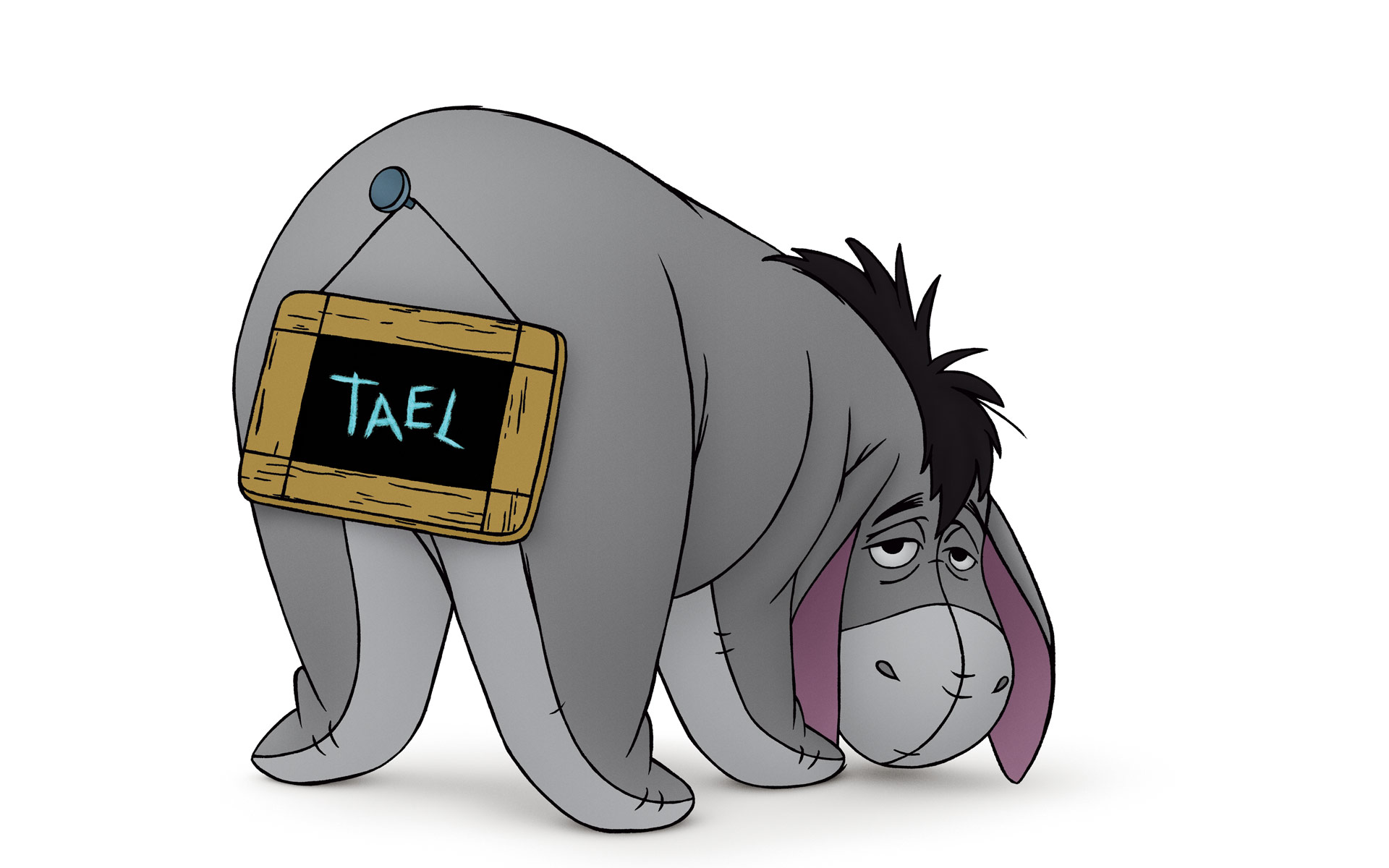
The Old Grey Donkey, Eeyore, stood by himself in a thistly corner of the forest, his front feet well apart, his head on one side, and thought about things.Sometimes he thought sadly to himself, "Why?" and sometimes he thought,"Wherefore?" and sometimes he thought, "Inasmuch as which?"--and sometimes he didn't quite know what he was thinking about. So when Winnie-the-Pooh came stumping along, Eeyore was very glad to be able to stop thinking for a little, in order to say "How do you do?" in a gloomy manner to him.
"And how are you?" said Winnie-the-Pooh.
Eeyore shook his head from side to side.
"Not very how," he said. "I don't seem to have felt at all how for a long time."
"Dear, dear," said Pooh, "I'm sorry about that. Let's have a look at you." So Eeyore stood there, gazing sadly at the ground, and Winnie-the-Pooh walked all round him once.
"Why, what's happened to your tail?" he said in surprise.
"What has happened to it?" said Eeyore.
"It isn't there!"
"Are you sure?"
"Well, either a tail is there or it isn't there You can't make a mistake about it. And yours isn't there!"
"Then what is?"
"Nothing."
"Let's have a look," said Eeyore, and he turned slowly round to the place where his tail had been a little while ago, and then, finding that he couldn't catch it up, he turned round the other way, until he came back to where he was at first, and then he put his head down and looked between his front legs, and at last he said, with a long, sad sigh, "I believe you're right"
"Of course I'm right," said Pooh
"That accounts for a Good Deal," said Eeyore gloomily. "It explains Everything. No Wonder."
"You must have left it somewhere," said Winnie-the-Pooh.
"Somebody must have taken it," said Eeyore.
"How Like Them," he added, after a long silence. Pooh felt that he ought to say something helpful about it, but didn't quite know what. So he decided to do something helpful instead.
"Eeyore," he said solemnly, "I, Winnie-the-Pooh, will find your tail for you."
"Thank you, Pooh," answered Eeyore. "You're a real friend," said he. "Not like Some," he said.
So Winnie-the-Pooh went off to find Eeyore's tail.
It was a fine spring morning in the forest as he started out. Little soft clouds played happily in a blue sky, skipping from time to time in front of the sun as if they had come to put it out, and then sliding away suddenly so that the next might have his turn. Through them and between them the sun shone bravely, and a copse which had worn its firs all the year round seemed old and dowdy now beside the new green lace which the beeches had put on so prettily. Through copse and spinney marched Bear; down open slopes of gorse and heather, over rocky beds of streams, up steep banks of sandstone into the heather again; and so at last, tired and hungry, to the Hundred Acre Wood. For it was in the Hundred Acre Wood that Owl lived.
"And if anyone knows anything about anything," said Bear to himself, "it's Owl who knows something about something," he said, "or my name's not Winnie-the-Pooh," he said. "Which it is," he added. "So there you are."
Owl lived at The Chestnuts, and old-world residence of great charm, which was grander than anybody else's, or seemed so to Bear, because it had both a knocker and a bell-pull. Underneath the knocker there was a notice which said:
PLES RING IF AN RNSER IS REQIRD.
Underneath the bell-pull there was a notice which said:
PLEZ CNOKE IF AN RNSR IS NOT REQID.
These notices had been written by Christopher Robin, who was the only one in the forest who could spell; for Owl, wise though he was in many ways, able to read and write and spell his own name WOL, yet somehow went all to pieces over delicate words like MEASLES and BUTTEREDTOAST.
Winnie-the-Pooh read the two notices very carefully, first from left to right, and afterwards, in case he had missed some of it, from right to left. Then, to make quite sure, he knocked and pulled the knocker, and he pulled and knocked the bell-rope, and he called out in a very loud voice, "Owl! I require an answer! It's Bear speaking." And the door opened, and Owl looked out.
"Hallo, Pooh," he said. "How's things?"
"Terrible and Sad," said Pooh, "because Eeyore, who is a friend of mine, has lost his tail. And he's Moping about it. So could you very kindly tell me how to find it for him?"
"Well," said Owl, "the customary procedure in such cases is as follows."
"What does Crustimoney Proseedcake mean?" said Pooh. "For I am a Bear of Very Little Brain, and long words Bother me."
"It means the Thing to Do."
"As long as it means that, I don't mind," said Pooh humbly.
"The thing to do is as follows. First, Issue a Reward. Then--"
"Just a moment," said Pooh, holding up his paw. "What do we do to this--what you were saying? You sneezed just as you were going to tell me."
"I didn't sneeze."
"Yes, you did, Owl."
"Excuse me, Pooh, I didn't. You can't sneeze without knowing it."
"Well, you can't know it without something having been sneezed."
"What I said was, 'First Issue a Reward'."
"You're doing it again," said Pooh sadly.
"A Reward!" said Owl very loudly. "We write a notice to say that we will give a large something to anybody who finds Eeyore's tail."
"I see, I see," said Pooh, nodding his head. "Talking about large somethings," he went on dreamily, "I generally have a small something about now--about this time in the morning," and he looked wistfully at the cupboard in the corner of Owl's parlour; "just a mouthful of condensed milk or whatnot, with perhaps a lick of honey--"
"Well, then," said Owl, "we write out this notice, and we put it up all over the Forest."
"A lick of honey," murmured Bear to himself, "or--or not, as the case may be." And he gave a deep sigh, and tried very hard to listen to what Owl was saying.
But Owl went on and on, using longer and longer words, until at last he came back to where he started, and he explained that the person to write out this notice was Christopher Robin.
"It was he who wrote the ones on my front door for me. Did you see them, Pooh?" For some time now Pooh had been saying "Yes" and "No" in turn, with his eyes shut, to all that Owl was saying, and having said, "Yes, yes," last time, he said "No, not at all," now, without really knowing what Owl was talking about?
"Didn't you see them?" said Owl, a little surprised. "Come and look at them
now."
So they went outside. And Pooh looked at the knocker and the notice below it, and he looked at the bell-rope and the notice below it, and the more he looked at the bell-rope, the more he felt that he had seen something like it, somewhere else, sometime before.
"Handsome bell-rope, isn't it?" said Owl.
Pooh nodded.
"It reminds me of something," he said, "but I can't think what. Where did you get it?"
"I just came across it in the Forest. It was hanging over a bush, and I thought at first somebody lived there, so I rang it, and nothing happened, and then I rang it again very loudly, and it came off in my hand, and as nobody seemed to want it, I took it home, and"
"Owl," said Pooh solemnly, "you made a mistake. Somebody did want it."
"Who?"
"Eeyore. My dear friend Eeyore. He was--he was fond of it."
"Fond of it?"
"Attached to it," said Winnie-the-Pooh sadly.
So with these words he unhooked it, and carried it back to Eeyore; and when
Christopher Robin had nailed it on its right place again, Eeyore frisked about the forest, waving his tail so happily that Winnie-the-Pooh came over all funny, and had to hurry home for a little snack of something to sustain him. And wiping his mouth half an hour afterwards, he sang to himself proudly:
Who found the Tail?
"I," said Pooh,
"At a quarter to two
(Only it was quarter to eleven really),
I found the Tail!"


24. listopadu 2015

Klasická britská detektivka

Agatha Christie, Dorothy L. Sayersová, P.D. Jamesová: toto trojhvězdí autorek proslavilo klasickou britskou detektivku po celém světě. Podívejme se dnes na text tak typicky aristokratický a britský, že tato jeho charakteristika musí zůstat zachována i v českém překladu.
Amatérský detektiv lord Petr Wimsey právě vstupuje do příběhu... nebo spíš příběh vstupuje do jeho života paira a tak trochu londýnského dandyho.

Přečtěte si nejprve celou ukázku. Soustřeďte se na charakteristiku jednajících osob. Berte v úvahu, že se děj odehrává na počátku třicátých let.

______________________________________________________________

Dorothy L. Sayersová: Whose body?

"Oh, damn!" said Lord Peter Wimsey at Piccadilly Circus. "Hi, driver!"
The taxi man, irritated at receiving this appeal while negotiating the intricacies of turning into Lower Regent Street across the route of a 19 'bus, a 38-B and a bicycle, bent an unwilling ear.
"I've left the catalogue behind," said Lord Peter deprecatingly, "uncommonly careless of me. D'you mind puttin' back to where we came from?"
"To the Savile Club, sir?"
"No--110 Piccadilly--just beyond--thank you."
"Thought you was in a hurry," said the man, overcome with a sense of injury.
"I'm afraid it's an awkward place to turn in," said Lord Peter, answering the thought rather than the words. His long, amiable face looked as if it had generated spontaneously from his top hat, as white maggots breed from Gorgonzola.
The taxi, under the severe eye of a policeman, revolved by slow jerks, with a noise like the grinding of teeth.
The block of new, perfect and expensive flats in which Lord Peter dwelt upon the second floor, stood directly opposite the Green Park, in a spot for many years occupied by the skeleton of a frustrate commercial enterprise. As Lord Peter let himself in he heard his man's voice in the library, uplifted in that throttled stridency peculiar to well-trained persons using the telephone.
"I believe that's his lordship just coming in again--if your Grace would kindly hold the line a moment."
"What is it, Bunter?"
"Her Grace has just called up from Denver, my lord. I was just saying your lordship had gone to the sale when I heard your lordship's latchkey."
"Thanks," said Lord Peter; "and you might find me my catalogue, would you? I think I must have left it in my bedroom, or on the desk."
He sat down to the telephone with an air of leisurely courtesy, as though it were an acquaintance dropped in for a chat.
"Hullo, Mother--that you?"
"Oh, there you are, dear," replied the voice of the Dowager Duchess. "I was afraid I'd just missed you."
"Well, you had, as a matter of fact. I'd just started off to Brocklebury's sale to pick up a book or two, but I had to come back for the catalogue. What's up?"
"Such a quaint thing," said the Duchess. "I thought I'd tell you. You know little Mr. Thipps?"
"Thipps?" said Lord Peter. "Thipps? Oh, yes, the little architect man who's doing the church roof. Yes. What about him?"
"Mrs. Throgmorton's just been in, in quite a state of mind."
"Sorry, Mother, I can't hear. Mrs. Who?"
"Throgmorton--Throgmorton--the vicar's wife."
"Oh, Throgmorton, yes?"
"Mr. Thipps rang them up this morning. It was his day to come down, you know."
"Yes?"
"He rang them up to say he couldn't. He was so upset, poor little man. He'd found a dead body in his bath."
"Sorry, Mother, I can't hear; found what, where?"
"A dead body, dear, in his bath."
"What?--no, no, we haven't finished. Please don't cut us off. Hullo! Hullo! Is that you, Mother?
Hullo!--Mother!--Oh, yes--sorry, the girl was trying to cut us off. What sort of body?"
"A dead man, dear, with nothing on but a pair of pince-nez. Mrs. Throgmorton positively blushed when she was telling me. I'm afraid people do get a little narrow-minded in country vicarages."
"Well, it sounds a bit unusual. Was it anybody he knew?"
"No, dear, I don't think so, but, of course, he couldn't give her many details. She said he sounded quite distracted. He's such a respectable little man--and having the police in the house and so on, really worried him."
"Poor little Thipps! Uncommonly awkward for him. Let's see, he lives in Battersea, doesn't he?"
"Yes, dear; 59 Queen Caroline Mansions; opposite the Park. That big block just around the corner from the Hospital. I thought perhaps you'd like to run round and see him and ask if there's anything we can do. I always thought him a nice little man."
"Oh, quite," said Lord Peter, grinning at the telephone. The Duchess was always of the greatest assistance to his hobby of criminal investigation, though she never alluded to it, and maintained a polite fiction of its non-existence.
"What time did it happen, Mother?"
"I think he found it early this morning, but, of course, he didn't think of telling the Throgmortons just at first. She came up to me just before lunch--so tiresome, I had to ask her to stay. Fortunately, I was alone. I don't mind being bored myself, but I hate having my guests bored."
"Poor old Mother! Well, thanks awfully for tellin' me. I think I'll send Bunter to the sale and toddle round to Battersea now an' try and console the poor little beast. So-long."
"Good-bye, dear."
"Bunter!"
"Yes, my lord."
"Her Grace tells me that a respectable Battersea architect has discovered a dead man in his bath."
"Indeed, my lord? That's very gratifying."
"Very, Bunter. Your choice of words is unerring. I wish Eton and Balliol had done as much for me. Have you found the catalogue?"
"Here it is, my lord."
"Thanks. I am going to Battersea at once. I want you to attend the sale for me. Don't lose time--I don't want to miss the Folio Dante* nor the de Voragine--here you are--see? 'Golden Legend'--Wynkyn de Worde, 1493--got that?--and, I say, make a special effort for the Caxton folio of the 'Four Sons of Aymon'--it's the 1489 folio and unique. Look! I've marked the lots I want, and put my outside offer against each. Do your best for me. I shall be back to dinner."
"Very good, my lord."
"Take my cab and tell him to hurry. He may for you; he doesn't like me very much. Can I," said Lord Peter, looking at himself in the eighteenth-century mirror over the mantelpiece, "can I have the heart to fluster the flustered Thipps further--that's very difficult to say quickly--by appearing in a top-hat and frock-coat? I think not. Ten to one he will overlook my trousers and mistake me for the undertaker. A grey suit, I fancy, neat but not gaudy, with a hat to tone, suits my other self better. Exit the amateur of first editions; new motif introduced by solo bassoon; enter Sherlock Holmes, disguised as a walking gentleman. There goes Bunter. Invaluable fellow--never offers to do his job when you've told him to do somethin' else. Hope he doesn't miss the 'Four Sons of Aymon.' Still, there is another copy of that--in the Vatican.** It might become available, you never know--if the Church of Rome went to pot or Switzerland invaded Italy--whereas a strange corpse doesn't turn up in a suburban bathroom more than once in a lifetime--at least, I should think not--at any rate, the number of times it's happened, with a pince-nez, might be counted on the fingers of one hand, I imagine. Dear me! it's a dreadful mistake to ride two hobbies at once."
He had drifted across the passage into his bedroom, and was changing with a rapidity one might not have expected from a man of his mannerisms. He selected a dark-green tie to match his socks and tied it accurately without hesitation or the slightest compression of his lips; substituted a pair of brown shoes for his black ones, slipped a monocle into a breast pocket, and took up a beautiful Malacca walking-stick with a heavy silver knob.
"That's all, I think," he murmured to himself. "Stay--I may as well have you--you may come in useful--one never knows." He added a flat silver matchbox to his equipment, glanced at his watch, and seeing that it was already a quarter to three, ran briskly downstairs, and, hailing a taxi, was carried to Battersea Park.